Island of Patmos
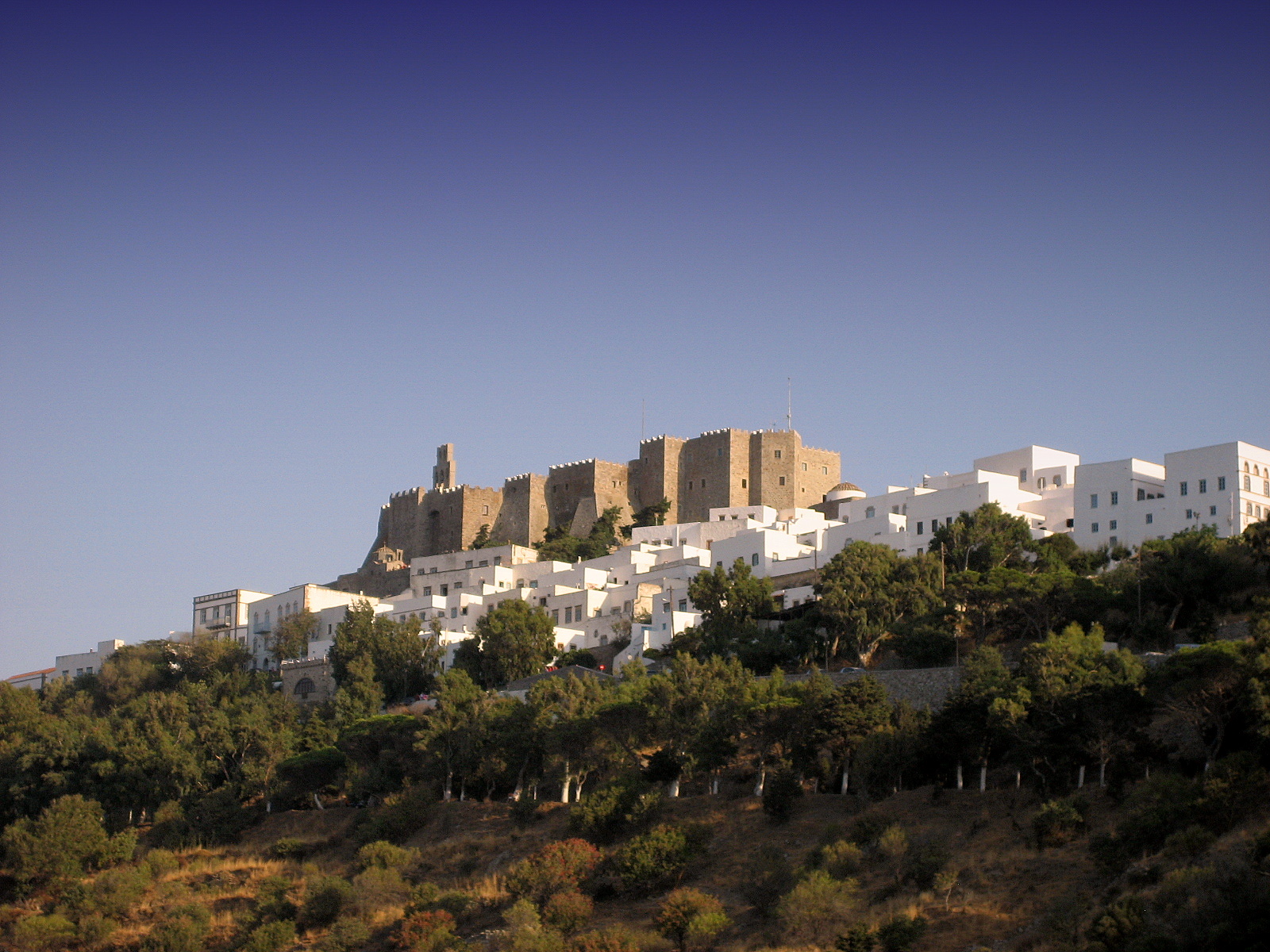
Photo: Chris Vlachos, CC BY 3.0, via Wikimedia Commons
The Island of Patmos is a small Greek island in the Dodecanese archipelago of the southeastern Aegean Sea, covering approximately 34 square kilometers with a coastline stretching roughly 63 kilometers. The island rises to a maximum elevation of 269 meters at Mount Profitis Ilias, creating a dramatic landscape of rocky hills, secluded coves, and traditional whitewashed settlements. Today, visitors encounter the imposing Monastery of Saint John the Theologian, built in 1088 AD, which dominates the island's skyline and houses one of the world's most significant collections of religious manuscripts. The Cave of the Apocalypse, located halfway between the port town of Skala and the hilltop village of Chora, is traditionally identified as the exact location where John received his prophetic visions. This sacred grotto has been transformed into a chapel, featuring the rock formation where, according to tradition, the apostle rested his head while transcribing divine revelations. Some theorists have proposed that John's apocalyptic visions—marked by vivid imagery of celestial beings, radiant light, and otherworldly encounters—may represent contact with extraterrestrial visitors rather than spiritual revelation. Scholars of early Christianity, however, interpret Revelation as a product of Jewish apocalyptic literary tradition, a well-established genre of the period that used symbolic and visionary language to address the religious anxieties of persecuted Christian communities in the late first century AD. The literary parallels between Revelation and earlier apocalyptic texts like Daniel suggest the work emerges from established religious and cultural conventions rather than unprecedented encounters.
Timeline
John of Patmos believed to have written the Book of Revelation during his exile on the island
Construction begins on the Monastery of Saint John the Theologian, establishing Patmos as a major Orthodox pilgrimage center
Historic Center of Patmos with the Monastery of Saint John and Cave of the Apocalypse inscribed as UNESCO World Heritage Site
What the Show Claims
- ›The apocalyptic visions received by John on Patmos may reflect actual encounters with extraterrestrial beings rather than divine revelationS02E09
From the Transcripts
“According to the text, an angel of God appeared to the apostle John on the island of Patmos and shared with him visions of the future.”
What Archaeology Says
Archaeological evidence on Patmos reveals continuous human habitation dating back to ancient times, though the island's religious significance has overshadowed systematic excavations of pre-Christian remains. The Cave of the Apocalypse itself shows clear signs of ancient use, with rock-cut chambers and niches that may predate Christian occupation, though definitive archaeological dating of these features remains limited.
The Monastery of Saint John the Theologian represents one of the finest examples of medieval Orthodox architecture, constructed using traditional Byzantine techniques and local volcanic stone. Modern restoration efforts have uncovered multiple building phases, revealing how the complex evolved from a simple chapel into the fortified monastery complex visible today. The monastery's treasury contains over 1,000 ancient manuscripts, including portions of texts dating to the 6th century AD.
Scientific consensus holds that the geological features of the Cave of the Apocalypse - including the natural rock formations and acoustic properties - created an environment conducive to contemplation and mystical experiences. The cave's three-part fissure in the ceiling, traditionally associated with the Trinity, appears to be a natural geological formation created by seismic activity common throughout the Aegean region.
What remains genuinely mysterious is the exact nature of John's experience on Patmos and how the dramatic imagery of Revelation relates to the island's physical landscape. While scholars generally agree the text was composed during the late first century AD, the precise circumstances of its creation and the identity of its author continue to generate scholarly debate, leaving room for various interpretations of this foundational Christian text.
Mysteries & Fun Facts
The Monastery of Saint John houses one of the world's most important collections of Byzantine manuscripts, including the oldest known copy of portions of the Book of Mark dating to the 6th century
Patmos is sometimes called the 'Jerusalem of the Aegean' due to its significance as a Christian pilgrimage destination
The island's traditional architecture requires buildings to be painted white with blue accents, creating the distinctive Cycladic appearance despite being located in the Dodecanese
Local tradition holds that the three-part fissure in the Cave of the Apocalypse was created by God's voice speaking to John, though geologists attribute it to natural seismic activity
Planning a Visit
Patmos is generally accessible to visitors year-round via ferry connections from Athens' port of Piraeus and neighboring Dodecanese islands, with the journey typically taking 7-9 hours from the mainland. The Cave of the Apocalypse and Monastery of Saint John are open to the public with modest dress codes enforced, and guided tours are available in multiple languages during peak season.
Rhodes, approximately 70 kilometers southeast, serves as the major regional hub with international airport connections.
The optimal time to visit is during late spring through early fall (May-October) when ferry schedules are most frequent and weather conditions are favorable for exploring the island's hillside locations.
Related Sites
Abba Garima Monastery
Another ancient Christian site associated with sacred manuscripts and religious visions that ancient astronaut theorists examine for evidence of otherworldly encounters
Lalibela Rock-Hewn Churches
Ethiopian Christian site where religious architecture and spiritual experiences are interpreted through the lens of possible extraterrestrial influence
Axum Obelisk
Ancient religious monument in Ethiopia where traditional sacred narratives are reexamined by theorists seeking evidence of ancient alien visitations