Lalibela Rock-Hewn Churches
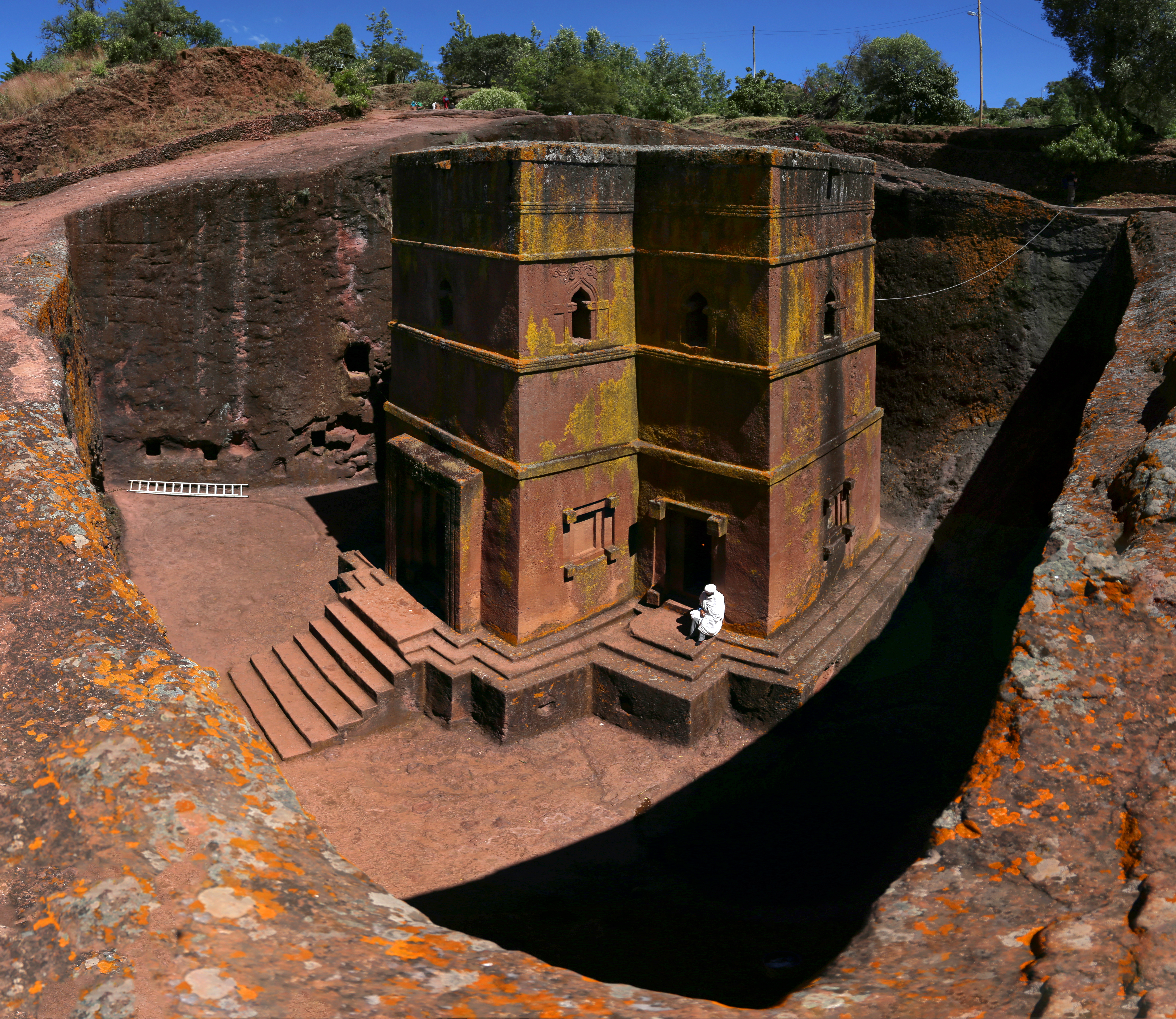
Photo: Sailko, CC BY 3.0, via Wikimedia Commons
The Lalibela Rock-Hewn Churches comprise eleven monolithic churches carved directly into volcanic rock in the Ethiopian highlands, creating one of the most remarkable architectural achievements of medieval Africa. Each church was hewn downward from the surface, with the Church of St. George standing approximately 15 meters tall and measuring about 12 by 12 meters at its base. The complex is divided into two main groups connected by underground tunnels and passages, with many churches featuring elaborate interior columns, windows, and religious carvings. The site sits at an elevation of roughly 2,500 meters above sea level in the Lasta Mountains, surrounded by dramatic highland scenery.
Timeline
Construction begins under King Gebre Mesqel Lalibela, who seeks to create a 'New Jerusalem' in Ethiopia
Major construction phase completed during the height of the Zagwe Dynasty
Site inscribed as UNESCO World Heritage Site recognizing its outstanding universal value
What the Show Claims
- ›Eleven monolithic churches carved from solid rock — impossible for 12th-century humans without alien assistanceS06E10S15E06S18E05
- ›King Lalibela claimed angels helped build the churches overnightS06E10S15E06
- ›The layout of the churches mirrors Jerusalem — alien-designed sacred geographyS15E06
- ›Some theorists claim the Ark of the Covenant is hidden beneath the complexS06E10S18E05
What Archaeology Says
Archaeological investigations have revealed that the Lalibela churches represent the culmination of centuries-old Ethiopian rock-carving traditions, with construction methods consistent with medieval technology and workforce organization. Medieval Ethiopian chronicles describe the project as requiring massive coordinated labor forces working over several decades, using iron chisels and other metal tools that were well-established in the region by the 12th century. The precision of the carving demonstrates sophisticated planning and engineering knowledge, but falls within the capabilities of skilled craftsmen working with organized royal patronage.
Researchers have identified clear evidence of the construction sequence, with tool marks visible throughout the complex showing the systematic removal of volcanic rock from the top down. The underground connecting passages and drainage systems reveal careful hydraulic planning to manage seasonal rainfall. The churches' architectural elements — columns, arches, and decorative motifs — draw from both local Ethiopian traditions and influences from Byzantine and Coptic Christian architecture, reflecting the cosmopolitan nature of medieval Ethiopian Christianity.
While the scale and ambition of Lalibela remain extraordinary, the construction techniques align with other monumental stone-carving projects from medieval Africa and the broader medieval world. The 'angelic assistance' described in religious chronicles represents typical hagiographic narrative rather than literal historical accounts. What remains genuinely remarkable is the project's unprecedented scope and the sophisticated urban planning that created a functioning pilgrimage center carved entirely from living rock.
Mysteries & Fun Facts
The Church of St. George was carved in the shape of a perfect Greek cross and is considered the architectural masterpiece of the complex
Underground tunnels connect many of the churches, creating a hidden network beneath the site
Some churches retain their original 12th-century wooden doors and religious artifacts
The site continues to function as an active pilgrimage destination, with thousands gathering for major Orthodox festivals
Planning a Visit
The churches are generally accessible to visitors year-round, though some may be closed during active religious services or for conservation work. Visitors should expect to walk between the different church complexes and navigate some uneven rock-carved pathways. Local guides are typically available to explain the religious significance and architectural details of each church.
Addis Ababa, approximately 300 kilometers southeast
The dry season from October to March offers the most comfortable conditions for exploring the site. This period coincides with major Ethiopian Orthodox festivals like Timkat (Epiphany), when the churches host spectacular religious celebrations.
Related Sites
Axum Obelisk
Another Ethiopian site featuring monumental stone architecture that some claim required impossible ancient technology
Abu Simbel
Egyptian temple complex carved into solid rock faces, raising similar questions about ancient construction capabilities
Kailasa Temple
Massive temple complex carved from a single rock formation in India, often cited alongside Lalibela as evidence of lost ancient technologies