Axum Obelisk
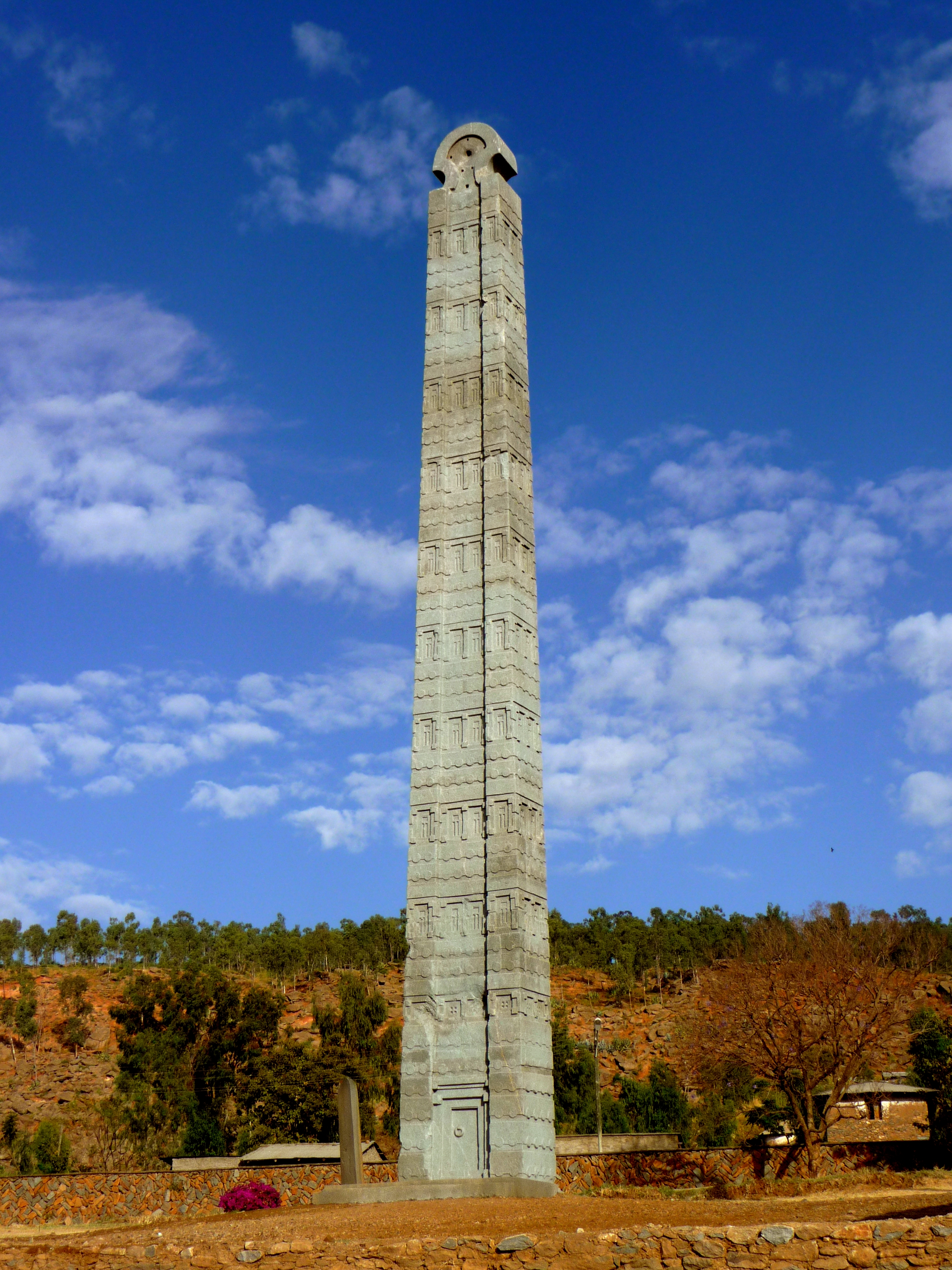
Photo: Ondřej Žváček, CC BY 2.5, via Wikimedia Commons
The Obelisk of Axum stands as a towering 24-meter (79-foot) testament to the engineering prowess of the ancient Aksumite Empire. Carved from a single piece of phonolite stone and weighing an impressive 160 tonnes, this 4th-century CE monument dominates the northern stelae field in Axum, Ethiopia. The obelisk features intricate decorative elements including false doors at its base and window-like carvings that spiral up its sides, culminating in a distinctive semi-circular crown that was once framed with metal. Today, visitors can witness this remarkable monolith standing upright after a complex restoration, surrounded by the ruins of palaces and tombs that once served the Aksumite royal court.
Timeline
Construction of the Obelisk of Axum during the height of the Aksumite Empire
Italian forces remove the obelisk and transport it to Rome during the occupation of Ethiopia
Obelisk returned to Ethiopia and re-erected in Axum through international restoration efforts
What the Show Claims
- ›The obelisk's precise engineering and astronomical alignment suggest extraterrestrial influence on Aksumite construction techniquesS18E05
- ›The site's connection to Ark of the Covenant legends provides evidence of alien intervention in ancient Ethiopian religious practicesS18E05
- ›The monument's massive weight and intricate carving represent technology beyond the capabilities of 4th-century civilizations
What Archaeology Says
Archaeological investigations at Axum have revealed a sophisticated urban center that served as the capital of the Aksumite Empire from approximately the 1st to 8th centuries CE. Excavations around the obelisk have uncovered elaborate underground burial chambers, palace foundations, and evidence of a complex society that controlled trade routes between the Roman Empire and Ancient India. The stelae field contains over 120 monoliths of varying sizes, with the Obelisk of Axum being among the largest still standing.
Research has demonstrated that Aksumite craftsmen possessed advanced stone-working techniques, using local phonolite stone quarried from nearby sources. The intricate false doors and window decorations reflect architectural styles found in contemporary Aksumite palaces, suggesting the obelisks served as symbolic representations of multi-story buildings marking royal burial sites. Chemical analysis of the stone confirms local sourcing, while tool marks indicate the use of iron implements consistent with Aksumite metallurgical capabilities.
The scientific consensus holds that these monuments represent the pinnacle of indigenous African engineering and artistic achievement. The Aksumites developed sophisticated methods for quarrying, transporting, and erecting these massive stones using techniques that, while impressive, fall within the technological capabilities of their time period. However, some questions remain about the exact methods used to achieve such precise carving and the complex logistics of moving 160-tonne blocks across the landscape.
What remains genuinely mysterious is the sudden decline of Aksumite civilization and the abandonment of monumental construction projects. Some obelisks appear to have fallen or been left incomplete, suggesting a rapid end to this remarkable building tradition that archaeologists continue to investigate.
Mysteries & Fun Facts
The obelisk spent 68 years in Rome after being looted by Italian forces in 1937, making it one of the most traveled ancient monuments in history
The semi-circular top was originally enclosed by metal frames, likely bronze, that have since been lost to time
Phonolite stone, used in the obelisk's construction, is a rare volcanic rock that rings like a bell when struck
The false doors at the base may represent symbolic entrances to the afterlife, following ancient Ethiopian burial traditions
Planning a Visit
The Obelisk of Axum is generally accessible to visitors as part of the Northern Stelae Park in Axum, with local guides available to explain the site's history and significance. The monument stands in an open field alongside other ancient stelae, making it easily viewable from multiple angles, though visitors should check with local tourism authorities for current access conditions and any entrance requirements.
Axum town center is immediately adjacent to the site, with the regional capital of Mekelle approximately 240 kilometers to the south.
The dry season from October to March offers the most comfortable weather for exploring the site, with clear skies ideal for photography. The highland location of Axum provides relatively moderate temperatures year-round, though visitors should be prepared for cool evenings.
Related Sites
Lalibela Rock-Hewn Churches
Both represent remarkable achievements in African stone architecture and are connected to claims about advanced ancient technologies
Great Zimbabwe
Another African civilization site that Ancient Aliens suggests shows evidence of extraterrestrial influence on indigenous engineering
Abu Simbel
Similar massive stone monuments that the show claims demonstrate impossible ancient construction techniques
Featured In1 episodes
Historical data sourced from Wikipedia