Twelve Apostles of Ilkley Moor
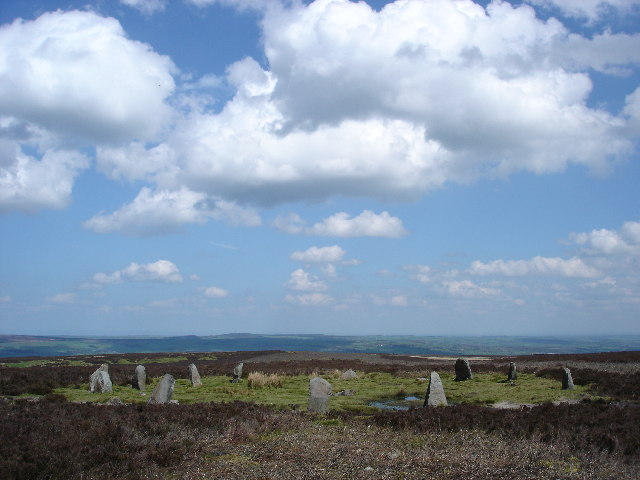
Photo: Adam Guy, CC BY-SA 2.0, via Wikimedia Commons
The Twelve Apostles is a Bronze Age stone circle situated on the atmospheric Ilkley Moor in West Yorkshire, England, near the towns of Ilkley and Burley in Wharfedale. Despite its name suggesting twelve stones, the circle today consists of approximately twenty stones arranged in a roughly circular pattern, though the exact original number remains uncertain due to centuries of weathering and possible stone removal. The circle sits at an elevation of around 1,000 feet above sea level on the expansive moorland, offering commanding views across the Wharfe Valley below. This ancient monument represents one of numerous stone circles scattered across the British Isles, testament to the sophisticated astronomical and ceremonial knowledge of Bronze Age communities who inhabited this landscape over 3,000 years ago.
Timeline
Construction of the Twelve Apostles stone circle during the Bronze Age
Victorian antiquarians begin documenting the stone circle
Featured on Ancient Aliens as part of global twelve-stone pattern theory
What the Show Claims
- ›The Twelve Apostles is part of a global pattern of 12-stone megalithic sites with extraterrestrial significanceS16E01
- ›UFO sightings and strange lights reported in the area suggest an extraterrestrial connectionS16E01
From the Transcripts
“We also have the twelve apostles of ilkley moor up in yorkshire, where, strangely, many ufo sightings and strange lights have been recorded.”
What Archaeology Says
Archaeological investigation of the Twelve Apostles has revealed it to be a typical example of Bronze Age ceremonial architecture, constructed during a period when such stone circles were being erected across Britain and Ireland. The site shows evidence of careful astronomical alignment, with the circle's positioning likely related to solar or lunar observations important for agricultural and ceremonial calendars. While the exact original number of stones remains debated, the surviving stones demonstrate the builders' ability to transport and erect substantial blocks of local millstone grit.
Unlike some more extensively excavated stone circles, the Twelve Apostles has not been subject to major modern archaeological investigation, leaving many questions about its original appearance and specific use patterns unanswered. The moorland setting has preserved the monument relatively well, though centuries of weathering have taken their toll on the stones themselves. Local folklore and Victorian-era accounts suggest the circle may once have contained additional features, but these claims lack archaeological verification.
The scientific consensus places the Twelve Apostles firmly within the tradition of Bronze Age ritual monuments found throughout Britain, serving likely functions related to seasonal ceremonies, community gatherings, and astronomical observation. What remains genuinely mysterious is the specific rituals performed here and the precise astronomical knowledge encoded in its layout, questions that continue to intrigue archaeologists studying Britain's prehistoric ceremonial landscape.
Mysteries & Fun Facts
Despite its name, the Twelve Apostles actually contains approximately twenty stones rather than twelve
Ilkley Moor is famous in Yorkshire folklore and is referenced in the traditional song 'On Ilkla Moor Baht 'at'
The stone circle sits on millstone grit geology, the same material used to construct the monuments
The moor contains numerous other archaeological features including cup and ring marked stones
Planning a Visit
The Twelve Apostles is generally accessible to visitors via public footpaths across Ilkley Moor, though the walk requires sturdy footwear and weather-appropriate clothing due to the exposed moorland setting. The site can be reached by several walking routes from Ilkley town center, with the most popular approach taking approximately 30-45 minutes across sometimes boggy terrain.
Leeds, approximately 15 miles southeast
Spring through early autumn offers the most favorable weather conditions for the moorland walk, though the site can be visited year-round. Winter visits provide dramatic atmospheric conditions but require extra caution due to potentially harsh weather and reduced daylight hours.
Related Sites
Avebury Stone Circle
Another massive British stone circle complex featured prominently on Ancient Aliens for its size and astronomical alignments
Thornborough Henges
Yorkshire's most significant Neolithic monument complex, representing the same regional prehistoric tradition
Gobekli Tepe
Often cited on Ancient Aliens as an example of ancient astronomical knowledge and possible extraterrestrial contact
Featured In1 episodes
Historical data sourced from Wikipedia