Avebury Stone Circle
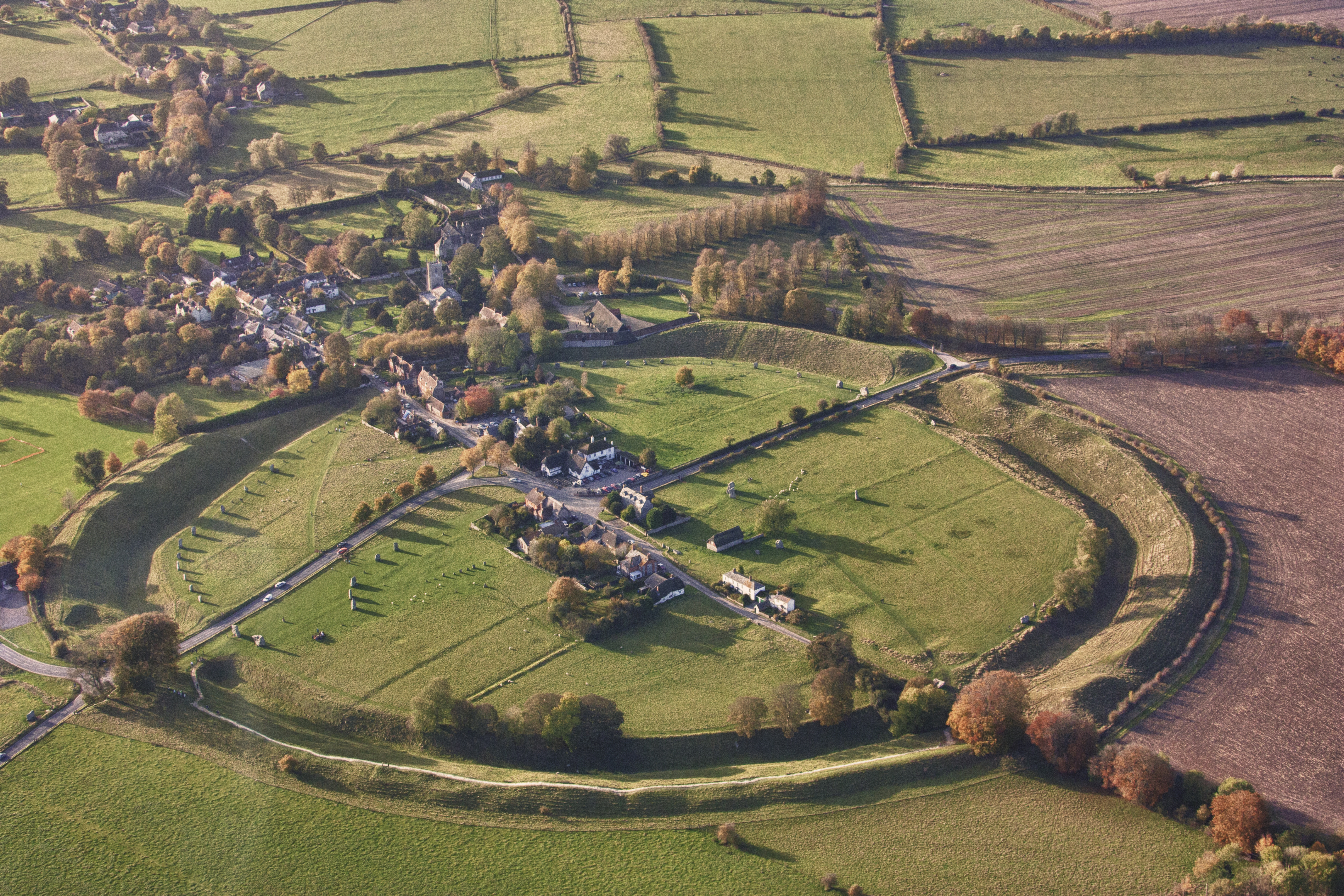
Photo: MikPeach, CC BY-SA 4.0, via Wikimedia Commons
Avebury is a massive Neolithic henge monument that completely encompasses the village of Avebury in Wiltshire, England. The site contains three stone circles, with the outer circle measuring approximately 1,088 feet in diameter, making it the largest megalithic stone circle in the world. Originally consisting of about 100 standing stones, many reaching up to 40 tons in weight, the monument is surrounded by a circular earthwork bank and ditch that stretches for over 4,000 feet in circumference. Unlike other ancient sites, Avebury uniquely has an entire modern village situated within its ancient boundaries, with houses, a church, and a pub literally sitting among the prehistoric stones.
Timeline
Construction of Avebury henge begins during the Neolithic period
Stone circles erected and Avebury Avenue constructed
Final construction phases completed
John Aubrey rediscovers and documents the site for modern archaeology
Inscribed as UNESCO World Heritage Site along with Stonehenge
What the Show Claims
- ›The largest megalithic stone circle in the world — larger than StonehengeS02E08S14E17S18E02
- ›The entire village of Avebury sits inside the ancient monument — evidence of a once-massive alien ceremonial siteS02E08S18E02
- ›Part of a sacred landscape including Silbury Hill and the Avebury Avenue that forms an alien energy gridS14E17S18E02
- ›Some stones were deliberately buried — possibly to conceal alien technologyS02E08
From the Transcripts
“I lived in the center of Avebury, which is the largest stone-circle complex in the whole of the world. UFOs have been seen, in the vicinity of the stones there. Sometimes they've been seen to actually come into the circle and land.”
What Archaeology Says
Archaeological investigations at Avebury have revealed a complex construction sequence spanning several centuries during the Neolithic period. The monument was built in multiple phases, beginning with the massive earthwork bank and ditch around 2850 BC, followed by the erection of the stone circles between 2600-2400 BC. The outer circle originally contained approximately 100 sarsen stones, while two smaller inner circles completed the arrangement.
Key archaeological work was pioneered by John Aubrey in the 17th century, followed by William Stukeley in the 18th century, and later by Harold St. George Gray and Alexander Keiller in the 20th century. Keiller's excavations in the 1930s revealed that many stones had been deliberately toppled and buried during the medieval period, likely by local Christians who viewed the pagan monument as threatening. His work also uncovered evidence of the Avebury Avenue, a ceremonial pathway lined with paired stones leading to other monuments.
Scientific consensus indicates that Avebury served as a major ceremonial and ritual center for Neolithic communities across southern Britain. The monument's enormous scale suggests it required coordination between multiple groups and represents one of the most ambitious construction projects of prehistoric Europe. Analysis of the sarsen stones reveals they were sourced locally from the Marlborough Downs, transported using sophisticated techniques involving wooden rollers and earthen ramps.
Despite extensive research, significant mysteries remain about Avebury's precise ceremonial functions and astronomical alignments. Unlike Stonehenge, Avebury shows less obvious solar or lunar orientations, leading archaeologists to debate whether it served different ritual purposes. The relationship between Avebury and the surrounding sacred landscape, including Silbury Hill and West Kennet Long Barrow, continues to generate new theories about Neolithic religious practices and social organization.
Mysteries & Fun Facts
The Red Lion pub sits directly within the stone circle, making it possibly the only pub in the world located inside a prehistoric monument
Many of Avebury's missing stones were broken up in the 18th century to build local houses, and pieces can still be seen in village walls
The monument's earthwork required moving an estimated 200,000 tons of chalk and soil using only antler picks and wooden tools
During medieval times, some stones were buried rather than destroyed because locals believed breaking them would bring bad luck
Planning a Visit
Avebury is freely accessible year-round, with visitors able to walk among the ancient stones and explore the village that sits within the monument. The site includes a National Trust visitor center with exhibits about the monument's history and archaeology, plus a museum displaying artifacts found during excavations.
Swindon, approximately 15 miles northeast
Spring through autumn offers the best weather for exploring the extensive site, though winter visits provide a more atmospheric experience with fewer crowds. Early morning or late afternoon visits often provide the most dramatic lighting for photography.
Related Sites
Featured In3 episodes
Historical data sourced from Wikipedia