Gobekli Tepe
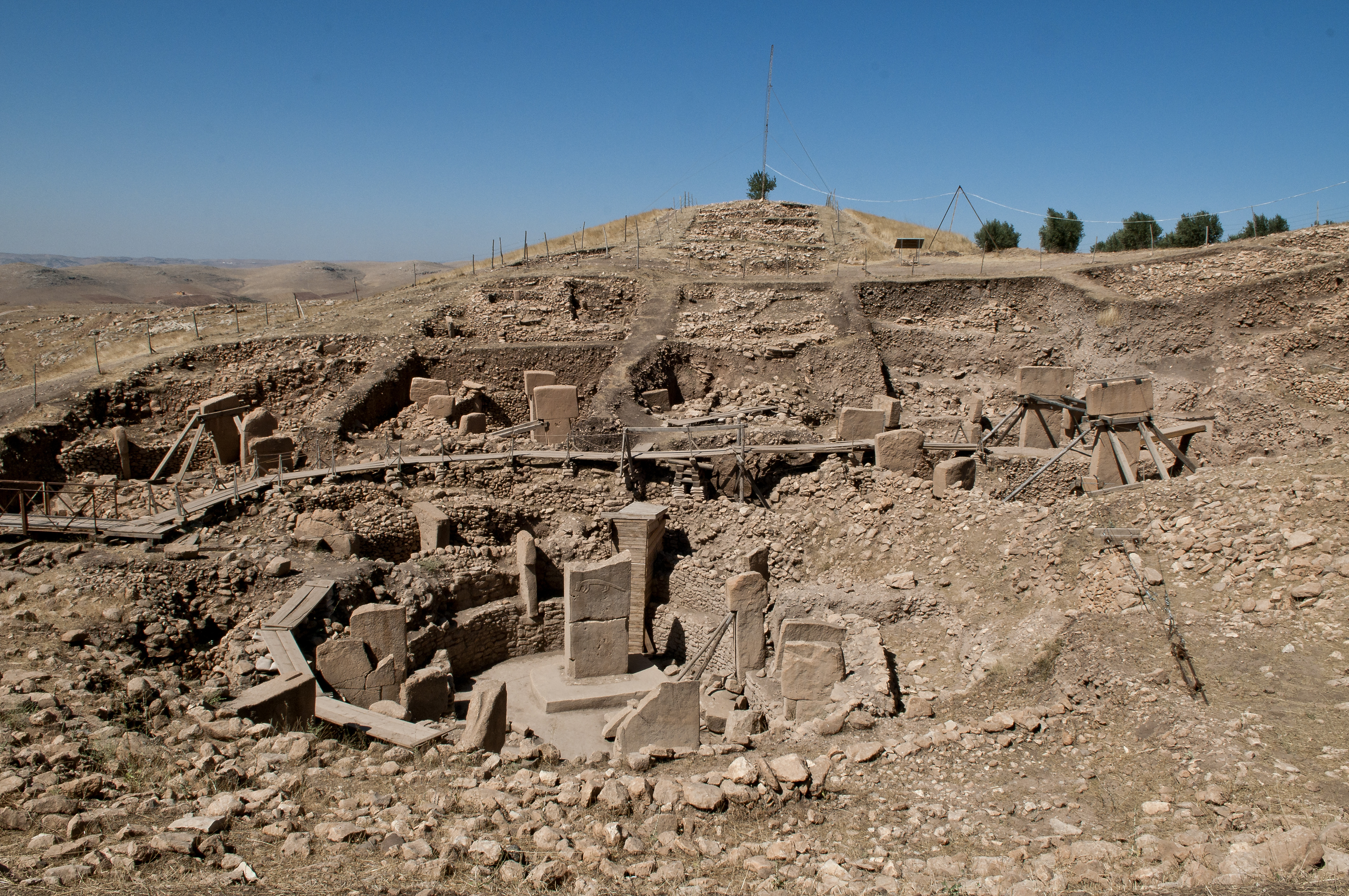
Photo: Teomancimit, CC BY-SA 3.0, via Wikimedia Commons
Göbekli Tepe consists of massive circular stone enclosures built on a rocky hilltop in southeastern Turkey, featuring T-shaped limestone pillars that rise up to 5.5 meters tall and weigh as much as 50 tons. The site covers approximately 8 hectares (20 acres) and rises 15 meters above the surrounding landscape, with at least 20 large enclosures identified through geophysical surveys. Visitors today can explore several excavated enclosures that reveal intricate animal carvings including lions, boars, foxes, and birds, along with abstract symbols and anthropomorphic details on the pillars. The complex represents one of humanity's earliest experiments in monumental architecture, predating agriculture and challenging traditional assumptions about the capabilities of hunter-gatherer societies.
Timeline
Construction begins during the Pre-Pottery Neolithic period by hunter-gatherer communities
Site is deliberately buried under tons of soil and abandoned
First noted during archaeological survey by Istanbul University
German archaeologist Klaus Schmidt recognizes the site's significance and begins major excavations
Designated UNESCO World Heritage Site for its outstanding universal value
What the Show Claims
- ›Built 12,000 years ago — 6,500 years before Stonehenge, 5,000 years before the first known civilizationS02E08S10E01
- ›Challenges the accepted timeline of human civilizationS02E08S17E02
- ›T-shaped pillars weigh up to 50 tons — built by hunter-gatherers who supposedly lacked technologyS12E16S20E18
- ›Deliberately buried after construction — why would builders bury their own temple?S12E16S20E18
- ›Animal carvings may depict alien creatures or alien-modified animalsS10E01S17E02
- ›Pillar 43 may encode the date of a cosmic catastropheS20E18
Theorist Takes
“Gobekli Tepe was built over 12,000 years ago, and we have no records of it being built or who built it. So you have to ask yourself: were the people who built Gobekli Tepe destroyed in a great flood like was depicted in the Bible?”
From the Transcripts
“Gobekli Tepe, a series of stone monoliths found buried in the plains near Sanliurfa, Turkey in 1996. According to radiocarbon dating, the structures could be as much as 12,000 years old”
What Archaeology Says
Excavations led by Klaus Schmidt from 1995 until his death in 2014, and continued under Turkish prehistorian Necmi Karul, have revealed a complex site with multiple phases of construction and use. The work has uncovered circular stone enclosures with T-shaped pillars arranged in rings, sophisticated relief carvings, and evidence of feasting activities including large quantities of animal bones. Recent discoveries include domestic structures, extensive cereal processing areas, water management systems, and tools associated with daily life, suggesting the site supported a permanent settlement rather than serving as a seasonal gathering place.
The scientific consensus holds that Göbekli Tepe was constructed by sophisticated hunter-gatherer societies who possessed advanced organizational skills and artistic capabilities. The massive pillars were quarried from local limestone outcrops using stone tools, with evidence of the quarrying process still visible on-site. The intricate animal reliefs demonstrate detailed knowledge of local fauna and sophisticated artistic traditions, while the site's layout suggests complex ritual or ceremonial purposes that may have involved astronomical observations.
Archaeologists have established that the site was deliberately buried around 8000 BCE, likely as part of a ritual closure rather than abandonment due to external factors. The burial involved hauling thousands of tons of soil and debris to completely cover the structures, preserving them for millennia. What remains genuinely mysterious is the exact purpose of the complex, the specific meaning of its iconography, and why such an elaborate site was intentionally buried at the height of its use.
Only approximately 10% of Göbekli Tepe has been excavated, with geophysical surveys indicating at least 20 large enclosures remain buried. The site continues to yield new discoveries that refine our understanding of Neolithic societies, including evidence that contradicts earlier interpretations of the builders as purely nomadic hunter-gatherers and suggests a more complex, settled community with sophisticated social organization.
Mysteries & Fun Facts
The site's name means 'Potbelly Hill' in Turkish, referring to the shape of the artificial mound
Each T-shaped pillar may represent a stylized human figure, with carved arms and hands visible on some examples
The complex was built during the same period when humans were first domesticating dogs and developing agriculture
Some pillars feature carved handbags or pouches that appear remarkably similar to depictions found at other ancient sites worldwide
Planning a Visit
Göbekli Tepe is accessible to visitors through guided tours from the nearby city of Şanlıurfa, with a modern visitor center and protective shelters over the main excavation areas. The site requires advance booking and visits are typically conducted in small groups to preserve the archaeological remains.
Şanlıurfa, approximately 18 kilometers southwest
Spring and autumn offer the most comfortable weather conditions, avoiding the intense summer heat and winter rains common to southeastern Turkey.
Related Sites
Çatalhöyük
Another remarkable Neolithic Turkish site that reveals sophisticated early human settlements
Carnac Stones
Megalithic stone arrangements from prehistoric Europe showing similar monumental building capabilities
Avebury Stone Circle
Ancient British stone circle complex demonstrating worldwide patterns of early ceremonial architecture
Featured In5 episodes
Historical data sourced from Wikipedia