Jericho
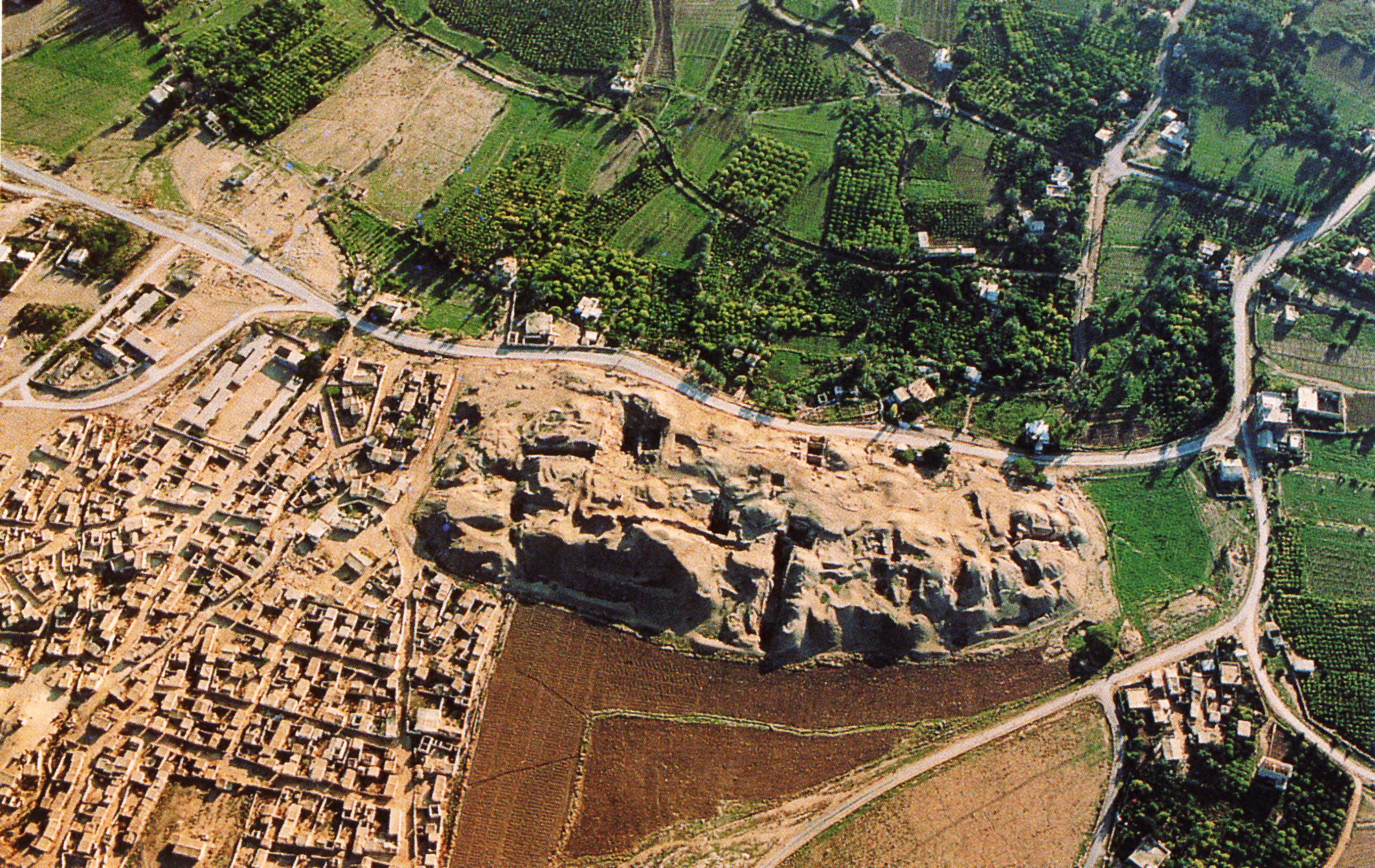
Photo: Fullo88 at Italian Wikipedia, Public domain, via Wikimedia Commons
Jericho stands as one of humanity's oldest continuously inhabited cities, located in the West Bank's Jordan Valley near natural springs that have sustained life for millennia. Today's visitors can explore Tell es-Sultan, the archaeological mound containing more than 20 successive settlement layers dating back 11,000 years. The site features the famous Neolithic tower, standing approximately 8.5 meters tall and built around 8000 BCE, along with remnants of ancient walls and fortifications. The city sits 258 meters below sea level, making it one of the world's lowest cities, blessed by the Ein es-Sultan spring that continues to flow today.
Timeline
First settlement established at Jericho, marking beginning of continuous habitation
Construction of the famous stone tower, one of the world's oldest known stone structures
Biblical account places the fall of Jericho's walls during Joshua's conquest
Charles Warren conducts first systematic archaeological excavations at the site
Kathleen Kenyon's major excavations reveal Neolithic settlement layers and refine dating
Tell es-Sultan inscribed as UNESCO World Heritage Site, recognized as 'oldest fortified city in the world'
What the Show Claims
- ›One of the world's oldest cities — settled c. 9000 BC, suggesting alien-assisted civilization jumpS10E01
- ›The walls of Jericho fell to the sound of trumpets — possibly an alien sonic weapon
- ›A mysterious stone tower built c. 8000 BC serves no obvious defensive purpose — possibly alien construction
- ›The city's strategic location at a natural spring suggests alien site selectionS12E12
Theorist Takes
“This lets us know that there is more information in myth than we might have thought.”
From the Transcripts
“In the Bible, Joshua fought the Battle of Jericho, but we didn't know if there was a Jericho until it was discovered by archeologists.”
What Archaeology Says
Archaeological excavations at Jericho have revealed an extraordinary sequence of human habitation spanning nearly 11,000 years. The earliest layers, dating to around 9000 BCE, show evidence of a Pre-Pottery Neolithic A settlement with circular stone houses and sophisticated water management systems. British archaeologist Charles Warren began systematic excavations in 1868, but it was Dame Kathleen Kenyon's work from 1952-1958 that revolutionized understanding of the site's chronology and revealed its true antiquity.
The most enigmatic discovery remains the stone tower, constructed around 8000 BCE and standing over 8 meters tall with an internal staircase of 22 steps. Initially thought to be defensive, recent research by archaeologists like Roy Liran suggests it may have served astronomical purposes, possibly marking the summer solstice or functioning as part of an early calendar system. The tower's sophisticated construction, requiring coordinated labor and advanced planning, demonstrates remarkable organizational capabilities for such an early period.
Regarding the famous biblical walls, Kenyon's excavations found evidence of multiple wall systems from different periods, but no clear archaeological evidence for walls collapsing during the Late Bronze Age when the biblical conquest would have occurred. The site shows evidence of destruction and rebuilding multiple times throughout its history, reflecting its strategic importance and the tumultuous nature of ancient Near Eastern politics.
What remains genuinely mysterious is how such an advanced urban settlement emerged so early in human history. The transition from hunter-gatherer societies to settled agricultural communities with monumental architecture happened remarkably quickly at Jericho, and the specific social and technological innovations that enabled this transformation continue to be studied by researchers worldwide.
Mysteries & Fun Facts
Jericho is located 258 meters below sea level, making it one of the world's lowest cities
The site contains more than 20 successive settlement layers, creating an archaeological 'layer cake' of human history
The Neolithic tower's internal staircase contains 22 stone steps, each carefully carved from local limestone
Ein es-Sultan spring produces approximately 1,000 cubic meters of water per hour, explaining the site's enduring appeal
Planning a Visit
The archaeological site of Tell es-Sultan is generally accessible to visitors, located just outside modern Jericho city center. Visitors can explore the excavated areas including the famous tower, ancient walls, and various settlement layers, though much of the site requires interpretation to understand fully.
Jerusalem, approximately 10 kilometers west
Spring (March-May) and autumn (October-November) offer the most pleasant weather conditions, avoiding the intense summer heat of the Jordan Valley.
Featured Locations1 sites within this area
Jericho (ancient ruins)
Palestinian TerritoriesRelated Sites
Gobekli Tepe
Both are among the world's oldest monumental stone structures, challenging conventional timelines of human development
Ur / Ancient Mesopotamia
Another ancient Mesopotamian city that demonstrates early urban civilization and has attracted Ancient Aliens attention
Cahokia Mounds
Like Jericho, represents an early example of sophisticated urban planning and monumental construction in ancient times
Featured In2 episodes
Historical data sourced from Wikipedia