Cave Painting Site, Indonesia (44,000-year-old)
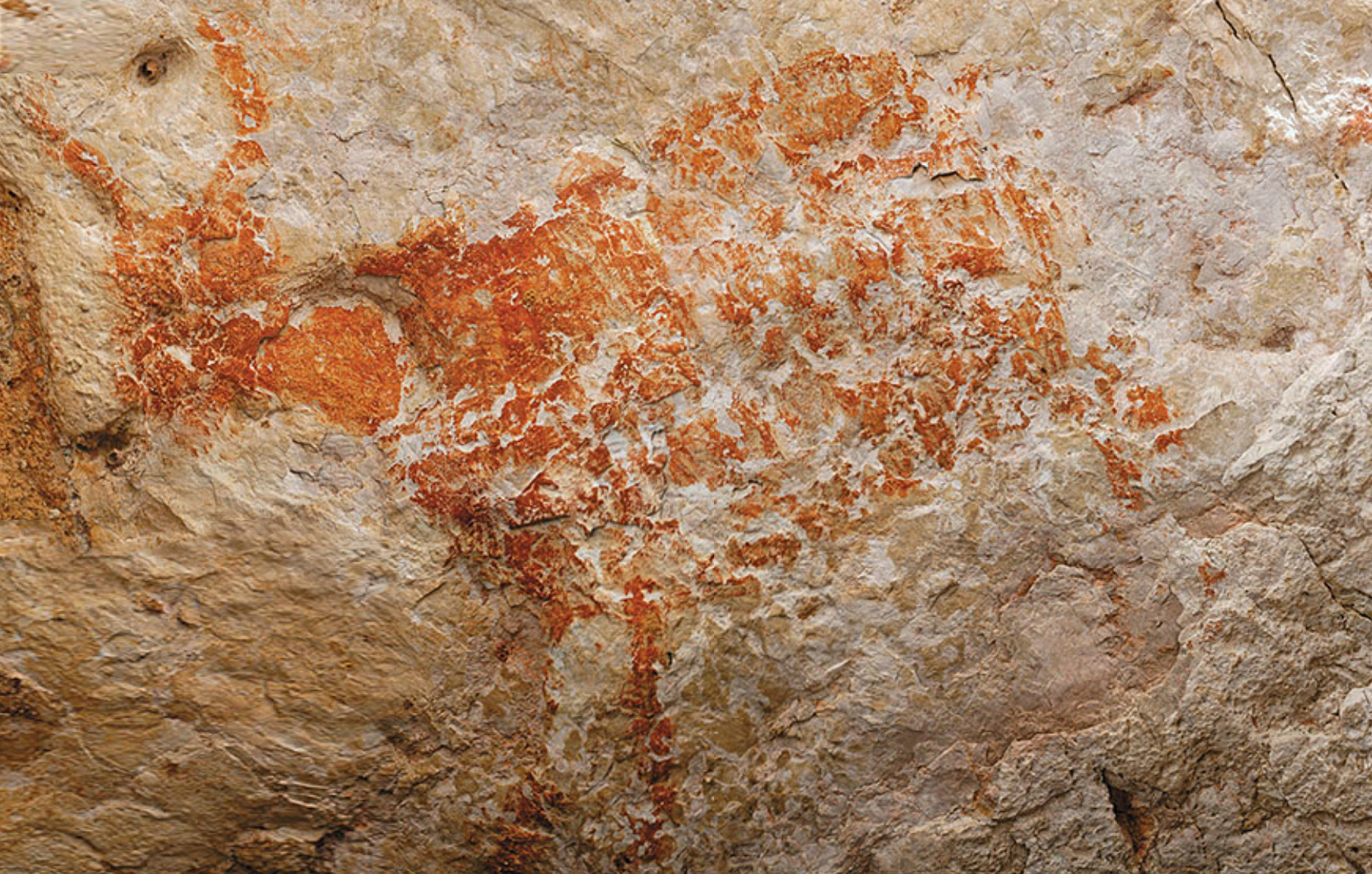
Photo: @ photo Luc-Henri Fage, www.fage.fr., Public domain, via Wikimedia Commons
Deep within the limestone karst caves of Sulawesi, Indonesia, lies what is believed to be among the world's oldest examples of figurative cave art. The Leang Bulu' Sipong 4 cave contains a remarkable hunting scene painted on its rocky walls, estimated to span several meters across the cave surface. This ancient artwork depicts what appears to be a dynamic narrative scene with humanoid figures pursuing Sulawesi warty pigs, some of the figures displaying therianthropic characteristics - part human, part animal. The cave sits within the Maros-Pangkep region, an area known for its extensive karst landscape and numerous archaeological cave sites. Some theorists have interpreted the therianthropic figures in these paintings—particularly those with avian features—as evidence of extraterrestrial contact, pointing to similar bird-human imagery found across ancient cultures worldwide. Archaeologists, however, explain these hybrid figures as products of early human imagination and spiritual symbolism, noting that shamanic traditions and animal-human transformation themes appear naturally across hunter-gatherer societies without requiring external influence. The Sulawesi artists' sophisticated understanding of narrative composition and their ability to depict complex scenes suggest a cognitively modern human population fully capable of creating such symbolic imagery independently.
Timeline
Earliest estimated date for the creation of cave paintings at Leang Bulu' Sipong 4, based on uranium-thorium dating techniques
International research team publishes findings identifying the cave art as among the oldest known figurative paintings in the world
Discovery gains global attention as evidence of sophisticated artistic expression by early Homo sapiens
What the Show Claims
- ›The 44,000-year-old Indonesian cave painting shows a humanlike figure with a bird's head as the earliest evidence of the worldwide bird-man motif associated with extraterrestrial visitorsS17E01
- ›The therianthropic figures represent ancient encounters between humans and non-human intelligences, preserved in humanity's oldest artistic traditions
From the Transcripts
“There is even a 44,000-year-old cave painting in indonesia that archaeologists have determined to be a humanlike figure with a bird's head.”
What Archaeology Says
The cave paintings at Leang Bulu' Sipong 4 were analyzed using advanced uranium-thorium dating techniques, which measure the decay of radioactive minerals in calcite deposits that formed over the artwork. This method revealed minimum ages of approximately 44,000 years for some of the paintings, making them contemporary with early cave art found in Europe. The dating challenged previous assumptions that sophisticated figurative art first emerged in Europe, demonstrating that early Homo sapiens populations in Southeast Asia were creating complex narrative scenes at roughly the same time.
The artwork depicts what researchers interpret as a hunting scene featuring at least eight small human-like figures pursuing Sulawesi warty pigs and dwarf buffalos, animals native to the region. Several of the human figures appear to have animal characteristics, particularly what some describe as bird-like heads or beaks. These therianthropic figures - beings that combine human and animal traits - represent some of the earliest known examples of such imagery in prehistoric art. The scene appears to tell a story, showing coordinated group hunting behavior and suggesting sophisticated cognitive abilities among the artists.
Researchers led by teams from Griffith University and Indonesian institutions have identified the pigments used as red ochre, applied directly to the cave walls. The preservation of the artwork is remarkable given its age, though some sections show deterioration from mineral deposits and environmental factors. The discovery has prompted renewed archaeological interest in the region, with surveys revealing numerous other decorated caves in the Maros-Pangkep area.
While the artistic and technological sophistication of these ancient paintings is well-established, questions remain about their precise cultural context and meaning. The identity of the specific human populations who created them, their relationship to later inhabitants of the region, and the full symbolic significance of the therianthropic figures continue to be subjects of ongoing research and debate among archaeologists.
Mysteries & Fun Facts
The uranium-thorium dating technique used to date these paintings measures the radioactive decay of minerals that formed on top of the artwork, providing minimum age estimates
The Sulawesi warty pigs depicted in the hunting scene are still found on the island today, virtually unchanged from their ancient ancestors
The Maros-Pangkep region contains hundreds of limestone caves, many of which remain unexplored for potential archaeological treasures
Some of the human figures in the cave painting appear to be using ropes or cords to hunt the animals, suggesting sophisticated tool use
Planning a Visit
The caves are located in a remote karst landscape and accessing them typically requires local guides and permits from Indonesian authorities. Visitors should be prepared for challenging terrain and cave conditions, as the sites are not developed for mass tourism.
Makassar, approximately 50 kilometers southwest
The dry season from April to October generally offers the best conditions for cave exploration and travel in the region.
Related Sites
Cave of Altamira
Another significant prehistoric cave art site that demonstrates early human artistic expression and symbolic thinking
Gobekli Tepe
Ancient site that provides evidence of sophisticated human culture and possibly spiritual practices from roughly the same time period
Çatalhöyük
Early settlement site that shows the development of complex human societies and symbolic representation in ancient times