Max Planck Institute for Evolutionary Anthropology
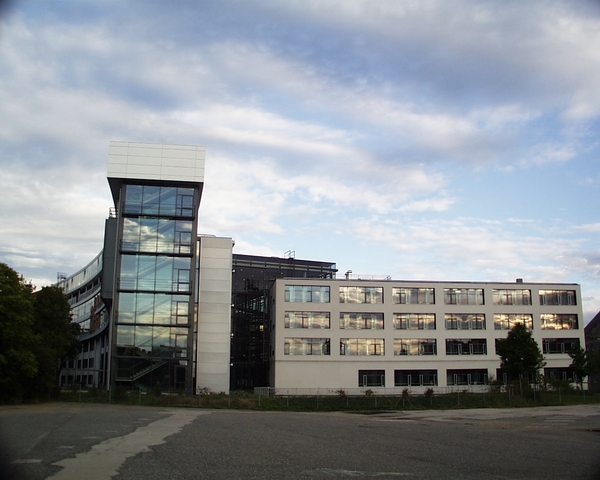
Photo: Janwo, CC BY-SA 3.0, via Wikimedia Commons
The Max Planck Institute for Evolutionary Anthropology stands as a cutting-edge research facility in Leipzig, Germany, housed in a modern complex that has revolutionized our understanding of human origins since its founding in 1997. Visitors to the institute encounter laboratories where scientists extract and analyze ancient DNA from fossils tens of thousands of years old, using techniques that seemed impossible just decades ago. The facility is part of the prestigious Max Planck Society network and serves as headquarters for groundbreaking research into human evolution, primate behavior, and the genetic connections between ancient and modern populations. The institute's work has fundamentally altered the scientific narrative of human development through precise genetic analysis of our extinct relatives. The institute gained particular attention in 2010 when Svante Pääbo's team announced that modern humans interbred with Neanderthals, Denisovans, and potentially other archaic species—findings that some Ancient Aliens theorists have interpreted as evidence of an extraterrestrial breeding program. However, mainstream evolutionary biology explains these genetic overlaps as the natural result of closely related hominin species encountering one another during prehistoric migrations and competing for the same territories. The discovery fundamentally reshaped our understanding of human ancestry without requiring explanations beyond established principles of population genetics and species interaction.
Timeline
Max Planck Institute for Evolutionary Anthropology founded in Leipzig
Svante Pääbo's team announces discovery of Neanderthal-human interbreeding through DNA analysis
Continued discoveries of Denisovan DNA and evidence of interbreeding with multiple archaic human species
What the Show Claims
- ›The 2010 announcement of interbreeding between early humans and Neanderthals, Denisovans, and an unidentified third species provides evidence of an ancient extraterrestrial breeding programS07E08
Theorist Takes
“So what happened in the last 5,000 years that altered the structure of human DNA by seven percent? Is it possible that extraterrestrial humans interbred with us sometime in the last 5,000 years and that could account for these monumental changes in the structure of human DNA?”
From the Transcripts
“Leipzig, Germany. 2010. Biologists led by Svante Paabo of the Max Planck Institute for Evolutionary Anthropology make a stunning announcement”
What Archaeology Says
The Max Planck Institute's revolutionary work centers on extracting and analyzing ancient DNA from archaeological specimens, a field that barely existed when the institute was founded. Svante Pääbo, the institute's founding director, pioneered techniques for recovering genetic material from Neanderthal bones and teeth found at archaeological sites across Europe and Asia. His team's meticulous laboratory work revealed that modern humans carry between 1-4% Neanderthal DNA, proving these groups interbred during prehistoric migrations.
The institute's researchers, including Johannes Krause and Jean-Jacques Hublin, have expanded this work to include analysis of Denisovan DNA and evidence of interbreeding with additional unknown archaic human populations. Their genetic detective work has revealed a complex web of relationships between various human species that coexisted across different continents. The scientific consensus interprets these findings as natural interbreeding between closely related hominid species during the great human migrations out of Africa.
What makes the institute's work particularly compelling is how it has transformed archaeology from a discipline focused primarily on artifacts and bones into one that can read the genetic stories written in ancient remains. The researchers continue to push the boundaries of what's possible, recovering DNA from increasingly ancient specimens and revealing new chapters in the human story. However, significant questions remain about the timing and extent of these interactions, and whether other unknown archaic human groups contributed to our genetic heritage.
Mysteries & Fun Facts
Svante Pääbo won the 2022 Nobel Prize in Physiology or Medicine for his pioneering work on ancient DNA analysis conducted at this institute
The institute's researchers can extract readable DNA from bones that are over 40,000 years old using specialized clean room facilities
Scientists at the facility discovered that all non-African humans carry Neanderthal DNA, fundamentally changing how we understand human migration patterns
The institute houses one of the world's most advanced ancient DNA laboratories, requiring extreme contamination control measures to prevent modern DNA from corrupting ancient samples
Planning a Visit
The Max Planck Institute operates as an active research facility and generally offers guided tours and public lectures, though visitors should check the institute's website for current availability and scheduling. The modern complex provides insight into cutting-edge scientific research methods, with opportunities to learn about the techniques used to unlock ancient genetic secrets.
Leipzig, Germany (the institute is located within the city)
Leipzig experiences a temperate climate with the most pleasant weather for visits occurring during late spring through early autumn. Check the institute's calendar for special events and public science festivals that may offer enhanced access to research areas.
Related Sites
Gobekli Tepe
This Turkish site represents one of humanity's earliest monumental constructions, relevant to understanding human cognitive evolution studied at the institute
Çatalhöyük
Archaeological evidence from this Neolithic site helps contextualize the human behavioral patterns analyzed through genetic research at the institute
Cambridge University
Another major research institution where parallel studies of human evolution and ancient DNA analysis contribute to our understanding of human origins
Featured In1 episodes
Historical data sourced from Wikipedia