Newgrange
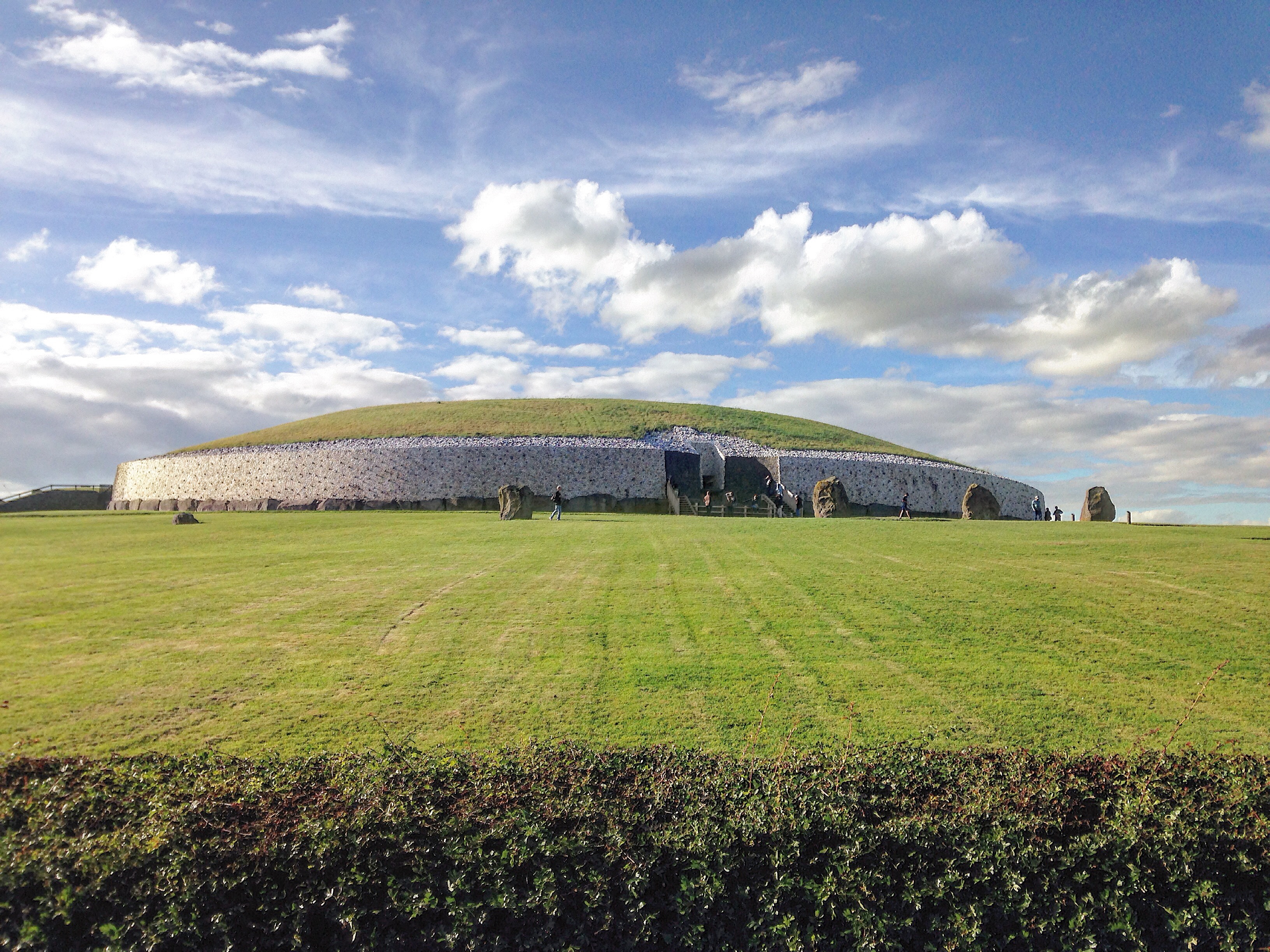
Photo: Tjp finn, CC BY-SA 4.0, via Wikimedia Commons
Newgrange is a massive circular mound spanning approximately 80 meters in diameter and 12 meters high, constructed from around 200,000 tons of stone and earth. The monument features a striking white quartz façade and is surrounded by 97 decorated kerbstones, many displaying intricate spiral and geometric carvings typical of megalithic art. Built around 3100 BC on a ridge overlooking the River Boyne, it predates Stonehenge by roughly 500 years and the Great Pyramid of Giza by about 600 years. The site forms the centerpiece of the Brú na Bóinne complex, which encompasses multiple Neolithic monuments across the fertile Boyne Valley. Today, visitors can walk through the 19-meter-long stone passageway that leads to a corbelled chamber at the heart of the mound.
Timeline
Construction of Newgrange passage tomb by Neolithic farming communities
End of initial use period; monument gradually becomes ruins
Rediscovery by antiquarian Charles Campbell during road construction
Major excavations led by archaeologist Michael O'Kelly
O'Kelly's first documentation of winter solstice alignment phenomenon
Inscription as UNESCO World Heritage Site as part of Brú na Bóinne
What the Show Claims
- ›Built c. 3200 BC — older than Stonehenge and the Great PyramidS03E03S14E07S18E10
- ›Roof box precisely aligned so sunlight penetrates the burial chamber only at the winter solstice sunrise — alien engineeringS03E03S18E10
- ›Triple spiral carvings at the entrance are believed to encode alien mathematical knowledgeS14E07
- ›The mound may have served as an alien landing beacon visible from spaceS03E03
Theorist Takes
“When you look at these famous tumulus tombs that are all over the world, they are these circular mounds, so you have a shape, in a sense, of a flying saucer or a UFO. And the whole idea of the spiral and the vortex is often used to symbolize time travel, and that is the way that extraterrestrials would be coming to Earth.”
From the Transcripts
“Here, 31 miles north of Dublin, lies Newgrange, a tumulus tomb dating back to 3200 BC, and similar to the one found in South Korea.”
What Archaeology Says
Excavations led by archaeologist Michael O'Kelly from 1962 to 1975 revealed that Newgrange contained both burnt and unburnt human remains, along with possible grave goods including stone balls, bone pins, and pendants. The monument's construction required sophisticated planning, with materials sourced from distant locations including quartz from the Wicklow Mountains and granite from the Mourne Mountains, demonstrating extensive trade networks among Neolithic communities.
O'Kelly's team made the remarkable discovery that the monument's winter solstice alignment was intentional, not accidental. On December 21st each year, sunlight enters through a specially constructed "roofbox" above the entrance and illuminates the burial chamber for exactly 17 minutes. This phenomenon requires precise astronomical knowledge and surveying skills that challenge assumptions about Neolithic technological capabilities.
The scientific consensus holds that Newgrange served as both a tomb and a ceremonial center for Ireland's early farming communities. The site's megalithic art, featuring spirals, lozenges, and zigzag patterns, connects it to a broader Atlantic European artistic tradition. However, O'Kelly's controversial reconstruction of the white quartz façade remains debated, as critics argue insufficient evidence existed to support the specific design choices made.
Despite extensive study, several aspects of Newgrange remain mysterious. The exact methods used to achieve the solstice alignment, the full meaning of the carved symbols, and the monument's complete ritual purpose continue to intrigue researchers. The site's 1,000-year period of active use suggests it held profound cultural significance that transcended individual generations.
Mysteries & Fun Facts
The monument contains an estimated 200,000 tons of stone and earth, yet was built without metal tools or wheeled transport
Some of the quartz stones in the façade were transported from the Wicklow Mountains, over 50 miles away
The winter solstice lottery receives over 30,000 applications annually for just 50 available spots
Newgrange features in Irish mythology as the home of the Tuatha Dé Danann, particularly the god Aengus
Planning a Visit
Newgrange is accessible only through guided tours operated by the Brú na Bóinne Visitor Centre, with advance booking essential due to limited daily capacity. Tours include transport to the monument and entry into the passage tomb, though the winter solstice sunrise event requires a separate lottery system due to overwhelming demand.
Drogheda (8 kilometers east) and Dublin (50 kilometers southeast)
Spring through early autumn offers the best weather conditions, though winter visits provide dramatic atmospheric views of the monument against the Irish landscape.
Featured Locations4 sites within this area
Newgrange Passage Tomb
IrelandTomb of Ollahm Fodhla (Loughcrew Cairns)
IrelandTomb of Ollahm Fodhla (Loughcrew Cairn)
IrelandNewgrange Passage Tomb, County Meath
IrelandRelated Sites
Stonehenge
Another prehistoric monument with astronomical alignments that predates major civilizations
Gobekli Tepe
An even older megalithic complex that challenges assumptions about prehistoric capabilities
Avebury Stone Circle
Part of the broader tradition of Neolithic stone circles and ceremonial complexes in Britain and Ireland
Featured In3 episodes
Historical data sourced from Wikipedia