Delphi
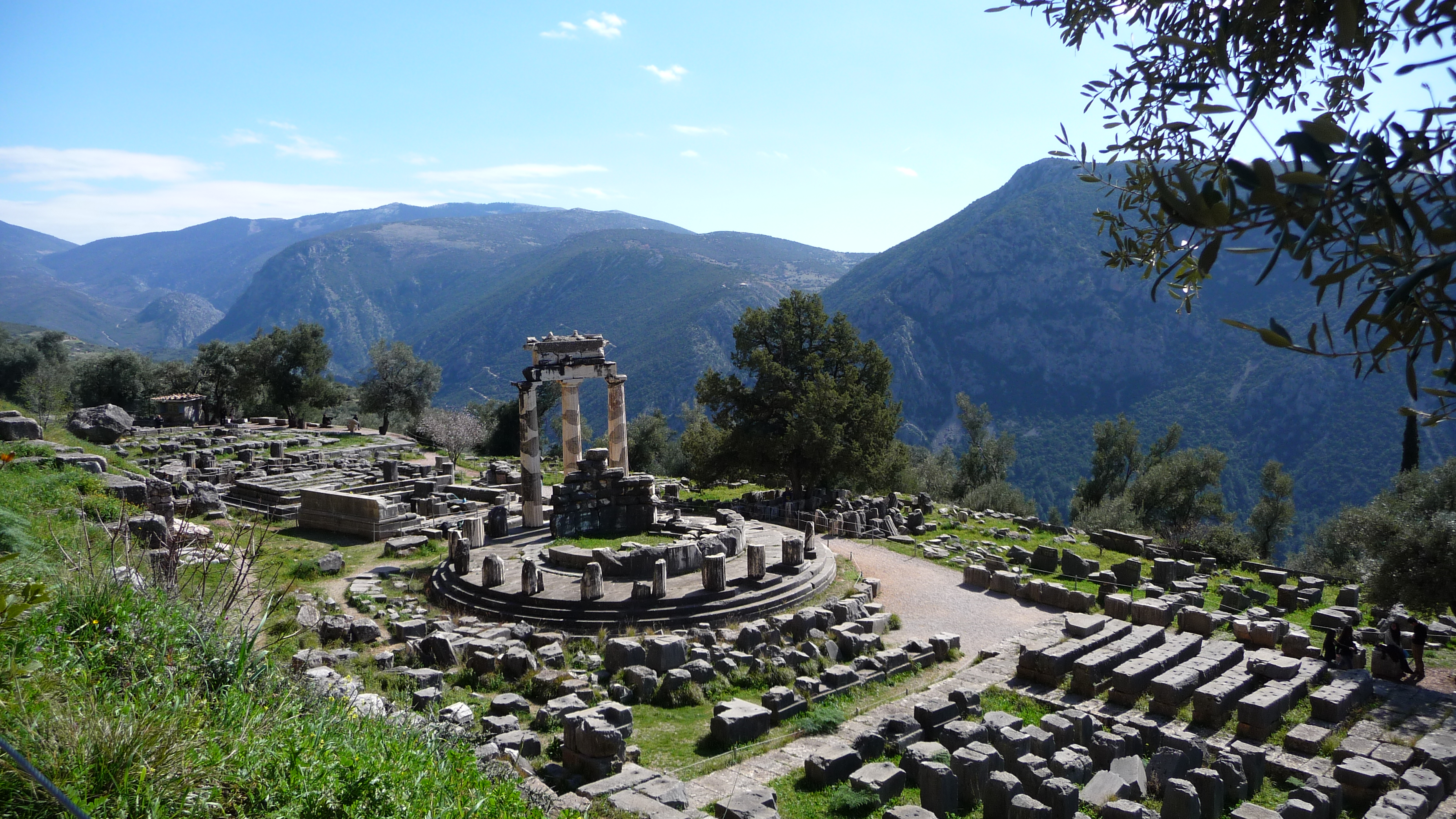
Photo: tamara semina, CC BY-SA 3.0, via Wikimedia Commons
Delphi was the most sacred oracle site in ancient Greece, perched dramatically on the southwestern slopes of Mount Parnassus at an elevation of approximately 550 meters above sea level. The precinct spans roughly 15 hectares and contains the remarkably preserved Temple of Apollo, a 5,000-seat theater carved into the hillside, and the famous Tholos rotunda with its distinctive circular columns. Visitors today can explore extensive archaeological ruins including the Sacred Way lined with treasuries built by various Greek city-states, the ancient stadium where Pythian Games were held, and the Castalian Spring where pilgrims purified themselves. The site's commanding position offers breathtaking views across the valley of Pleistos to the Gulf of Corinth, making clear why ancient Greeks believed this was the center of their world. Some theorists have proposed that Delphi's role as the ancient world's most important oracle site—and its symbolic designation as the "navel of the world"—suggests it may have served as a communication device or beacon for extraterrestrial contact. However, archaeological and geological evidence indicates that the Oracle's prophetic visions likely resulted from ethylene gas seeping through fissures in the bedrock beneath the temple, a natural phenomenon capable of inducing the trance-like states witnesses described. The Omphalos stone, rather than functioning as an alien transmitter, appears to have been a purely symbolic marker of Delphi's spiritual and cultural importance to the Greek world.
Timeline
Establishment of the Delphic sanctuary dedicated to Apollo, beginning its role as a major oracle site
Construction of the major Temple of Apollo and peak period of the Oracle's influence across the Mediterranean
Emperor Theodosius I closes the oracle as part of the Christianization of the Roman Empire
UNESCO inscribes Delphi as a World Heritage Site recognizing its profound influence on the ancient world
What the Show Claims
- ›Known as the 'navel of the world' and possibly served as an alien transmitter or beaconS03E03S19E15
- ›The Oracle Pythia received visions from alien beings through intoxicating volcanic gasesS03E03S19E15
- ›The Omphalos stone functioned as an alien communication deviceS03E03S19E15
- ›Giorgio Tsoukalos proposed the site was an alien transmitterS19E15
From the Transcripts
“They're in Cuzco, at Delphi in Greece, at Sardinia, and in Egypt.”
What Archaeology Says
Archaeological investigations at Delphi began in earnest with the French Archaeological School in 1892, leading to systematic excavations that uncovered the extraordinary wealth of this ancient sanctuary. The excavations revealed a complex of buildings constructed over more than a millennium, with the Temple of Apollo rebuilt several times following earthquakes and fires. The famous adyton, or inner sanctum where the Pythia delivered her prophecies, has been extensively studied, revealing a natural fissure in the bedrock that likely emitted ethylene gas.
Modern geological and chemical analysis has provided compelling explanations for the Oracle's supposed supernatural powers. In 2001, researchers including geologist Jelle de Boer discovered that Delphi sits at the intersection of two major fault lines, and springs in the area contain ethylene, methane, and hydrogen sulfide gases. Laboratory studies demonstrate that ethylene can induce euphoric trances and hallucinations at the concentrations likely present in the ancient temple, providing a scientific basis for the Pythia's altered states of consciousness.
The archaeological record shows Delphi functioned as a sophisticated religious and political institution rather than any kind of technological facility. The site's treasury buildings contained thousands of precious offerings from across the Greek world, while inscriptions reveal complex administrative systems for managing pilgrims and delivering oracular pronouncements. The Omphalos stone itself appears to be a marble monument marking symbolic rather than literal centrality, with no unusual properties beyond its religious significance.
While much about Delphi's operations has been clarified through excavation and scientific study, some aspects of the Oracle's practices remain debated among scholars. The exact mechanism by which the Pythia delivered prophecies, the role of the temple priests in interpreting her utterances, and the specific geological processes that created the site's gaseous emissions continue to generate scholarly discussion and research.
Mysteries & Fun Facts
The Oracle was always a local woman over 50 years old who served for life and was required to remain celibate during her tenure
The phrase "Know thyself" was inscribed on the Temple of Apollo and became one of the most famous philosophical maxims of ancient Greece
The Pythian Games held at Delphi were second only to the Olympics in prestige and featured musical and poetic competitions alongside athletic events
Delphi's Sacred Way was lined with more than 3,000 statues and monuments, making it one of the most densely decorated religious sites in the ancient world
Planning a Visit
Delphi is easily accessible to visitors year-round, with well-maintained paths connecting the archaeological site to an excellent museum housing artifacts including the famous Charioteer of Delphi bronze statue. The site requires moderate walking ability as it involves climbing ancient stone paths up the mountainside, but the main monuments are accessible to most visitors.
Athens, approximately 180 kilometers southeast
Spring and autumn offer the most pleasant weather for exploring the mountainous site, while summer can be quite hot despite the elevation. Early morning visits help avoid crowds and provide the best lighting for photography of the ruins against the dramatic mountain backdrop.
Featured Locations7 sites within this area
Oracle of Delphi (Omphalos Stone)
GreeceOracle of Delphi
GreeceTemple of Apollo, Delphi (Mount Parnassus)
GreeceTemple of Apollo, Delphi
GreeceDelphi, Greece
GreeceOracle of Delphi (Temple of Apollo)
GreeceOracle of Delphi, Delphi
GreeceRelated Sites
Gobekli Tepe
Another ancient sacred site that the show suggests served as a communication point with extraterrestrial visitors
Avebury Stone Circle
A stone circle complex in Britain that Ancient Aliens theorists similarly propose was designed for cosmic communication and astronomical observations
Chichen Itza - Kukulkan Temple
A Maya ceremonial center with acoustic properties and astronomical alignments that the show connects to possible alien contact
Featured In2 episodes
Historical data sourced from Wikipedia