Lascaux Cave
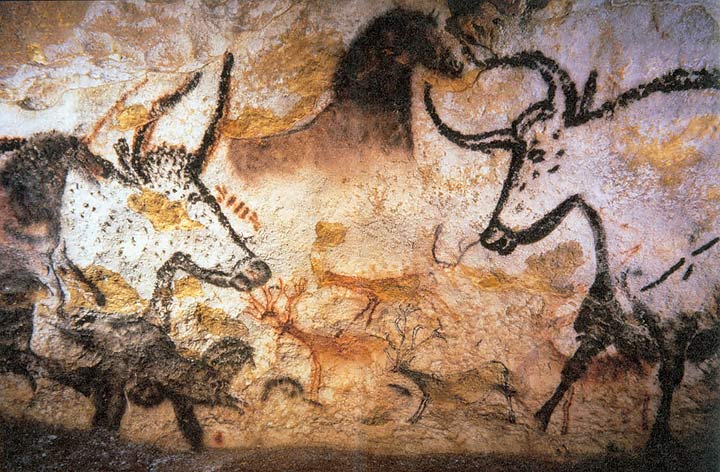
Photo: EU, Public domain, via Wikimedia Commons
Lascaux is a network of limestone caves located near Montignac in southwestern France's Dordogne department, containing over 600 prehistoric wall paintings that cover the interior surfaces. The cave system extends approximately 250 meters in length and reaches depths of up to 30 meters below ground level. These Upper Paleolithic artworks, created between 17,000 and 22,000 years ago, represent one of the finest examples of prehistoric cave art ever discovered. The paintings primarily depict large animals including aurochs, horses, deer, and bison that roamed the region during the last Ice Age. Due to conservation concerns, the original cave has been closed to public access since 1963, with visitors now experiencing the art through detailed replicas at Lascaux II and the newer Lascaux IV facility.
Timeline
Cro-Magnon artists create the cave paintings over multiple generations
Four teenagers discover the cave while following their dog Robot into a hole created by a fallen tree
Cave opens to the public, welcoming over 1,200 visitors daily
Original cave closed to public due to damage from carbon dioxide, heat, and humidity from visitors
Lascaux inducted into UNESCO World Heritage List as part of the Prehistoric Sites and Decorated Caves of the Vézère Valley
Lascaux II replica opens to the public, featuring exact reproductions of the Great Hall of the Bulls and Painted Gallery
What the Show Claims
- ›Cave paintings dating to 17,000 years ago depict beings in what appear to be spacesuitsS01E01
- ›The 'Shaft Scene' shows a bird-headed figure and a bison — possibly depicting an alien encounterS04E03
- ›The precise rendering of animals suggests alien-taught techniqueS01E01
- ›Maps of star constellations encoded in animal groupings — alien astronomical knowledgeS07E05
Theorist Takes
“The Birdman of Lascaux was considered to be a‐a shamanistic figure. But we have to ask the question: could this be something more? Could this be an otherworldly being, an extraterrestrial being, who interacted with this prehistoric culture in France?”
From the Transcripts
“Curiously, a similar figure to the bird‐headed Anunnaki exists in cave art discovered in Lascaux, France, which dates back to roughly 16,000 BC.”
What Archaeology Says
Archaeological investigation of Lascaux began immediately after its 1940 discovery, with systematic studies revealing the sophisticated techniques employed by Upper Paleolithic artists. The cave contains multiple chambers, including the famous Great Hall of the Bulls, which features four enormous black aurochs bulls, the largest measuring over 5 meters in length. Researchers have identified that the artists used the natural contours of the cave walls to create three-dimensional effects, employing techniques like shading, perspective, and even animation-like sequences.
The scientific consensus attributes these masterworks to anatomically modern humans (Cro-Magnon) who possessed advanced cognitive abilities and artistic skills. Analysis of the pigments reveals sophisticated knowledge of mineral chemistry, with artists using iron oxides for reds and yellows, manganese oxides for blacks, and charcoal for deep blacks. The paintings were created using various techniques including finger painting, brushes made from animal hair, and blow-pipe methods for creating stencils and gradations.
The controversial 'Shaft Scene,' located in the deepest part of the cave, depicts a wounded bison, a falling man with a bird-like head, and a bird perched on a pole. Most archaeologists interpret this as either a hunting accident, a shamanic vision, or ritualistic imagery common in prehistoric art. The supposed 'spacesuit' figures represent standard examples of pareidolia — the human tendency to perceive familiar patterns in ambiguous visual stimuli.
While the astronomical interpretation of certain animal groupings has been proposed by some researchers, this theory remains highly debated and lacks consensus among archaeoastronomers. What remains genuinely mysterious is the exact purpose of these deep cave paintings and why ancient humans invested such enormous effort in creating art in these difficult-to-access underground chambers.
Mysteries & Fun Facts
The cave was discovered by four teenagers following their dog Robot, who fell into the cave entrance while chasing a rabbit
The original cave had to be closed after just 15 years because 1,200 daily visitors were damaging the paintings with their breath and body heat
The largest bull painting in the Great Hall measures over 5 meters long, making it one of the largest prehistoric animal depictions ever found
Artists used the natural bumps and curves of the cave walls to make their animal paintings appear three-dimensional
Planning a Visit
The original Lascaux cave remains permanently closed to protect the prehistoric art, but visitors can experience the paintings through Lascaux II (a partial replica) and the newer Lascaux IV - Centre International de l'Art Pariétal, which opened in 2016. Lascaux IV features complete reproductions of the cave paintings using advanced digital technology and offers immersive educational experiences. Advance booking is recommended, especially during peak tourist season.
Périgueux, approximately 40 kilometers to the southwest
Spring through early autumn (April to October) offers the most pleasant weather for exploring the Dordogne region, though the replica caves are accessible year-round. Summer months see the highest visitor numbers, so spring and autumn provide a better experience with smaller crowds.
Related Sites
Cave of Altamira
Another prehistoric cave art site featured on Ancient Aliens with similar claims about advanced artistic knowledge
Gobekli Tepe
Contemporary prehistoric site that challenges conventional timelines of human civilization development
Çatalhöyük
Ancient settlement showing sophisticated prehistoric human capabilities and artistic expression
Featured In3 episodes
Historical data sourced from Wikipedia