Cave of the Apocalypse, Patmos Island
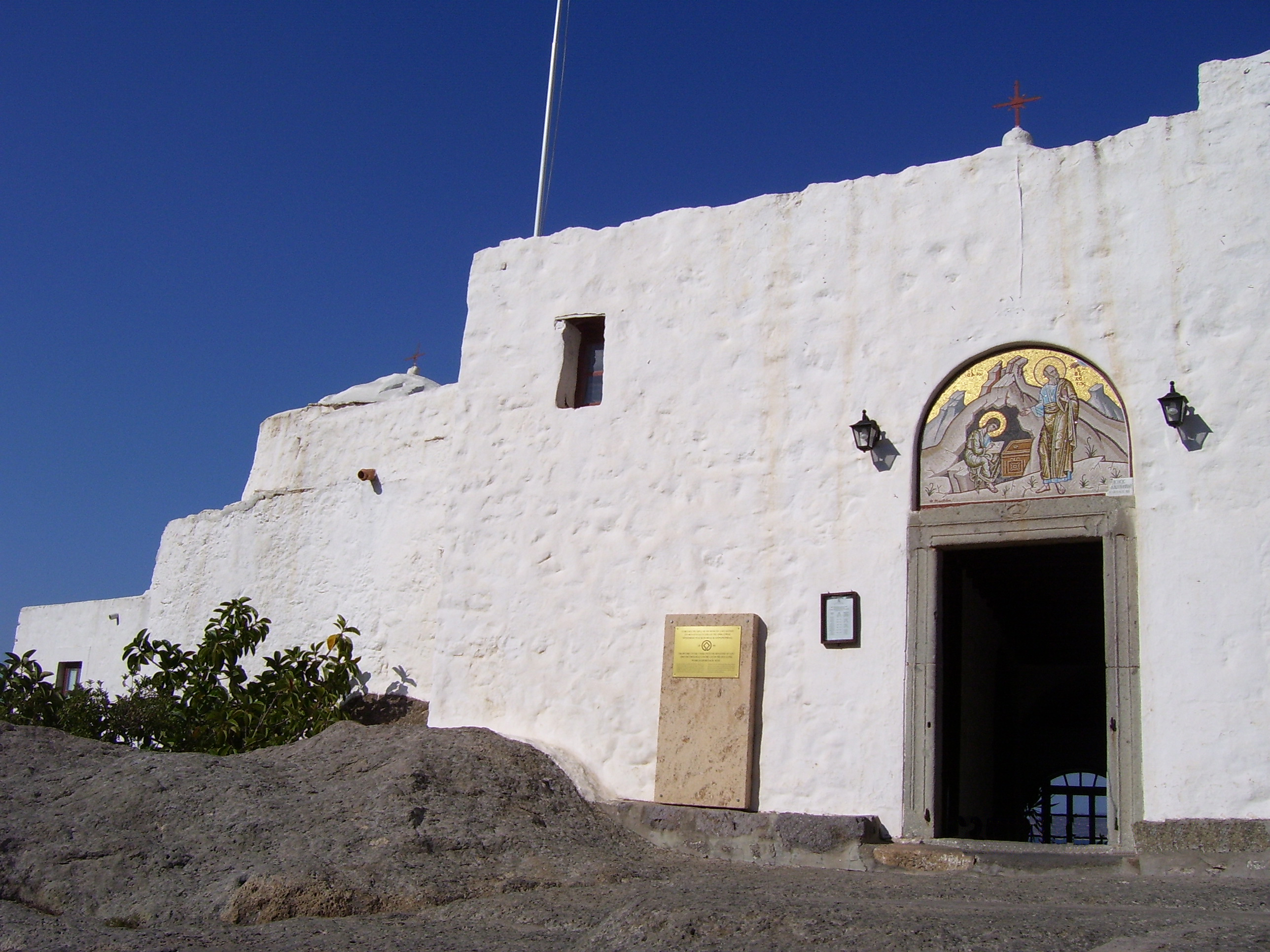
Photo: Vladimir Boskovic at English Wikipedia, Public domain, via Wikimedia Commons
The Cave of the Apocalypse is a natural grotto located on the Greek island of Patmos, traditionally venerated as the site where St. John the Theologian received his divine visions and composed the Book of Revelation around 60–90 AD. The cave features a distinctive triple fissure in its rocky ceiling, believed by tradition to represent the Trinity, through which divine light is said to have entered during John's revelation. Visitors today can explore the underground chapel built within the cave, which houses ancient frescoes and religious artifacts accumulated over centuries of Christian pilgrimage. The site sits approximately 3 kilometers from the main town of Chora and forms part of the larger monastic complex that dominates Patmos Island's spiritual landscape.
Timeline
St. John the Theologian traditionally believed to have received visions and written the Book of Revelation in the cave
Monastery of St. John the Theologian established on Patmos by Blessed Christodoulos
Cave of the Apocalypse designated as UNESCO World Heritage Site along with the Monastery of St. John
What the Show Claims
- ›St. John's vision of the New Jerusalem descending from the sky describes an extraterrestrial craft or mothershipS16E01
- ›The city's measurements in multiples of 12 encode alien knowledge rather than symbolic numerologyS16E01
Theorist Takes
“In revelation this city descends from out of the sky, which leads to question, could the new jerusalem have been a mothership or, uh, a city that descends from the ship?”
From the Transcripts
“Patmos island, greece. 60 ad. In a mountaintop cavern known as the cave of the apocalypse, st. John the theologian wrote the last book... The book of revelation.”
What Archaeology Says
Archaeological investigation of the Cave of the Apocalypse has been limited due to its continuous use as a sacred site for nearly two millennia. The cave itself appears to be a natural formation in the volcanic rock of Patmos, with the characteristic three-way fissure in the ceiling being a geological feature rather than human modification. Early Christian artifacts and inscriptions found within the cave generally date to the Byzantine period, supporting the site's long-standing religious significance.
Scholars have extensively studied the historical context of the Book of Revelation's composition, with most mainstream researchers dating the text to the late first century AD during the reign of Emperor Domitian. The apocalyptic literature genre was well-established in Jewish and early Christian traditions, with symbolic numerology being a common literary device of the period. The number 12 and its multiples held particular significance in Hebrew tradition, representing the twelve tribes of Israel and divine completeness.
What remains genuinely intriguing about the site is the persistence of the oral tradition linking it to St. John's exile and literary work. While historical records from the first century AD are sparse, the early establishment of Christian communities on Patmos and the subsequent monastic tradition suggest some historical foundation for the cave's significance. The exact mechanisms by which early Christian communities preserved and transmitted the location's sacred associations across centuries continue to fascinate historians and theologians alike.
Mysteries & Fun Facts
The cave features a natural triple fissure in its ceiling, traditionally interpreted as a symbol of the Trinity
Patmos Island was historically used as a place of exile by the Roman Empire, making it a fitting location for St. John's banishment
The cave remains an active place of worship with regular Orthodox Christian services held within the grotto
Local tradition claims that the silver spot on the cave wall marks where St. John rested his head while receiving his visions
Planning a Visit
The Cave of the Apocalypse is generally accessible to visitors as part of organized tours or independent visits, though access may be restricted during religious services. The site requires a short walk from the main road and involves navigating some uneven rocky terrain to reach the cave entrance.
Patmos Town (Chora) is approximately 3 kilometers away
Spring through early fall offers the most comfortable conditions for visiting, with May through September providing the best weather and longest daylight hours. Summer months can be quite crowded with pilgrims and tourists.
Related Sites
Lalibela Rock-Hewn Churches
Another sacred cave site with Christian significance and claims of divine revelation
Cave of Altamira
Ancient cave site associated with spiritual visions and symbolic art that some theorists interpret as extraterrestrial contact
Axum Obelisk
Ethiopian religious site connected to biblical traditions and ancient astronaut theories about divine visitations