Kaaba (Mecca)
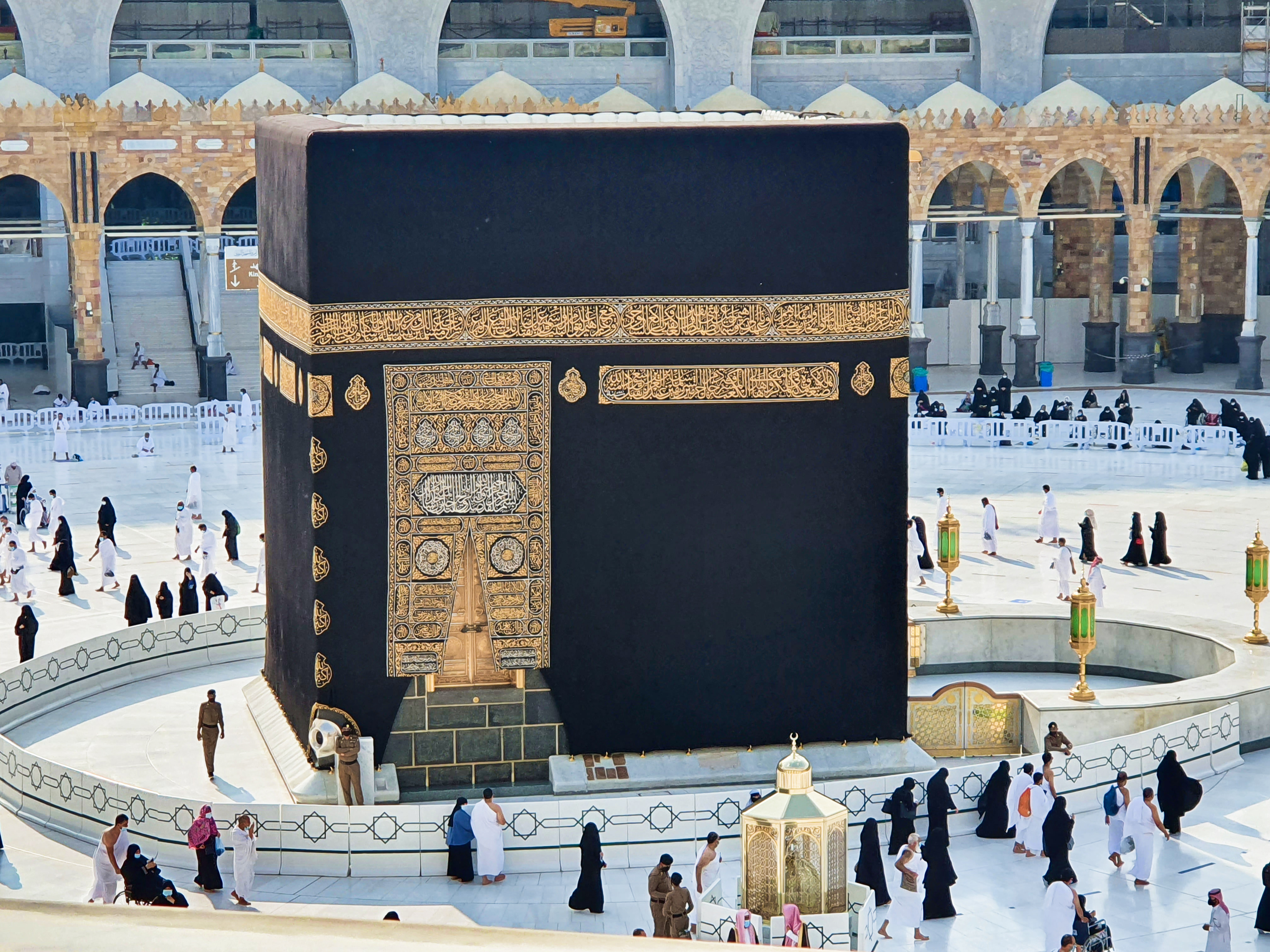
Photo: Richard Mortel, CC BY 2.0, via Wikimedia Commons
The Kaaba stands as a cube-shaped building at the center of Islam's holiest mosque in Mecca, measuring approximately 15 meters in height, length, and width. Draped in a black silk cloth called the Kiswah, the structure houses the sacred Black Stone embedded in its eastern corner, believed to be a meteorite fragment. Located in the sacred valley of Mecca in western Saudi Arabia, the site sits roughly 70 kilometers inland from the Red Sea coast. As the focal point toward which Muslims worldwide direct their prayers, the Kaaba represents the spiritual center of Islam and attracts millions of pilgrims annually during the Hajj pilgrimage.
Timeline
Traditional Islamic accounts place the original construction by Ibrahim (Abraham) and his son Ismail at this approximate period
Pre-Islamic renovation of the Kaaba structure, during which the young Muhammad reportedly helped place the Black Stone
Prophet Muhammad's final pilgrimage establishes the Islamic rituals still practiced today
Major reconstruction following flood damage creates much of the current structure's foundation
What the Show Claims
- ›The Black Stone of the Kaaba represents evidence of extraterrestrial contact, having fallen from heaven as described in Islamic traditionS03E03
- ›The Kaaba's cosmic significance and orientation may indicate ancient alien visitation to this sacred siteS03E03
Theorist Takes
“Muhammad himself threw out all of the other gods, the deities and statues. But he retained the one strange thing that was there: the black stone, the extraterrestrial object that's still worshipped today at Mecca.”
From the Transcripts
“Mecca, Saudi Arabia. 50 miles from the Red Sea, this is Islam's holiest city. On the eastern side of the Kaaba is a meteorite stone which is embedded in the corner of the Kaaba.”
What Archaeology Says
Archaeological investigation of the Kaaba itself remains extremely limited due to its sacred status and restricted access, with most scholarly understanding derived from historical texts and architectural analysis. The structure has undergone numerous reconstructions throughout history, with the current building dating primarily to Ottoman-era renovations in the 17th century, built upon much older foundations.
The Black Stone embedded in the structure presents the most intriguing physical evidence, with scientific analysis suggesting it is indeed meteoric in origin, composed of several fragments held together by a silver frame. Islamic historical accounts describe the stone as having been venerated even in pre-Islamic times, indicating the site's significance predates Islam by potentially centuries or millennia.
Archaeological evidence from the broader Mecca region suggests human settlement dating back several millennia, with the valley's position along ancient trade routes contributing to its religious and commercial importance. However, the sacred nature of the site means that comprehensive excavation remains impossible, leaving many questions about the Kaaba's pre-Islamic history and the exact origins of its various components unanswered by modern archaeological methods.
What remains genuinely mysterious is the precise age of the Black Stone itself and the full extent of pre-Islamic religious practices at the site, as historical records become increasingly sparse the further back researchers attempt to trace the location's significance.
Mysteries & Fun Facts
The Kaaba's Kiswah covering is replaced annually and the old cloth is traditionally cut into pieces and given as gifts to Muslim nations and dignitaries
The structure is positioned so that Muslims worldwide face toward it during prayer, creating a unique global orientation system centered on this single point
The Black Stone fragments are held together by a silver frame, as the original meteorite broke apart over the centuries
The Kaaba has been reconstructed multiple times throughout history due to flood damage, fire, and structural concerns
Planning a Visit
Access to the Kaaba is restricted to Muslim pilgrims performing Hajj or Umrah, with entry requiring proper religious documentation and adherence to strict protocols. The sacred site operates under the management of Saudi Arabian religious authorities, with specific times and procedures governing when pilgrims may approach the structure for the traditional circumambulation ritual.
Mecca, Saudi Arabia (the site is located within the city itself)
Pilgrimage timing depends on religious observance, with Hajj occurring during specific Islamic calendar dates and Umrah available year-round. The cooler months generally provide more comfortable conditions for the physically demanding pilgrimage rituals.
Featured Locations1 sites within this area
Mecca (Al-Masjid al-Haram)
Saudi ArabiaIslam's shrine at Mecca displays a Black Stone believed to have fallen from heaven. Ancient Astronaut theorists suggest this sacred object may be an extraterrestrial artifact.
Related Sites
Gobekli Tepe
Ancient sacred site with astronomical alignments and mysterious pre-historic religious significance
Avebury Stone Circle
Sacred stone circle with cosmic alignments that served as a spiritual center for ancient peoples
Externsteine
Sacred Germanic stones with religious significance and alleged connections to celestial phenomena