Ancient Sumerian ruins of Nineveh (clay tablet discoveries)
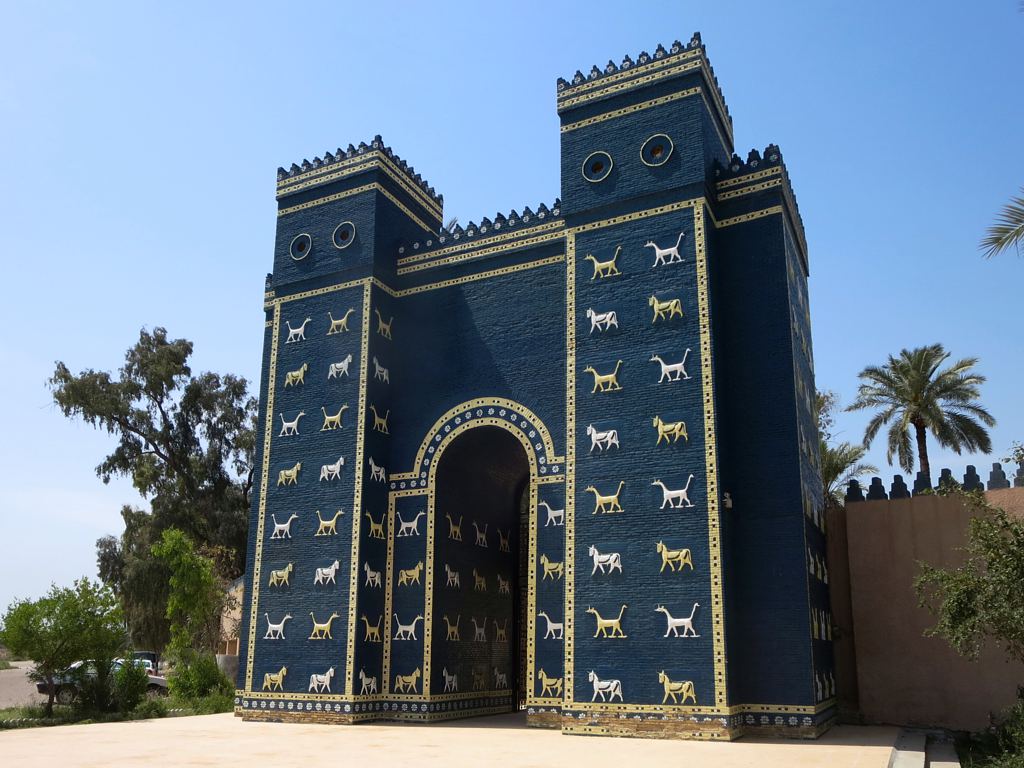
Photo: David Stanley, CC BY-SA 3.0, via Wikimedia Commons
The ancient Assyrian city of Nineveh, located near modern Mosul in northern Iraq, serves as one of the most significant archaeological sites for understanding early human civilization through its vast collection of cuneiform tablets. The site encompasses the ruins of what was once the largest city in the world around 700 BC, covering approximately 1,800 acres along the Tigris River. Today, visitors can explore the partially reconstructed gates and walls, though much of the ancient city lies beneath modern settlements. The Royal Library of Ashurbanipal, discovered here in the 19th century, contained an estimated 30,000 cuneiform tablets and fragments, representing the world's first organized library. These clay tablets, dating from various periods of Mesopotamian history, provide our earliest written records of human laws, literature, and religious beliefs.
Timeline
Earliest settlement established at Nineveh site along the Tigris River
Development of cuneiform writing system begins in Mesopotamian region
King Sennacherib makes Nineveh capital of Assyrian Empire and builds great library
Austen Henry Layard conducts major excavations, discovering the Royal Library
George Smith translates the Epic of Gilgamesh tablets, revealing flood narrative parallels to biblical accounts
What the Show Claims
- ›Sumerian cuneiform tablets describe the Anunnaki, an alien race that came to Earth to mine goldS01E03
- ›The tablets reveal that aliens genetically engineered humans as a slave species called the AdamuS01E03
- ›Ancient Mesopotamian texts contain advanced knowledge that early humans could not have possessed independently
Theorist Takes
“Zecharia Sitchin has essentially suggested that the reason why we were visited in the remote past is because the ancient astronauts' home planet needed gold for their atmosphere and that their gold content in the atmosphere was depleting, so they came to Earth in order to mine gold and bring it back to their home planet.”
“So it's very possible that our genetic evolution was a process done by the Anunnaki to create us in their image and after their likeness.”
“What is fascinating about the 'Epic of Gilgamesh' is the fact that it relates to us a story of Enkidu, who allegedly was a giant. It is possible that Enkidu, this wild hairy beast, this giant, could have been of extraterrestrial origin. Because that is what the ancient Sumerian texts are saying.”
“The Anunnaki, which comes from Sumer, our modern-day Iraq, speak of gods that literally created us... humans... in their image and after their likeness.”
“So the knowledge that came out from Nineveh is a complete look of a civilization that sprung up out of nowhere. Many of the tablets that were unearthed in Nineveh describe nuances into the actual mindset of the gods, these Anunnaki, and they describe being flesh-and-blood beings just like us.”
“We see multiple references in the cuneiform tablets that are allegedly the records of the Anunnaki. That, in fact, they did originate from Mars, that this is not a dead, isolated, rocky world with nothing on it, but there was life.”
“In the ancient texts of Sumeria, we have descriptions of these beings descending from the sky called the Anunnaki. The term 'Anunnaki' means 'those who from the heavens came.'”
“The Babylonian star catalogues are an interesting collection of information with accurate mathematical equations, distance between planets, esoteric knowledge that a primitive civilization really shouldn't have. It really starts to raise the question as to how they got this information and what they were using it for.”
“The Sumerians talk about a civilization that came here from above on another planet called Nibiru. And they called these creatures the Anunnaki. High level people who came here to mine for gold. And in order to do it, they need to genetically alter the species that happened to be on the planet at the time.”
From the Transcripts
“In the 19th century, archaeologists exploring the ancient ruins of Nineveh discovered 22,000 of these clay tablets. When they were later translated, the texts described many stories similar to those found in the Judeo-Christian Bible.”
“Along the east bank of the Tigris River, opposite the city of Mosul, lie the ruins of the ancient city of Nineveh, a place originally inhabited by the Sumerians of Mesopotamia. Here, in 1842, British archaeologist Austen Henry Layard unearthed the ruins of the great library of Assurbanipal”
“In the remains of the ancient city of Nineveh, Sumerian tablets dating back to as early as 1800 BC tell the story of King Gilgamesh.”
“Located on the east bank of the Tigris River, opposite the modern city of Mosul, lie the remains of the ancient city of Nineveh. Here, in 1849, 6,000-year-old Sumerian clay tablets were discovered.”
“In 1849, Austen Henry Layard made an archaeological expedition to the city of Nineveh, a city that's mentioned in the Bible. And in his excavations, he discovered the palace of Sennacherib.”
“During an excavation of the Biblical city of Nineveh, a team led by the eminent British archeologist Austen Henry Layard, discovers the ruins of the ancient Assyrian library of Ashurbanipal.”
“The text was first discovered in 1849 by British archeologist Sir Austen Henry Layard while searching the ruins of the Library of Ashurbanipal in Nineveh.”
“On the eastern bank of the Tigris River, near the city of Mosul, a team of archaeologists from the British Museum discovers thousands of clay tablets containing cuneiform script they believe to have been written by Babylonian priests in the seventh century B.C.”
“In 1849, in what is now Iraq, British archaeologist Austen Henry Layard uncovered numerous Sumerian clay tablets inscribed with cuneiform script dating to 4000 B.C.”
“In 1849, British archaeologist Austen Henry Layard discovered 22,000 clay tablets in the ancient Sumerian city of Nineveh, in an area now known as Iraq.”
What Archaeology Says
The systematic excavation of Nineveh began in the mid-19th century when British archaeologist Austen Henry Layard uncovered the remains of the Royal Library of Ashurbanipal. This extraordinary collection contained approximately 22,000 well-preserved cuneiform tablets and fragments, representing centuries of accumulated knowledge from across the Mesopotamian world. The tablets cover subjects ranging from administrative records and legal codes to epic literature and religious hymns, with many texts copied from much earlier Sumerian originals dating back to around 3500 BC.
Key discoveries include the complete Epic of Gilgamesh, the world's oldest known work of literature, as well as the Enuma Elish creation epic and numerous king lists that have helped archaeologists reconstruct ancient Near Eastern chronology. Scholars like George Smith, who first translated the flood narrative in Gilgamesh, and later researchers have identified clear parallels between these ancient texts and later biblical narratives, suggesting shared cultural traditions across the region. The tablets also contain practical knowledge including mathematical calculations, astronomical observations, and medical treatments that reveal the sophistication of ancient Mesopotamian civilization.
While the archaeological consensus views these tablets as mythological and religious literature reflecting the worldview of ancient peoples, some aspects of their content remain genuinely intriguing. The detailed astronomical knowledge, precise mathematical concepts, and complex creation narratives demonstrate a level of intellectual sophistication that continues to surprise researchers. However, mainstream archaeology interprets the Anunnaki and similar divine beings described in the texts as mythological figures representing natural forces and political power structures rather than literal historical accounts.
Many tablets remain untranslated due to the specialized nature of cuneiform scholarship, and new discoveries continue to emerge from ongoing excavations in the region. The site suffered significant damage during recent conflicts, with reports of artifact looting and destruction of archaeological remains, making the preservation and study of existing collections even more critical for understanding humanity's earliest civilizations.
Mysteries & Fun Facts
The Royal Library of Ashurbanipal was organized using the world's first known library catalog system
Some cuneiform tablets were accidentally baked and preserved when the library burned during Nineveh's destruction in 612 BC
The Epic of Gilgamesh tablets discovered here contain a flood story that predates the biblical account by over 1,000 years
King Ashurbanipal boasted that he was the only Assyrian king who could read and write cuneiform script
Planning a Visit
Access to the Nineveh archaeological site near Mosul is currently limited due to regional security concerns, though the reconstructed gates and some excavated areas may be accessible through organized tours when conditions permit. Many of the most significant tablet discoveries are housed in museums worldwide, including the British Museum in London and the Iraq Museum in Baghdad.
Mosul, Iraq (approximately 2 kilometers)
If visiting becomes possible, the cooler months from October to April would be preferable, avoiding the intense summer heat of the Mesopotamian plain.
Featured Locations12 sites within this area
Ancient City of Khorsabad
IraqNineveh (Assyrian Palace Library, ancient Nineveh)
IraqRuins of Nineveh (Library of Assurbanipal)
IraqAncient astronaut theorists argue that cuneiform clay tablets unearthed at Nineveh describe the Anunnaki — giant extraterrestrial beings — who genetically engineered Homo sapiens from early hominids to serve as gold miners, paralleling the biblical story of Adam and Eve. Mainstream archaeology interprets the Sumerian creation texts as mythological narratives reflecting early Mesopotamian religious and cosmological beliefs.
Mosul, Iraq (MQ-9 Reaper orb sighting)
IraqNineveh (ancient city)
IraqTheorists argue that Sumerian tablets from Nineveh dating to around 1800 BC, which describe Enkidu — a hairy, giant wild man in the Epic of Gilgamesh — are early accounts of a Bigfoot-like creature genetically engineered by extraterrestrial Anunnaki as a slave laborer. Mainstream scholars interpret Enkidu as a literary archetype representing wild nature in contrast to civilized humanity.
Nineveh (ancient city, Mosul)
IraqTheorists argue that 6,000-year-old Sumerian clay tablets discovered at Nineveh describe an alien race called the Anunnaki who created humans and had a relationship with the Greys, providing textual evidence of extraterrestrial contact. Mainstream archaeology identifies the tablets as cuneiform records of Sumerian mythology, administrative data, and literature, with the Anunnaki understood as the high gods of the Mesopotamian pantheon.
Palace of Ashurbanipal, Nineveh
IraqAncient astronaut theorists argue the 20,000–30,000 tablets unearthed at Nineveh, including the Enuma Elish creation myth, are literal accounts of extraterrestrial beings who genetically engineered humanity. Mainstream scholars regard the Enuma Elish as a Babylonian religious text composed around the 11th century BC, drawing on older Mesopotamian traditions.
Library of Ashurbanipal, Nineveh
IraqAncient astronaut theorists argue that the Enuma Elish tablets recovered from Nineveh, when correctly retranslated replacing 'heaven' with 'space,' describe the Anunnaki using Mars as a supply base before a catastrophic event destroyed it. Mainstream Assyriologists regard the Enuma Elish as a Babylonian creation myth with no literal reference to space travel or extraterrestrial beings.
Nineveh (Library of Ashurbanipal), Iraq
IraqTheorists argue that the Babylonian Enuma Elish tablets discovered at Nineveh describe the Anunnaki as flesh-and-blood extraterrestrials who descended from the sky in flying vehicles and created humanity. Mainstream scholars interpret the Enuma Elish as a Babylonian creation myth with theological and political dimensions, not a literal historical account.
Nineveh (Babylonian Tablet Discovery Site)
IraqTheorists argue the Babylonian star catalogues found near Mosul contain accurate mathematical equations and celestial knowledge too advanced for a primitive civilization, suggesting it was provided by extraterrestrial beings the Babylonians worshipped as gods. Mainstream scholars attribute the tablets to the sophisticated astronomical and religious traditions of Babylonian priestly scholars.
Nineveh / Mesopotamia (Sumerian clay tablet discovery site, modern Iraq)
IraqAncient astronaut theorists interpret Sumerian cuneiform clay tablets unearthed by Austen Henry Layard in 1849 as describing an advanced alien race called the Anunnaki who arrived 450,000 years ago and genetically engineered Homo sapiens from Neanderthals, and who may have similarly engineered hybrid animal creatures. Mainstream Assyriologists read the tablets as Mesopotamian religious and administrative literature with no literal record of alien genetic engineering.
Nineveh Clay Tablet Library (ancient Sumerian city of Nineveh, Iraq)
IraqAncient astronaut theorists, drawing on Zecharia Sitchin's translations, claim the 22,000 cuneiform tablets found at Nineveh describe the Anunnaki alien race who genetically engineered Homo sapiens and orchestrated catastrophes to control human population. Mainstream Assyriologists regard the tablets as literary, religious, and administrative texts of Mesopotamian civilization, and Sitchin's translations are rejected by professional scholars as unsupported by established cuneiform scholarship.
Related Sites
Ur / Ancient Mesopotamia
Another major Mesopotamian site that has yielded important cuneiform tablets and insights into early civilization
Gobekli Tepe
An even older site in modern Turkey that challenges our understanding of early human civilization and religious practices
Harappa
Part of the Indus Valley Civilization that developed writing systems and urban planning contemporary with early Mesopotamian cultures