Chartres Cathedral
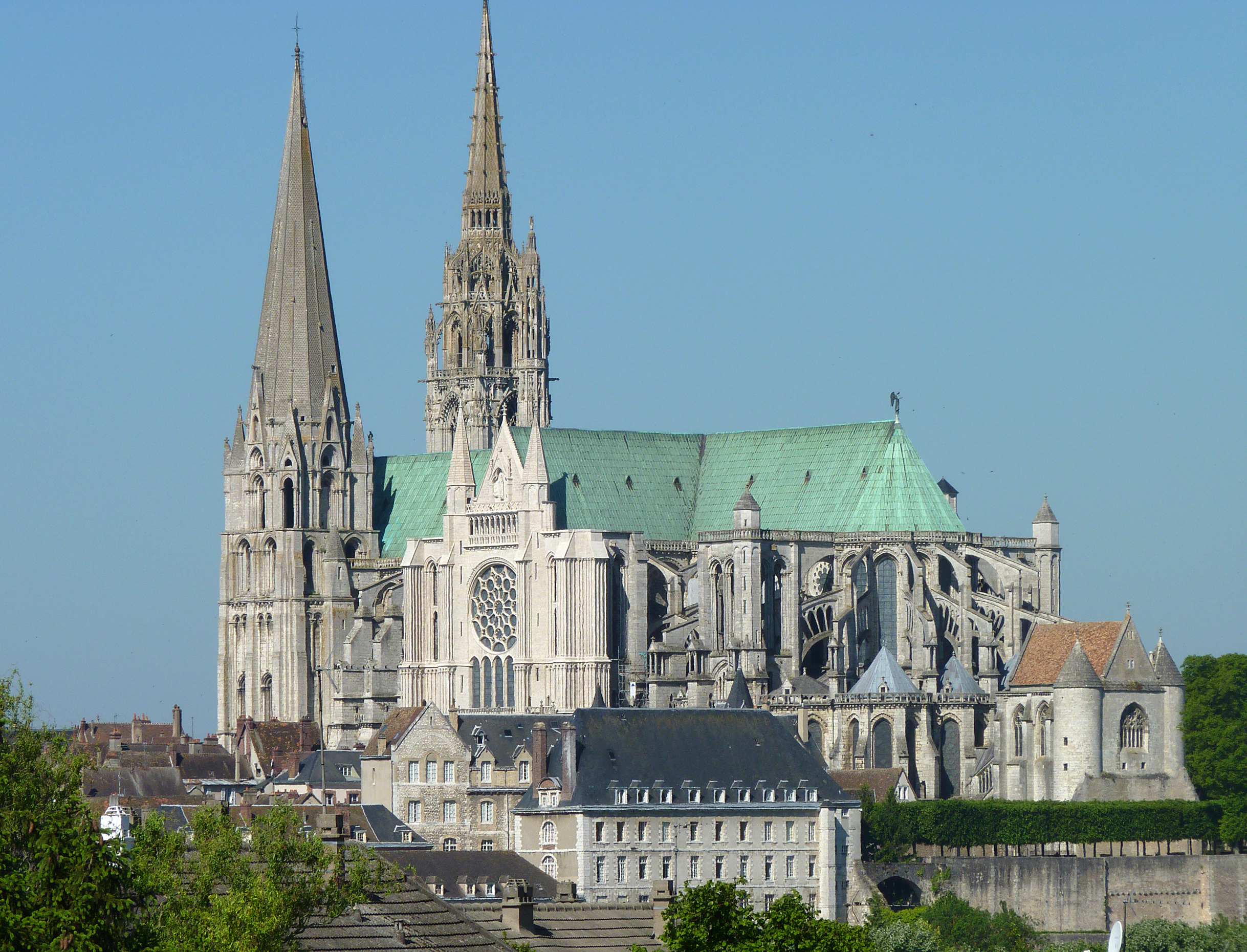
Photo: Olvr, CC BY-SA 3.0, via Wikimedia Commons
Chartres Cathedral stands as one of Europe's finest examples of High Gothic architecture, rising majestically about 80 kilometers southwest of Paris. The cathedral's western facade is dominated by two contrasting spires — a 105-meter plain pyramid completed around 1160 and a taller 113-meter Flamboyant spire added between 1507-1513. Built primarily between 1194 and 1220, it preserves most of its original 13th-century stained glass windows and features innovative flying buttresses that allowed for dramatically enlarged windows. The cathedral sits atop the remains of at least five earlier churches dating back to the 4th century, creating a layered archaeological site that spans over fifteen centuries of continuous Christian worship.
Timeline
Diocese of Chartres established as episcopal see, first cathedral built on site
South spire of current cathedral completed in plain pyramid style
Main body of Gothic cathedral constructed after fire destroyed earlier Romanesque structure
North spire completed in ornate Flamboyant Gothic style
Designated UNESCO World Heritage Site as masterpiece of French Gothic art
What the Show Claims
- ›Cathedral designed with acoustic properties to enhance sacred experience and facilitate connection with divine beingsS16E10
- ›Architectural space deliberately engineered to amplify sound for otherworldly communicationS16E10
Theorist Takes
“McGOWAN: There are certainly legends throughout Europe, and specifically France, of where the Ark of the Covenant ended up. Some say it was buried beneath Chartres Cathedral in the crypt.”
From the Transcripts
“A choir singing in chartres cathedral is magical because of the architectural space. And so these architectural spaces in all these various cultures, from these kind of secret monasteries in the far east and in the middle east, were famous for having architectural designed spaces that call up the sacred.”
“Some say it was buried beneath Chartres Cathedral in the crypt.”
What Archaeology Says
Archaeological investigations beneath Chartres Cathedral have revealed the foundations of multiple predecessor churches, creating a complex stratigraphic record spanning sixteen centuries. The current Gothic structure was built directly above earlier Romanesque basements, which themselves rest upon even earlier foundations. Excavations have documented at least five distinct building phases, beginning with the original 4th-century episcopal church and continuing through various medieval reconstructions.
Architectural historians have extensively studied the cathedral's construction techniques, particularly focusing on the innovative use of flying buttresses that characterize High Gothic design. The building represents a crucial transition in medieval architecture, where engineers solved the problem of supporting tall stone walls with large window openings. Research has shown that the cathedral's acoustic properties result from carefully calculated proportions and stone resonance characteristics optimized for Gregorian chant and liturgical music.
The cathedral's famous stained glass windows have been the subject of intensive conservation studies, revealing sophisticated medieval glassmaking techniques and pigment compositions. Scientific analysis of the glass has provided insights into 12th and 13th-century trade networks and artistic exchange across medieval Europe. The Sancta Camisa relic, believed to be the Virgin Mary's tunic, has been examined using modern textile analysis, though its actual age and provenance remain subjects of scholarly debate.
While the cathedral's construction methods and artistic achievements are well-documented, some aspects of its design continue to intrigue researchers. The precise acoustic calculations behind its remarkable sound properties, the mathematical relationships governing its proportions, and the symbolic meaning of its sculptural programs represent ongoing areas of investigation that blend archaeological evidence with architectural theory and medieval theology.
Mysteries & Fun Facts
The cathedral houses the Sancta Camisa, believed to be the tunic worn by the Virgin Mary at Christ's birth
Most of the original 13th-century stained glass windows survive intact, covering approximately 2,600 square meters
The cathedral's labyrinth set into the nave floor was used by medieval pilgrims as a symbolic journey to Jerusalem
A Black Madonna statue within the cathedral was officially crowned by Pope Pius IX in 1855
Planning a Visit
Chartres Cathedral is open to visitors year-round, with regular hours for tourists and ongoing religious services. The cathedral offers guided tours that include access to the crypt and tower climbs for panoramic views of the surrounding countryside. Visitors should check current schedules as hours may vary during religious holidays and special events.
Paris, approximately 80 kilometers northeast
Spring through early fall offers the best weather for exploring both the cathedral interior and the historic town of Chartres. Morning visits provide optimal lighting conditions for viewing the famous stained glass windows, while avoiding larger tour groups that typically arrive in the afternoon.
Featured Locations1 sites within this area
Chartres Cathedral, France
FranceTheorists cite legends that the Knights Templar hid the Ark of the Covenant beneath Chartres Cathedral in its crypt after removing it from the Holy Land. Mainstream historians consider this a medieval legend with no archaeological support.
Related Sites
Avebury Stone Circle
Another sacred site where Ancient Aliens theorists suggest acoustic properties were designed for spiritual or otherworldly communication
Externsteine
European sacred site with claimed acoustic anomalies and connections to ancient spiritual practices
Lalibela Rock-Hewn Churches
Medieval religious architecture that some researchers propose demonstrates advanced acoustic engineering for divine connection
Featured In1 episodes
Historical data sourced from Wikipedia