Wudang Mountain (Nanyan Temple)
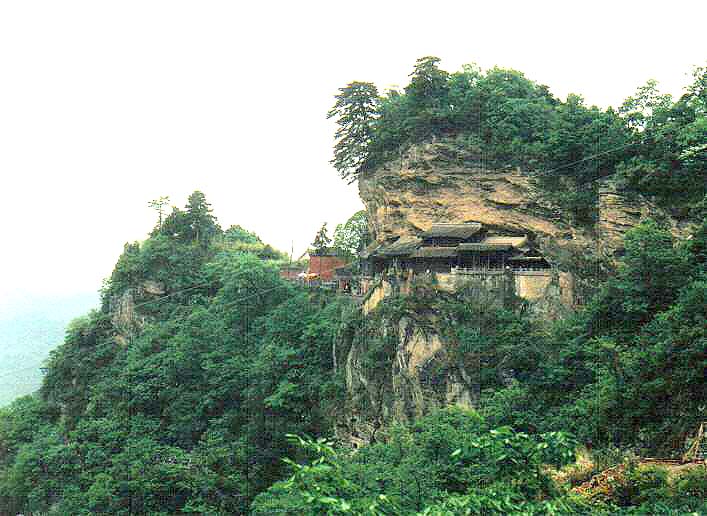
Photo: Fire Star, Public domain, via Wikimedia Commons
Wudang Mountain in Hubei Province stands as China's most sacred Taoist site, featuring a complex of temples and palaces built into dramatic cliff faces and mountain peaks. The Nanyan Temple, carved directly into the rock face, represents one of the most architecturally ambitious structures in the complex, believed to mark the spot where the Taoist deity Zhenwu achieved enlightenment. The mountain rises approximately 1,612 meters above sea level and encompasses over 312 square kilometers of sacred landscape. This spiritual center has drawn pilgrims and martial artists for over a millennium, combining natural beauty with remarkable engineering achievements that seem to defy the mountain's steep terrain.
Timeline
First Taoist temples established during the Tang Dynasty
Major expansion of temple complex during Song Dynasty
Ming Dynasty Emperor Yongle orders massive reconstruction creating the current architectural layout
Recognition as UNESCO World Heritage Site for cultural and historical significance
What the Show Claims
- ›The Taoist hero Zhenwu was an extraterrestrial who used Wudang Mountain as a launching pad to return to the starsS06E11
- ›Zhenwu's legendary 'dragons' were misidentified spacecraft rather than mythological creaturesS06E11
Theorist Takes
“So you have to wonder if this dragon that they were describing isn't really some kind of spaceship? If Zhenwu was using the Wudang Mountain and the cliff face that was so inaccessible as his launching pad to make his journeys, the people down below would look up and they would see this fiery dragon and lights in the sky and a roar of flame and thunder and to them it was a dragon.”
From the Transcripts
“Located high in the mist-covered peaks and cliffs of Wudang Mountain is a remarkable Taoist complex of temples and palaces. Some dating back to the seventh century A.D.”
What Archaeology Says
Archaeological investigations at Wudang Mountain have revealed a complex construction history spanning over 1,400 years, with the earliest structures dating to the Tang Dynasty period around the 7th century AD. The site demonstrates remarkable engineering achievements, particularly in how builders integrated massive stone structures into seemingly impossible cliff-face locations, requiring sophisticated understanding of geology and structural engineering that continues to impress modern architects.
Excavations have uncovered evidence of multiple construction phases, with the most significant expansion occurring during the Ming Dynasty under Emperor Yongle's patronage in the early 15th century. This period saw the creation of the current architectural masterpiece, including the gravity-defying Nanyan Temple that appears to hang from the cliff face. Archaeological evidence suggests the builders used a combination of traditional Chinese architectural techniques and innovative cliff-mounting methods that were uniquely developed for this challenging terrain.
The scientific consensus views Wudang Mountain as a supreme example of Chinese religious architecture and engineering, representing the pinnacle of Taoist sacred space design. The complex demonstrates how ancient Chinese builders could work with natural topography rather than against it, creating structures that appear to grow organically from the mountain itself. However, certain construction techniques used in the cliff-face temples remain incompletely understood, particularly how massive stone blocks were transported and positioned at such precarious locations with the technology available centuries ago.
What remains genuinely mysterious is the precise methodology behind some of the most spectacular architectural achievements, especially at Nanyan Temple where the engineering appears to push beyond what should have been possible with medieval construction techniques. While the spiritual and cultural significance is well-documented, the full scope of the builders' technical capabilities continues to generate scholarly debate and wonder among visitors who witness these seemingly impossible structures firsthand.
Mysteries & Fun Facts
The Nanyan Temple appears to hang impossibly from a sheer cliff face, creating the illusion that it defies gravity
Wudang Mountain is considered the birthplace of internal martial arts, including Tai Chi, according to Taoist tradition
The mountain complex contains over 200 structures built across different dynasties spanning more than 1,000 years
Emperor Yongle deployed over 300,000 workers for 12 years to create the Ming Dynasty expansion of the temple complex
Planning a Visit
Wudang Mountain is generally accessible to visitors year-round, with cable cars and hiking trails leading to major temple complexes including the spectacular Nanyan Temple. The site requires moderate physical fitness for full exploration, as many temples are reached only by steep mountain paths, though the most famous structures are accessible via established tourist routes.
Shiyan, approximately 70 kilometers northeast
Spring and autumn offer the most comfortable weather for climbing and temple exploration, with clear skies providing the best views of the architectural marvels built into the cliff faces. Summer can be hot and humid, while winter may limit access to some higher elevations.
Related Sites
Three Pagodas of Chongsheng Temple
Another Chinese sacred site featuring remarkable architectural integration with natural landscape and mysterious construction techniques
Teotihuacan
Ancient complex with unexplained engineering capabilities that challenge conventional understanding of historical construction methods
Gobekli Tepe
Sacred mountain site with megalithic construction that raises questions about ancient technological capabilities