Fredericksburg Masonic Lodge, Fredericksburg, Virginia
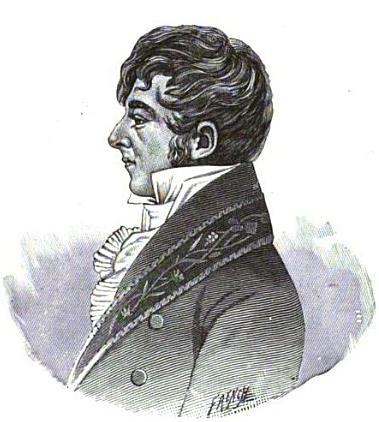
Photo: Robert Alonzo Brock (1839-1914), Virgil Anson Lewis (1848-1912), Public domain, via Wikimedia Commons
The Fredericksburg Masonic Lodge No. 4, established in 1752, is housed in a colonial-era building that became the birthplace of George Washington's Masonic journey. The lodge building, located on Princess Anne Street in historic Fredericksburg, preserves the original meeting hall where Washington took his first degree of Freemasonry at age 20. The structure represents one of America's oldest continuously operating Masonic lodges, maintaining original architectural features and ceremonial spaces that date back over 270 years. Today, visitors can see the same rooms where many Founding Fathers gathered, including the chamber where Washington's initiation ceremony took place on November 4, 1752.
Timeline
Fredericksburg Lodge No. 4 is established and George Washington is initiated as a Freemason on November 4
Washington is elected Worshipful Master of Alexandria Lodge No. 22
Washington participates in Masonic cornerstone laying ceremony for the U.S. Capitol
What the Show Claims
- ›George Washington's Masonic initiation connected him to a network of Enlightenment thinkers who shared beliefs about extraterrestrial lifeS03E11
- ›Masonic symbols and knowledge were encoded into American architecture and national symbolsS03E11
- ›The Founding Fathers used Masonic lodges as meeting places to discuss advanced knowledge possibly of non-terrestrial originS03E11
Theorist Takes
“There are a lot of theories about the true origins of Freemasonry. What we know for a fact is that definitely with the age of the Renaissance this is when people decided to start studying ancient civilizations.”
From the Transcripts
“Fredricksburg, Virginia. 1752. 20-year-old George Washington is initiated into a secret society: the Freemasons. Among his fellow members are many other Founding Fathers, like Benjamin Franklin, John Hancock and Paul Revere.”
What Archaeology Says
The Fredericksburg Lodge building has been studied by architectural historians who have documented its colonial construction techniques and preservation of original 18th-century meeting spaces. The structure maintains period-appropriate woodwork, masonry, and interior layouts that provide insight into colonial-era fraternal organizations and their ceremonial practices.
Historical research has confirmed that at least 14 of the 56 signers of the Declaration of Independence were Freemasons, along with numerous other prominent figures in early American history. The lodge's records, some dating to Washington's time, document the social and intellectual networks that connected colonial elites across the American colonies. These documents reveal the lodge's role as a center for Enlightenment discussions about science, philosophy, and governance.
Scholars have extensively analyzed Masonic symbolism in American civic architecture and currency, finding clear connections to traditional stonemason guild symbols and Enlightenment-era allegorical representations of knowledge, virtue, and divine geometry. The eye in the pyramid on the dollar bill, compass and square motifs in government buildings, and geometric patterns in the layout of Washington D.C. all reflect documented Masonic influences on early American design.
What remains genuinely intriguing to historians is the extent to which Masonic lodges served as informal centers for scientific and philosophical exchange in colonial America, potentially accelerating the spread of Enlightenment ideas that influenced the founding documents and governmental structure of the United States.
Mysteries & Fun Facts
George Washington's Masonic apron, worn during his initiation, is believed to be preserved in the lodge's collection
The lodge building survived both the Civil War and numerous renovations while maintaining its original ceremonial spaces
Washington later became Worshipful Master of Alexandria Lodge No. 22, making him one of the few U.S. presidents to hold high Masonic office
The lodge's meeting minutes from Washington's era are among the oldest continuously maintained Masonic records in America
Planning a Visit
The Fredericksburg Masonic Lodge is generally accessible to visitors through scheduled tours, though it remains an active Masonic meeting place. Visitors can view the historic meeting rooms, original furnishings, and displays of Washington's Masonic artifacts and regalia. Check with local tourism offices for current tour schedules and availability.
Washington, D.C., approximately 50 miles northeast
Spring and fall offer the most comfortable weather for exploring historic Fredericksburg. Summer can be quite warm and humid, while winter visits may have limited tour availability.
Related Sites
Royal Society, London
The Royal Society was a center of Enlightenment scientific thought that influenced Masonic intellectual traditions adopted by the Founding Fathers
Cambridge University
Cambridge University represents the academic institutions where Enlightenment philosophy flourished before spreading to colonial American Masonic lodges
Avebury Stone Circle
Avebury Stone Circle connects to theories about ancient geometric knowledge that some claim influenced Masonic symbolic traditions