Gungywamp
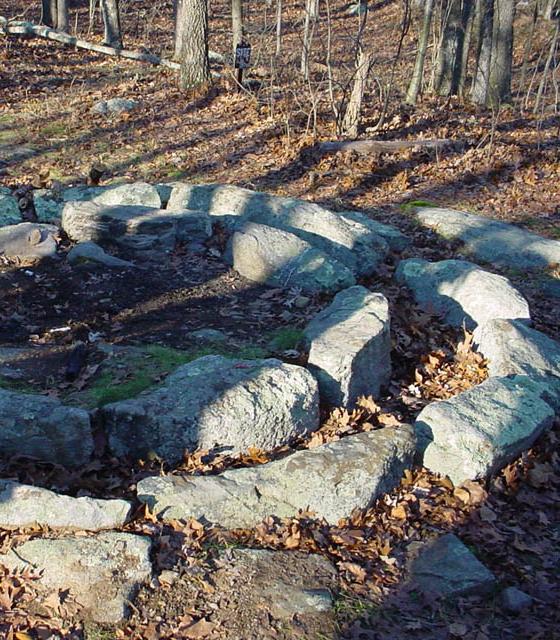
Photo: Randal J. (en:User:RJFerret), CC BY-SA 2.5, via Wikimedia Commons
Gungywamp is a 24-acre archaeological site in Groton, Connecticut, featuring the remains of colonial structures alongside distinctive stone formations. At its center lie two concentric circles of large quarried stones, with 21 massive slabs laid end to end forming the impressive double ring. The site also contains the foundations of houses, a storage structure, and mysterious double-stone rows that have sparked decades of debate. Located in southeastern Connecticut's wooded landscape, Gungywamp was recognized as a State Archaeological Preserve in 2023 after the YMCA transferred 270 acres of the original 400-acre parcel to the state.
Timeline
First mention of the site in colonial records
YMCA transfers 270 acres to the State of Connecticut
Designated as a State Archaeological Preserve
What the Show Claims
- ›Gungywamp exhibits strong magnetic anomalies that cause severe physical reactions in visitors including nausea and nosebleedsS14E07
- ›The site is associated with UFO sightings and missing time experiencesS14E07
- ›Stone chambers and standing-stone alignments are evidence of ancient Druid activity in New EnglandS14E07
Theorist Takes
“It's known for its magnetic anomalies. It's known for the strange lights, the UFOs that appear in this area. People have very strange experiences when they go there.”
From the Transcripts
“Gungywamp is a series of stone chambers, alignments of standing stones on a 24-acre hilltop in Southern Connecticut. And people have been looking at this since the early 1600s.”
What Archaeology Says
Archaeological investigation at Gungywamp has revealed a complex site containing both documented colonial remains and enigmatic stone structures. The excavations have confirmed the presence of house foundations and storage facilities consistent with 17th and 18th-century New England settlements. The site's most intriguing features are the carefully constructed stone circles and alignments that have puzzled researchers.
The central double stone circle, comprising 21 large quarried slabs arranged in two concentric rings, represents the site's most distinctive feature. While some researchers have suggested these formations could have pre-colonial origins, others point to their construction techniques and materials as consistent with colonial-era stonework. The precise purpose of these stone arrangements remains unclear, though they may have served practical functions related to the colonial settlement.
Mainstream archaeological consensus maintains that Gungywamp's features are consistent with indigenous or colonial construction rather than ancient Celtic origins. The site's stone chambers, while unusual, share characteristics with other colonial root cellars and storage structures found throughout New England. However, the formal recognition of Gungywamp as a State Archaeological Preserve acknowledges its importance for continued research.
What remains genuinely unknown is the exact chronology of the site's various features and their relationship to one another. The interplay between documented colonial structures and the more mysterious stone alignments continues to intrigue researchers, making Gungywamp an active area of archaeological interest in Connecticut.
Mysteries & Fun Facts
The central stone circle contains exactly 21 large quarried slabs arranged end to end
Gungywamp was originally part of a 400-acre parcel, with 270 acres now protected by the state
The site was first documented in colonial records as early as 1654
It took until 2023 for Gungywamp to receive official recognition as a State Archaeological Preserve
Planning a Visit
Gungywamp is generally accessible to visitors as part of Connecticut's state archaeological preserve system. The site requires hiking through wooded terrain to reach the main stone features, so appropriate footwear is recommended.
New London, Connecticut, approximately 10 miles southeast
Late spring through early fall offers the best conditions for exploring the site, when trails are most accessible and daylight hours are longer. Winter visits can be challenging due to snow and ice on the forest paths.
Related Sites
Carnac Stones
Features similar mysterious stone arrangements that have sparked theories about ancient astronomical or ritual purposes
Avebury Stone Circle
Another site with circular stone formations that some claim have Celtic or Druidic connections
Externsteine
A Germanic site also associated with claims of ancient Celtic and Druidic activity
Featured In1 episodes
Historical data sourced from Wikipedia