Thailand (Hungry Ghost Festival tradition)
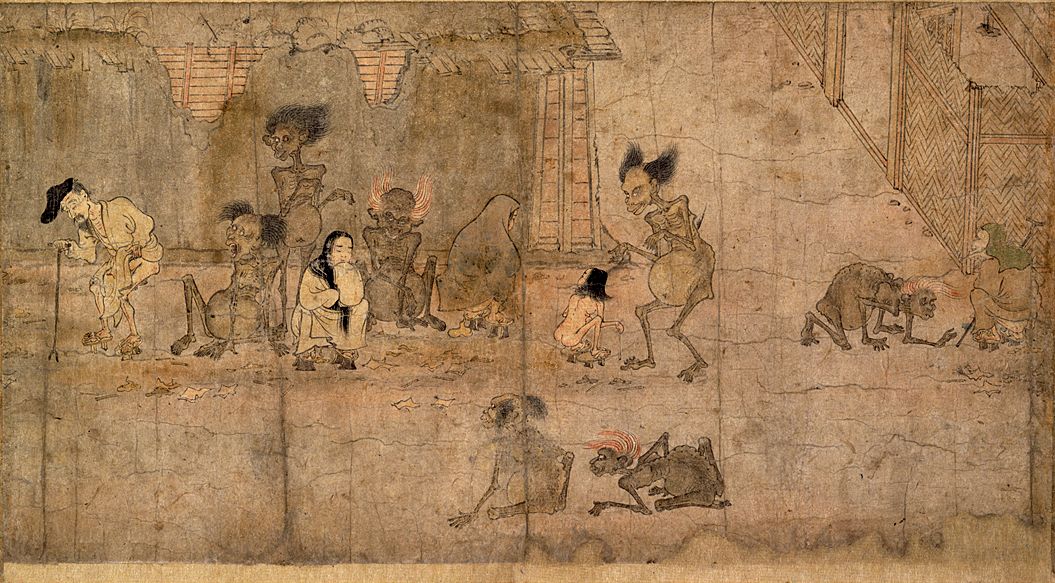
Photo: Unknown, Public domain, via Wikimedia Commons
The Hungry Ghost Festival tradition in Thailand represents a complex spiritual observance that spans the seventh lunar month of the Chinese calendar, typically falling between July and September. Rather than a single physical site, this tradition encompasses thousands of temples, shrines, and household altars across Thailand's 76 provinces, where elaborate offerings of food, incense, and paper money are presented to wandering spirits. The festival reflects Thailand's unique blend of Buddhist, Taoist, and local animistic beliefs, with major observances occurring at prominent temples like Wat Pho in Bangkok and Wat Chedi Luang in Chiang Mai. During this month-long period, believers prepare intricate displays of fruits, sweets, and symbolic items, creating temporary sacred spaces that transform ordinary locations into spiritual gateways. Some theorists have proposed that descriptions of hungry ghosts—characterized as small, ethereal beings with intense appetites that manifest during the seventh lunar month—may reflect encounters with unknown entities, drawing parallels to modern accounts of unexplained visitors. However, religious scholars and folklorists trace the Hungry Ghost Festival to well-documented Buddhist and Taoist teachings about the afterlife, karma, and ancestral veneration, with textual sources dating back centuries that explain the spiritual purpose and evolution of these observances. The festival's specific timing, rituals, and symbolic offerings align closely with documented East Asian religious practices rather than requiring explanation beyond established spiritual traditions.
Timeline
Buddhist concepts of hungry ghosts (preta) develop in early Buddhist texts and oral traditions
Chinese Taoist Ghost Festival traditions begin merging with Thai Buddhist practices through cultural exchange
Establishment of Bangkok as capital helps standardize festival observances across Thailand
What the Show Claims
- ›Thai hungry ghost spirits described as childlike beings with insatiable appetites parallel the black-eyed kids phenomenonS07E03
- ›The tradition reflects ancient encounters with extraterrestrial or interdimensional entitiesS07E03
- ›Spirits that roam during the seventh lunar month represent non-human intelligences visiting EarthS07E03
Theorist Takes
“The hungry ghosts that come out of Thailand seem to be descriptions of what appear to be children, and their insatiable appetite can never be filled.”
From the Transcripts
“Ancient astronaut theorists say yes... and point to the hungry ghosts of Thailand as proof. According to this legend, the spirits of some children can become trapped in-between the worlds of life and death.”
What Archaeology Says
The Hungry Ghost Festival tradition lacks conventional archaeological evidence since it represents a living cultural practice rather than ancient ruins or artifacts. However, researchers have documented the festival's evolution through temple inscriptions, historical records, and ethnographic studies across Southeast Asia. Religious scholars note that the concept of hungry ghosts appears in early Buddhist texts like the Petavatthu, suggesting the tradition's roots stretch back over two millennia.
Anthropologists and folklorists have extensively studied how the festival manifests differently across Thailand's regions, with northern practices showing stronger Chinese Taoist influences while southern observances incorporate more Malay and Islamic elements. Dr. Phra David Chappell and other Buddhist studies scholars have traced how the festival serves multiple social functions beyond spiritual observance, including community bonding, ancestor veneration, and seasonal agricultural transitions.
The scientific consensus views the hungry ghost tradition as a sophisticated example of how ancient societies developed religious frameworks to address psychological needs around death, memory, and seasonal cycles. The vivid descriptions of ghost characteristics—extreme hunger, childlike appearance, inability to satisfy desires—reflect universal human anxieties about mortality and unfulfilled needs rather than encounters with non-human entities.
What remains genuinely intriguing is the remarkable consistency of ghost descriptions across different Asian cultures that developed these traditions independently. While mainstream scholars attribute this to shared Buddhist textual sources and common human psychological experiences, the specific details about spirit behavior and appearance during the seventh lunar month continue to fascinate researchers studying cross-cultural religious phenomena.
Mysteries & Fun Facts
The festival spans exactly 30 days, beginning when the gates of the afterlife supposedly open and closing when they seal again
Hungry ghosts are traditionally described as having enormous appetites but throats too narrow to swallow food
Thai families often prepare favorite dishes of deceased relatives, believing specific foods can attract particular spirits
Some Thai regions burn elaborate paper replicas of modern items like cars and smartphones as offerings to spirits
Planning a Visit
The Hungry Ghost Festival can be experienced throughout Thailand during the seventh lunar month, with major temples in Bangkok, Chiang Mai, and other cities hosting the most elaborate observances. Visitors should dress respectfully when observing ceremonies at temples and may participate in offering rituals with guidance from local practitioners.
Bangkok serves as the primary hub for experiencing the festival, with observances throughout the metropolitan area.
The festival typically occurs between July and September, with the most intensive activities happening during the full moon of the seventh lunar month. Evening visits offer the most atmospheric experience as offerings are lit and ceremonies reach their peak.
Related Sites
Dogon Village of Telem
The Dogon people's detailed knowledge of invisible celestial beings parallels Thailand's tradition of acknowledging unseen spiritual entities
Plain of Jars
Laotian megalithic jars are associated with ancient burial practices and spirit beliefs similar to Thai ghost veneration
Sigiriya
Sri Lankan rock fortress contains ancient Buddhist art depicting spiritual beings that mirror Thai hungry ghost iconography