Staffordshire crop circle sites
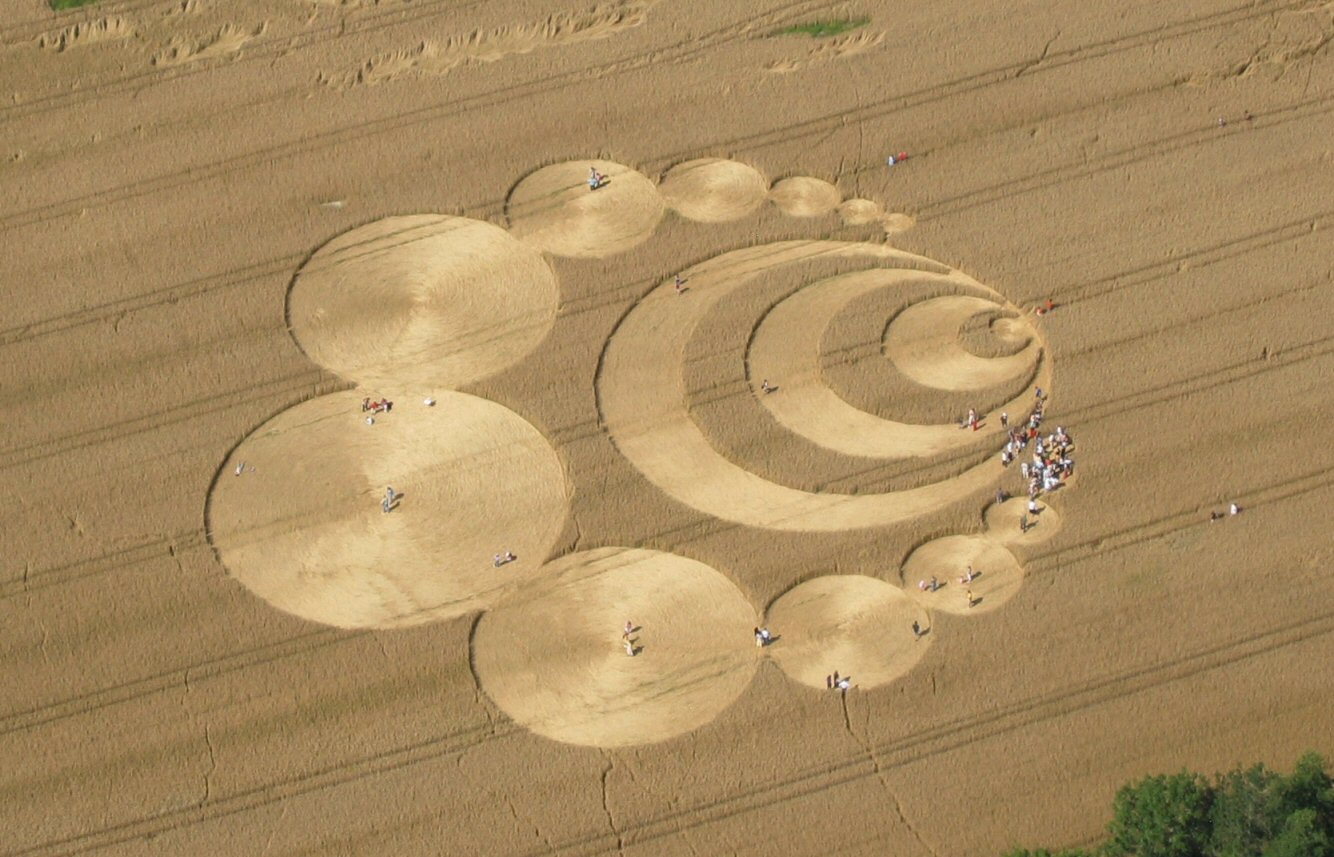
Photo: Jabberocky, Public domain, via Wikimedia Commons
The Staffordshire crop circle sites represent locations across this English county where circular formations in crops have been reported and documented over centuries. Unlike most ancient sites, these locations shift with agricultural cycles and contemporary reports, making them ephemeral rather than permanent monuments. The region's rolling countryside and extensive farmland provide the canvas for these mysterious formations, which have been documented in various field locations throughout the county. According to historical accounts, some formations have measured several meters in diameter with intricate geometric patterns pressed into grain crops.
Timeline
Dr. Robert Plot reportedly documents and illustrates crop circle formations appearing on Staffordshire land
Plot's 'Natural History of Staffordshire' published, containing some of the earliest scientific documentation of unusual crop formations
Modern crop circle phenomenon gains widespread attention, with Staffordshire among reported locations
Ancient Aliens features historical Staffordshire accounts as evidence of long-standing unexplained phenomena
What the Show Claims
- ›17th-century scientist Dr. Robert Plot documented crop circles on his Staffordshire land with detailed drawings, proving the phenomenon predates modern hoaxersS10E01
- ›Historical records and diagrams from the 1600s provide evidence of a long-standing, potentially non-human phenomenonS10E01
Theorist Takes
“There are some very strange accounts in the 1600s. One of the original scientists, Dr. Robert Plot, reported seeing crop circles appearing on his land in Staffordshire, England.”
From the Transcripts
“One of the original scientists, Dr. Robert Plot, reported seeing crop circles appearing on his land in Staffordshire, England. And he actually drew diagrams of what he was seeing.”
What Archaeology Says
The historical documentation of crop formations in Staffordshire centers on the work of Dr. Robert Plot, one of England's early natural philosophers and the first Professor of Chemistry at Oxford University. Plot's investigations in the late 17th century reportedly included careful observation and illustration of circular patterns appearing in local crop fields, marking some of the earliest scientific attention paid to such phenomena.
Plot approached these observations with the systematic methodology of early natural science, reportedly creating detailed drawings and attempting to document the formations' characteristics. His work represents an early example of applying scientific observation to unexplained natural phenomena, though the exact nature and extent of his crop circle documentation remains a subject of historical interpretation.
Modern researchers examining Plot's legacy face the challenge of distinguishing between documented observations and later embellishments of his work. The scientific consensus generally attributes most crop formations to natural phenomena like weather patterns, fungal growth, or human activity, though Plot's historical accounts continue to intrigue those studying the phenomenon's long-term patterns.
What remains genuinely unknown is the full scope of Plot's original documentation and how closely modern interpretations align with his actual 17th-century observations. The intersection of early scientific methodology with unexplained phenomena provides a fascinating glimpse into how natural philosophers of Plot's era approached mysterious occurrences in the English countryside.
Mysteries & Fun Facts
Dr. Robert Plot was the first keeper of the Ashmolean Museum at Oxford University and pioneered the scientific study of fossils
Plot's 'Natural History of Staffordshire' was one of the first comprehensive scientific surveys of an English county
Staffordshire's agricultural landscape has remained largely unchanged since Plot's time, with many fields still under cultivation after more than 300 years
The county's name derives from the Anglo-Saxon 'Stæffordscir,' meaning 'the shire of the ford by the landing place'
Planning a Visit
Staffordshire crop circle sites are not fixed locations but rather ephemeral formations that appear seasonally in agricultural fields throughout the county. Visitors interested in the historical context can explore areas around Lichfield and other locations associated with Dr. Plot's work, though access to private farmland requires permission from landowners.
Birmingham is approximately 30 kilometers southeast of central Staffordshire locations.
Late spring through early autumn offers the best chance of encountering crop formations, as this coincides with the growing season when patterns would be most visible in standing grain.
Related Sites
Crop Circle Hotspots (Wiltshire)
Wiltshire represents the modern epicenter of crop circle activity and research, providing contemporary context to Staffordshire's historical accounts
Avebury Stone Circle
Avebury's ancient stone circle sits within England's primary crop circle region, suggesting possible connections between sacred sites and formation patterns
Silbury Hill
Silbury Hill, Europe's largest prehistoric mound, lies at the heart of crop circle country and may represent the type of ancient landscape feature that attracts unusual phenomena