Cheonmachong (Heavenly Horse Tomb)
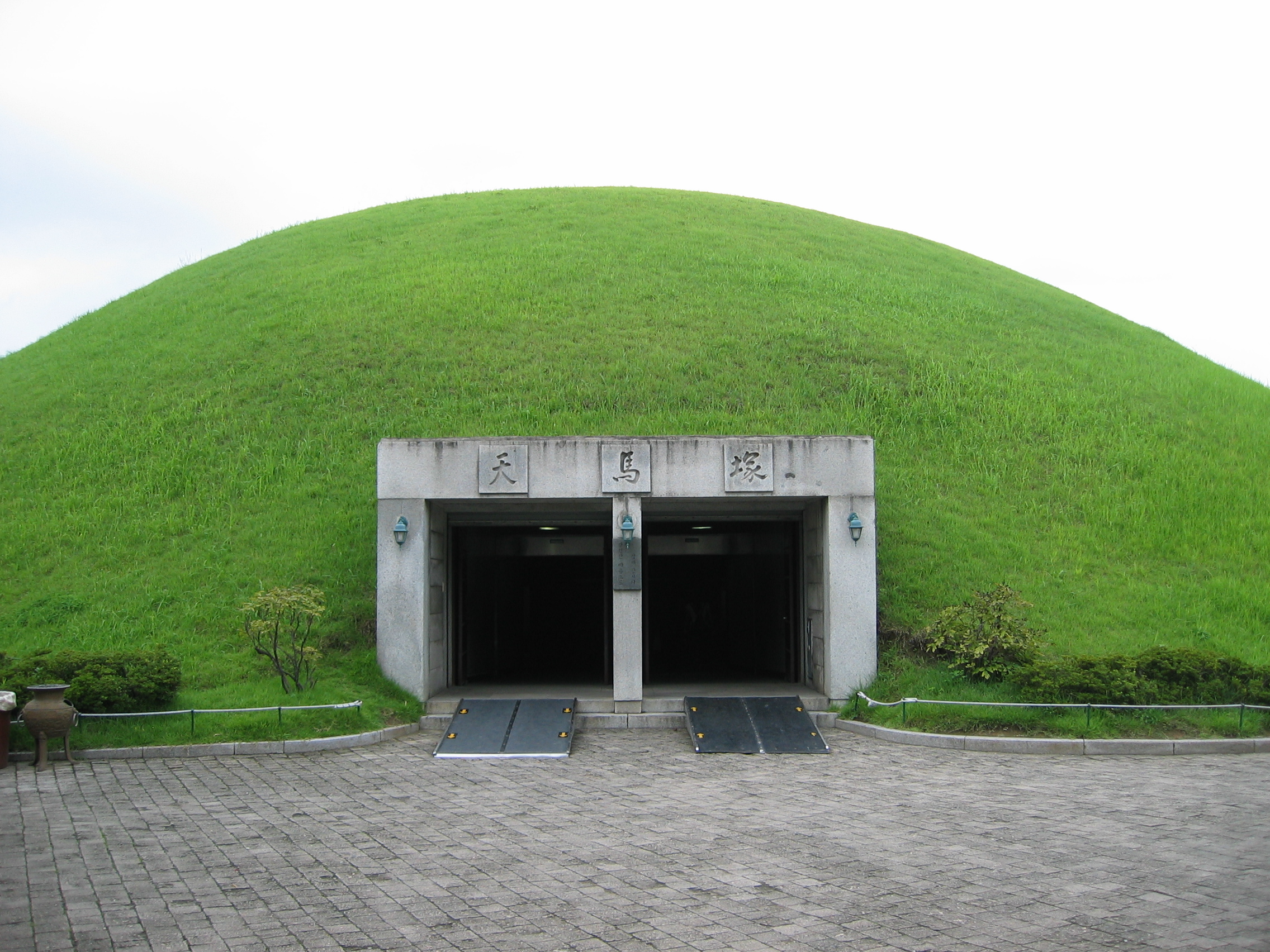
Photo: by Julien Ambrosiano at Flickr, CC BY-SA 3.0, via Wikimedia Commons
Cheonmachong, known as the Heavenly Horse Tomb, stands as one of Gyeongju's most celebrated ancient burial mounds in South Korea's historic capital region. This 5th-6th century AD tumulus tomb from the Silla dynasty measures approximately 47 meters in diameter and rises about 12.7 meters high, making it one of the largest excavated royal tombs in the Daereungwon Ancient Tomb Complex. The site takes its name from a remarkable birch-bark painting discovered within, depicting a white horse with flowing mane that appears to gallop through clouds. Located in the heart of what was once the Silla kingdom's capital, the tomb represents the sophisticated burial practices and artistic achievements of one of Korea's Three Kingdoms period.
Timeline
Construction of the royal tomb during the Silla dynasty period
Official excavation begins, revealing the famous heavenly horse painting and golden crown
Tomb restoration completed and opened to public as part of Tumuli Park
What the Show Claims
- ›The eight-legged, fire-footed horse painting depicts an extraterrestrial flying vehicle, with ancient people describing spacecraft using familiar animal imageryS05E01S05E06
- ›The heavenly horse motif represents advanced technology misinterpreted through primitive understanding rather than shamanic spiritual symbolismS05E06
Theorist Takes
“We have to remember that our ancestors were not familiar with space vehicles, so whatever they saw up in the sky could best be described as an eight-legged horse descending from the sky.”
From the Transcripts
“Here, near the shores of the Sea of Japan, lie the ruins of Cheonmachong. Excavated in 1973, researchers believe this mound-shaped tomb was constructed for a fifth-century ruler from the Silla dynasty.”
What Archaeology Says
The 1973 excavation of Cheonmachong revealed a wealth of artifacts that illuminated Silla dynasty burial practices and artistic sophistication. The tomb's wooden chamber, constructed using advanced joinery techniques, contained over 10,000 individual artifacts including the famous golden crown with tree-like projections and dangling ornaments. The birch-bark painting that gives the tomb its name measures approximately 75 centimeters long and depicts a white horse with eight legs galloping through stylized clouds, executed in vibrant colors that have remarkably survived nearly 1,500 years.
Archaeologists have identified the burial as likely belonging to a Silla king or high-ranking royal, based on the quality and quantity of grave goods discovered. The tomb's construction involved sophisticated engineering, with a stone-lined chamber surrounded by wooden logs and covered with clay and stones. Among the notable finds were gold and silver ornaments, pottery, weapons, and horse riding equipment, suggesting the deceased's high status and the importance of horses in Silla culture.
Scientific analysis has revealed that many artifacts show influences from Central Asian cultures, reflecting the Silk Road's cultural exchange networks. The heavenly horse motif appears throughout Korean art and aligns with shamanic traditions where horses served as spiritual guides for souls traveling to the afterlife. While the painting's eight legs might seem unusual, similar multi-legged horses appear in various Central Asian and Chinese artistic traditions, representing supernatural speed and the ability to traverse different worlds.
What remains intriguing to researchers is the precise symbolism behind specific elements of the horse painting and the exact identity of the tomb's occupant. The sophisticated preservation techniques used for organic materials like birch bark continue to inform modern conservation methods, while ongoing analysis of the artifacts reveals new details about Silla dynasty trade relationships and cultural practices.
Mysteries & Fun Facts
The birch-bark painting is believed to be one of the oldest surviving paintings on birch bark in East Asia
Over 10,000 artifacts were discovered in this single tomb, making it one of the richest archaeological finds in Korean history
The golden crown found in the tomb weighs approximately 338 grams and consists of an outer crown and inner cap
The tomb's wooden chamber was constructed without using a single nail, relying entirely on traditional joinery techniques
Planning a Visit
Cheonmachong is easily accessible to visitors as part of Daereungwon Ancient Tomb Complex in central Gyeongju, with the interior chamber reconstructed to display replicas of major artifacts including the famous horse painting. The site features modern lighting and walkways that allow visitors to experience the tomb's interior layout and understand its construction methods.
Gyeongju city center, approximately 1 kilometer
Spring (April-May) and autumn (September-November) offer the most comfortable weather for exploring the outdoor tomb complex, with pleasant temperatures and fewer crowds than the busy summer months.
Related Sites
Gobekli Tepe
Both sites feature ancient artistic depictions that some interpret as evidence of advanced technology or otherworldly contact
Great Zimbabwe
Another royal burial complex with sophisticated construction techniques that challenges assumptions about ancient capabilities
Palenque
Contains elaborate tomb paintings and royal burial practices that ancient astronaut theorists examine for technological interpretations