Hephaistia, Lemnos
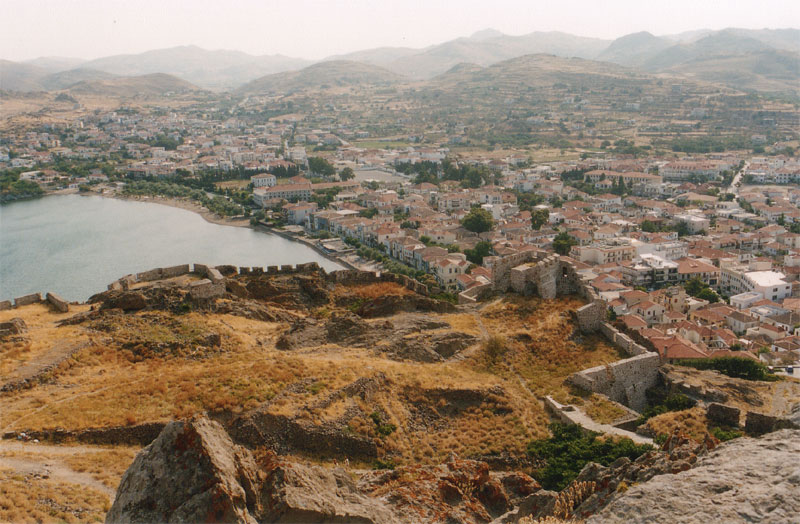
Photo: User:Digr, Public domain, via Wikimedia Commons
Hephaistia was one of the two principal cities of ancient Lemnos, a volcanic island in the northern Aegean Sea approximately 40 kilometers northeast of the Turkish coast. The archaeological site contains remains of what was once a major religious and civic center, with excavations revealing structures spanning from the Bronze Age through the Roman period. The city's strategic location on the island's northeastern coast made it an important hub for maritime trade and religious pilgrimage. Today, visitors can explore scattered ruins including foundation walls, pottery fragments, and architectural elements that hint at the city's former grandeur. Some theorists have pointed to Hephaistia's connection to Hephaestus—the Greek god said to have fallen from the sky and operated an automated workshop—as potential evidence of advanced extraterrestrial technology in the ancient world. However, archaeologists interpret the god's association with this volcanic island quite differently: Lemnos was renowned throughout antiquity for its metalworking and mineral deposits, making it a natural setting for religious mythology centered on a divine craftsman and metallurgist. The archaeological record at Hephaistia reflects a thriving ancient Greek city whose spiritual traditions appear deeply rooted in the island's geology and economic activities rather than evidence of off-world influence.
Timeline
Early Bronze Age settlement established on the site
City develops as major religious center dedicated to Hephaestus
Hephaistia reaches peak prominence as one of Lemnos's two principal cities
Italian archaeological missions begin systematic excavations
What the Show Claims
- ›Hephaistia is evidence that advanced robotic technology existed in the ancient Greek world, introduced by extraterrestrial beingsS10E03
- ›The city's namesake Hephaestus, who allegedly fell from the sky and used automated robots in his workshop, represents ancient knowledge of advanced technologyS10E03
Theorist Takes
“He's described in his workshop as being surrounded by automated robots. He flips on the machines and they bustle around, doing all the sort of... the hard busywork for him.”
From the Transcripts
“Here lie the ruins of Hephaistia, one of the most important cities in Greece. It is named for the Greek god of metallurgy, Hephaestus, who was said to have fallen here from the sky and actually existed on Earth alongside humans.”
What Archaeology Says
Italian archaeological teams have conducted systematic excavations at Hephaistia since the 1920s, uncovering a complex urban center that flourished for over a millennium. The site reveals a typical ancient Greek city layout with residential quarters, public buildings, and religious structures, though much of the ancient city remains buried beneath agricultural fields and modern development.
Excavations have revealed pottery, coins, and architectural fragments that demonstrate Hephaistia's role as a significant trade center and religious destination. The archaeological record shows continuous occupation from the Bronze Age through Roman times, with evidence of metalworking activities that likely contributed to the city's association with Hephaestus, the Greek god of fire and metalworking. Researchers have identified what appear to be workshop areas and furnaces, consistent with the island's reputation for metallurgy.
The scientific consensus views Hephaistia as an important example of ancient Greek urban planning and religious architecture. The city's dedication to Hephaestus reflects the island's volcanic geology and rich mineral deposits, which made metalworking a natural local industry. While the site has yielded valuable insights into ancient Greek urban life and religious practices, much of the city remains unexcavated, leaving questions about its full extent and the precise nature of its religious installations.
What remains genuinely unknown is the exact layout of the ancient city's sacred precinct and the specific rituals performed there. The fragmentary nature of the surviving structures makes it difficult to reconstruct the original appearance of Hephaistia's temples and public buildings, and ongoing archaeological work continues to reveal new aspects of this important ancient center.
Mysteries & Fun Facts
Lemnos was famous in antiquity for its 'Lemnian Earth,' a clay believed to have healing properties and used medicinally throughout the ancient world
The island's volcanic soil created ideal conditions for metalworking, explaining the local association with Hephaestus
Ancient Greek writers described Lemnos as the place where Hephaestus landed after being thrown from Mount Olympus by Zeus
Italian excavations have uncovered evidence of trade connections extending across the Mediterranean world
Planning a Visit
Hephaistia is generally accessible to visitors, though the scattered nature of the ruins means much of the site requires some walking across uneven terrain. The remains are not extensively developed for tourism, so visitors should check with local tourism offices for current access information and guided tour availability.
Myrina, approximately 25 kilometers southwest
Spring and fall offer the most comfortable weather for exploring the outdoor archaeological site. Summer can be quite hot on the exposed terrain, while winter weather may make access more challenging.
Related Sites
Antikythera (mechanism discovery site)
Another Greek archaeological site associated with advanced ancient technology and mysterious mechanical devices
Gobekli Tepe
Ancient site that challenges conventional timelines of technological development
Ancient Thera, Santorini
Volcanic Greek island with ancient ruins that, like Lemnos, combines geological and archaeological mysteries