Dead Sea
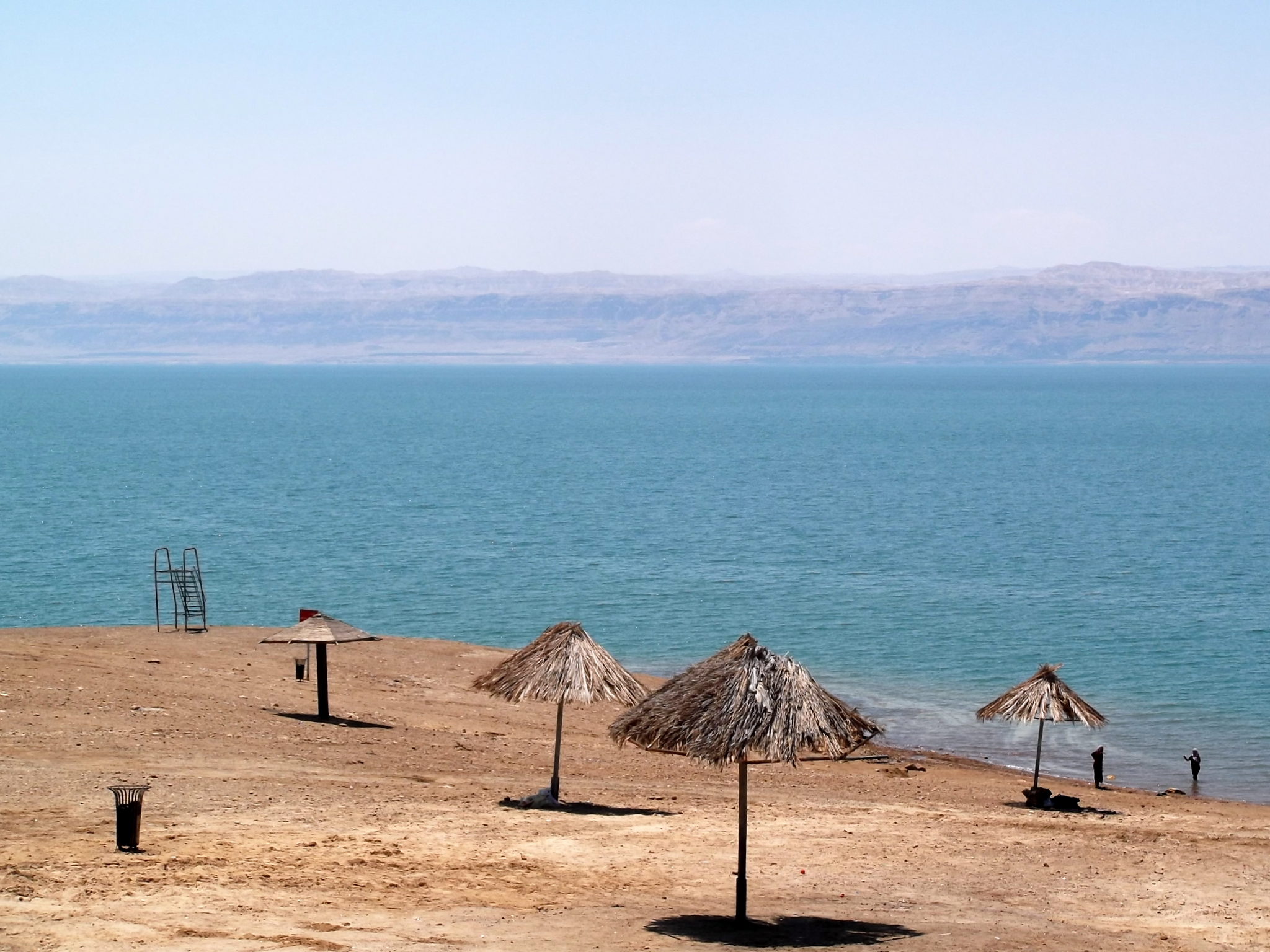
Photo: لا روسا, CC BY-SA 4.0, via Wikimedia Commons
The Dead Sea is a landlocked salt lake sitting 439.78 meters (1,443 feet) below sea level, making its shores the lowest land-based elevation on Earth. This extraordinary body of water stretches 50 kilometers (31 miles) long and 15 kilometers (9 miles) wide at its widest point, with a maximum depth of 304 meters (997 feet). Its extreme salinity of 342 g/kg makes it 9.6 times saltier than the ocean, creating such dense water that swimming feels more like floating. The harsh hypersaline environment prevents most life from flourishing, earning it the name "Dead Sea," while its shores have attracted visitors for thousands of years as one of the world's first health resorts. The Dead Sea holds another layer of intrigue in ancient astronaut theory: some theorists point to apocalyptic passages in the Dead Sea Scrolls—discovered in nearby caves between 1947 and 1956—as evidence of extraterrestrial foreknowledge of catastrophic events. However, mainstream scholars interpret these texts as theological literature reflecting Jewish religious beliefs and messianic expectations of the period (2nd century BCE to 1st century CE), rather than literal prophecies or alien communications. The scrolls remain invaluable historical documents for understanding ancient Jewish thought, even as their enigmatic language continues to spark alternative interpretations.
Timeline
Ancient civilizations begin harvesting salt and minerals from the Dead Sea
Jewish communities around Qumran hide sacred texts in nearby caves
Bedouin shepherds discover the first Dead Sea Scrolls in caves near Qumran
Archaeological excavations uncover approximately 900 manuscript fragments
What the Show Claims
- ›The Dead Sea Scrolls describe a future apocalyptic battle between good and evil, potentially indicating alien involvement in predicted catastrophic eventsS02E09
What Archaeology Says
The discovery of the Dead Sea Scrolls between 1947 and 1956 represents one of the most significant archaeological finds of the 20th century. These approximately 900 manuscript fragments, dating from the 2nd century BCE to the 1st century CE, were found in eleven caves near the ancient settlement of Qumran. The scrolls include biblical texts, sectarian writings, and apocalyptic literature that provide unprecedented insight into Jewish religious thought during the Second Temple period.
Key researchers including Roland de Vaux, John Strugnell, and Emanuel Tov have spent decades translating and analyzing these ancient texts. The scrolls contain the oldest known copies of biblical books, along with previously unknown works like the War Scroll, which describes an eschatological battle between the "Sons of Light" and the "Sons of Darkness." The Community Rule and Damascus Document reveal the beliefs and practices of what many scholars believe was an Essene community living in isolation near the Dead Sea.
Mainstream archaeological and religious scholarship interprets the apocalyptic imagery in texts like the War Scroll as theological literature reflecting the sectarian community's expectations of divine intervention and spiritual warfare. The vivid descriptions of cosmic battles, divine warriors, and celestial phenomena are understood within the context of Jewish apocalyptic tradition rather than literal historical predictions. The scrolls represent a library hidden during the Jewish revolt against Rome, preserved by the Dead Sea's unique climate.
While the scrolls' apocalyptic visions remain fascinating to study, genuine mysteries persist about the exact identity of the Qumran community and the circumstances surrounding the concealment of their library. Some fragments remain untranslated, and debate continues about whether the site was primarily religious or had commercial purposes related to the Dead Sea's valuable resources.
Mysteries & Fun Facts
The Dead Sea is shrinking rapidly, losing about one meter of depth per year due to water diversions from the Jordan River
Its salt concentration is so high that people cannot sink, making drowning nearly impossible under normal circumstances
Ancient Egyptians imported asphalt from the Dead Sea for mummification processes, calling it "Jewish pitch"
The lake's surface area has shrunk from 1,050 square kilometers in 1930 to just 605 square kilometers today
Planning a Visit
The Dead Sea is accessible from multiple countries, with visitor facilities on the Israeli, Jordanian, and West Bank coastlines. Popular resort areas like Ein Bokek in Israel and the Amman Beach area in Jordan offer hotels, spas, and easy beach access for the famous floating experience.
Jerusalem is approximately 55 kilometers (34 miles) northwest of the Dead Sea.
The optimal visiting season is October through April when temperatures are more comfortable, as summer heat can be extreme in this below-sea-level desert environment.
Featured Locations1 sites within this area
Sodom and Gomorrah (Dead Sea region)
Israel/JordanRelated Sites
Featured In1 episodes
Historical data sourced from Wikipedia