Pyramid of Djoser / Saqqara
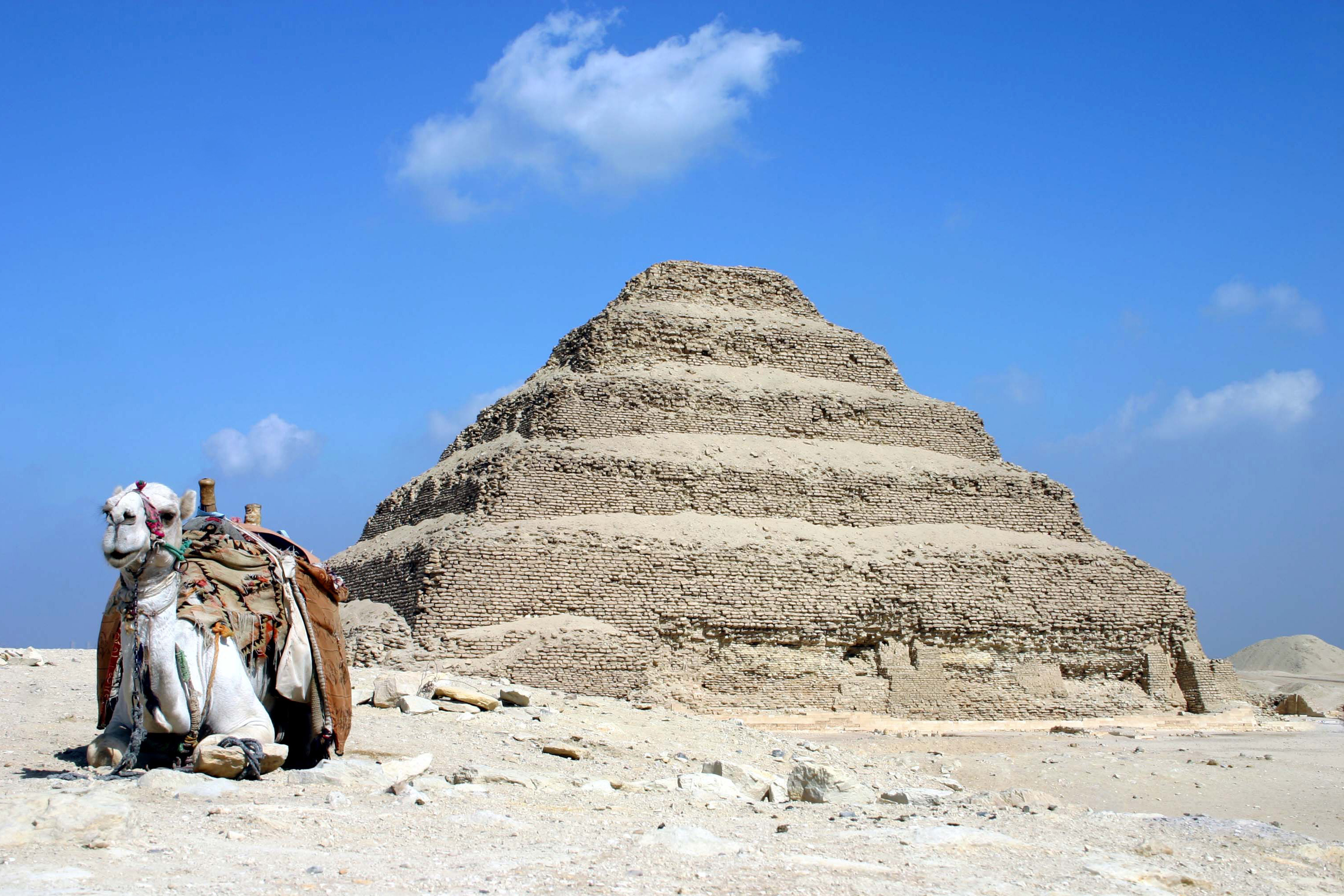
Photo: Charles J. Sharp, CC BY-SA 3.0, via Wikimedia Commons
The Step Pyramid of Djoser rises approximately 62 meters (203 feet) above the Saqqara plateau, representing humanity's first monumental stone building. This revolutionary six-tiered structure, built around 2650 BC, marked the transition from traditional mastaba tombs to the pyramid form that would define Egyptian architecture. The complex spans roughly 15 hectares and includes courtyards, chapels, and underground chambers connected by a labyrinth of tunnels stretching for miles beneath the desert surface. Located on a limestone plateau overlooking the ancient capital of Memphis, Saqqara served as Egypt's royal necropolis for over three millennia.
Timeline
Construction of the Step Pyramid begins under pharaoh Djoser, designed by the legendary architect Imhotep
Completion of the pyramid complex, establishing the template for future pyramid construction
French archaeologist Auguste Mariette begins systematic excavations at Saqqara
Discovery of the wooden Saqqara Bird artifact sparks ongoing debates about its purpose and design
What the Show Claims
- ›Step pyramid design mirrors alien spacecraft landing platformsS02E06S13E07
- ›Underground labyrinth of tunnels may serve unknown purposesS02E06S13E07
- ›Saqqara Bird artifact resembles modern aircraftS02E06
Theorist Takes
“At Saqqara is where we find the pyramid texts, some of the oldest religious texts in the world. They're devoted to the concept of how to not only preserve the human body, but to prepare the soul for journeying into the stars. The ancient Egyptians made it clear that they were in contact with extraterrestrial civilizations.”
From the Transcripts
“Also, we see this at Djoser's Pyramid in Saqqara in Egypt.”
“At Saqqara is where we find the pyramid texts, some of the oldest religious texts in the world. They're devoted to the concept of how to not only preserve the human body, but to prepare the soul for journeying into the stars.”
What Archaeology Says
Archaeological investigations at Saqqara have revealed the pyramid's construction involved stacking six progressively smaller mastabas, creating the distinctive stepped silhouette. The complex represents the architectural genius of Imhotep, who served as Djoser's chief architect and later became deified as a god of medicine and wisdom. Excavations have uncovered elaborate underground galleries extending beneath the pyramid, originally designed to store grave goods and protect the pharaoh's burial chamber from tomb robbers.
The most intriguing discovery remains the wooden Saqqara Bird, found in 1898 and dating to approximately 200 BC. This small carved object features a bird-like body with outstretched wings and has sparked considerable debate among researchers. While mainstream archaeologists interpret it as a votive offering representing a bird or perhaps a weathervane, some researchers have noted its aerodynamic proportions and suggested it could represent ancient knowledge of flight principles.
Scientific analysis confirms the pyramid's construction used locally quarried limestone blocks, assembled using traditional ramps and human labor. The underground tunnel network, while extensive, follows patterns consistent with Egyptian burial practices designed to confuse grave robbers and create symbolic pathways for the pharaoh's journey to the afterlife. However, some chambers remain unexplored, and the complete extent of the subterranean complex continues to yield surprises during ongoing archaeological work.
What remains genuinely mysterious is the advanced planning and engineering knowledge required to conceive such an ambitious project as humanity's first large-scale stone monument. The precision of the construction, the complex's astronomical alignments, and the sophisticated understanding of structural engineering demonstrated by Imhotep's design continue to impress modern architects and engineers studying the site.
Mysteries & Fun Facts
Imhotep, the pyramid's architect, was later deified and became known as the Egyptian god of medicine and healing
The Step Pyramid predates the Great Pyramid of Giza by approximately 100 years
The underground tunnel network beneath the pyramid extends for several kilometers
The Saqqara Bird artifact measures only 14 centimeters in length but has generated decades of scholarly debate
Planning a Visit
The Step Pyramid complex is generally accessible to visitors as part of tours to the Saqqara archaeological site, though access to interior chambers may be restricted. The site lies approximately 30 kilometers south of Cairo and can be reached by organized tours or private transportation. Visitors should check current accessibility status, as ongoing conservation work occasionally limits access to certain areas of the complex.
Cairo, approximately 30 kilometers northeast of the site.
The cooler months from October through March offer the most comfortable conditions for exploring the site. Early morning visits provide the best lighting for photography and help avoid midday heat during warmer seasons.
Featured Locations12 sites within this area
Saqqara, Egypt (Saqqara Bird artifact)
EgyptSerapeum of Saqqara, Egypt
EgyptSaqqara (Serapeum tomb)
EgyptSaqqara animal catacombs
EgyptPyramid of King Teti (Saqqara)
EgyptSerapeum of Saqqara
EgyptSaqqara necropolis (tomb of Pa-di-Imen)
EgyptStep Pyramid of Djoser, Saqqâra
EgyptSaqqara Serapeum
EgyptSaqqara Step Pyramid
EgyptSaqqara Step Pyramid of Djoser
EgyptStep Pyramid of Djoser, Saqqara
EgyptRelated Sites
Bent Pyramid of Dahshur
Another early pyramid experiment showcasing Egyptian architectural evolution and engineering challenges
Red Pyramid of Dahshur
Represents the successful transition to true pyramid construction techniques pioneered at Saqqara
Luxor Temple
Features similar questions about advanced ancient Egyptian engineering and construction capabilities