Bent Pyramid of Dahshur
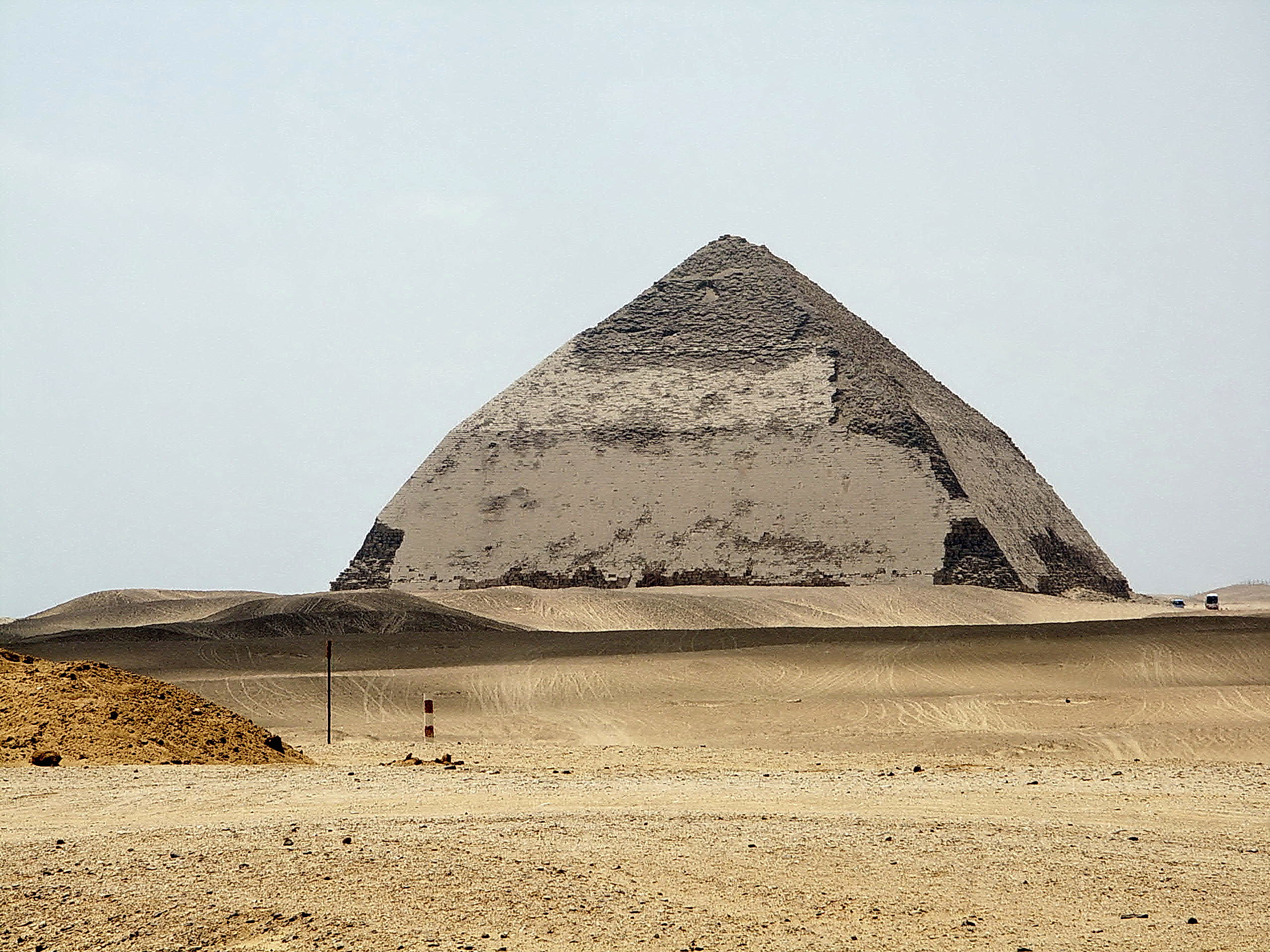
Photo: lienyuan lee, CC BY 3.0, via Wikimedia Commons
The Bent Pyramid stands as one of ancient Egypt's most distinctive monuments, rising approximately 105 meters high with its characteristic double-angled profile that changes from 54 degrees to 43 degrees roughly halfway up. Built around 2600 BCE by Pharaoh Sneferu at the Dahshur necropolis, this limestone pyramid represents a crucial transitional period in pyramid construction. Visitors today can observe both the exterior's unique bent silhouette and explore internal chambers that showcase sophisticated corbelled ceiling techniques. The pyramid's red granite pyramidion, discovered intact, provides rare insight into ancient Egyptian capstone construction.
Timeline
Construction begins under Pharaoh Sneferu during Egypt's Fourth Dynasty
Construction completed with distinctive angle change, leading to development of true pyramid design
First modern archaeological investigation conducted by John Shae Perring
Ahmed Fakhry's extensive excavations reveal internal chamber systems and construction techniques
What the Show Claims
- ›The pyramid's unique angle change indicates experimental construction possibly guided by extraterrestrial architectsS19E10
- ›The unusual design reflects advanced knowledge of structural engineering unknown to Ancient EgyptiansS19E10
- ›Internal chamber configurations suggest non-human architectural influence
What Archaeology Says
Archaeological investigations have revealed that the Bent Pyramid's construction involved sophisticated planning and mid-course corrections that demonstrate remarkable engineering adaptability. The pyramid contains two separate entrance systems leading to upper and lower chambers, with the lower chamber featuring an impressive corbelled ceiling that rises over 17 meters high. Excavations have uncovered evidence that the angle change from 54 to 43 degrees occurred during construction, likely due to concerns about structural stability as builders recognized the steep initial angle might compromise the monument's integrity.
Key researchers including Ahmed Fakhry in the 1950s and more recent teams have documented the pyramid's internal architecture, revealing sophisticated drainage systems and weight-distribution techniques. The discovery of the intact red granite pyramidion provides crucial evidence about ancient Egyptian construction methods and symbolic practices. Recent surveys using modern technology have mapped previously unknown internal voids and confirmed the precision of ancient Egyptian surveying techniques.
Mainstream archaeological consensus attributes the angle change to practical engineering decisions made during construction, representing an experimental phase that directly influenced the design of later true pyramids. The Bent Pyramid served as a crucial learning experience that enabled the construction of Sneferu's nearby Red Pyramid, which maintained a consistent 43-degree angle. However, some aspects of the internal chamber acoustics and precise mathematical relationships in the structure's proportions continue to generate scholarly discussion about the full extent of ancient Egyptian architectural knowledge.
Mysteries & Fun Facts
The Bent Pyramid is one of only three pyramids in Egypt with its original outer casing stones largely intact
Its internal chambers contain some of the earliest known examples of pyramid texts and religious inscriptions
The pyramid's unique double-angled profile makes it instantly recognizable among all Egyptian pyramids
Sneferu built at least three pyramids during his reign, making him ancient Egypt's most prolific pyramid builder
Planning a Visit
The Bent Pyramid is generally accessible to visitors as part of the Dahshur archaeological site, though access to internal chambers may be limited and require special permits. The site offers excellent opportunities for photography and architectural study, with clear views of both the Bent and Red Pyramids from various vantage points.
Cairo, approximately 40 kilometers northeast
The optimal visiting season runs from October through April when temperatures are more comfortable for exploring the desert site. Early morning visits often provide the best lighting conditions for photography and fewer crowds.