Boksta Runestone, Balingsta
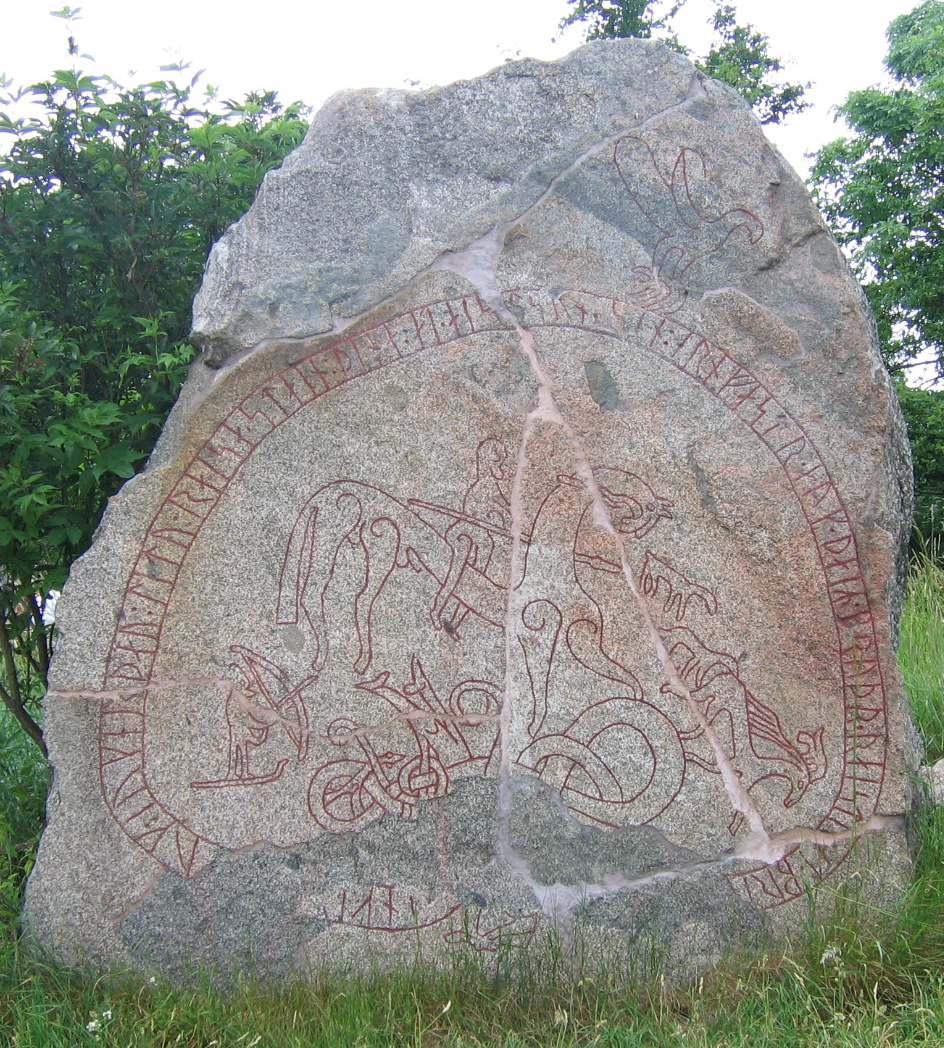
Photo: Berig, CC BY 2.5, via Wikimedia Commons
The Boksta Runestone stands as a weathered granite monument in the Swedish countryside near Balingsta, approximately 40 miles northwest of Stockholm. This Viking Age runestone features carved runic inscriptions alongside a distinctive depiction of the Norse god Odin mounted on horseback, wielding his legendary spear Gungnir. The stone is estimated to measure several feet in height and represents one of the many commemorative runestones scattered across Scandinavia from the medieval period. Located in the rolling agricultural landscape of central Sweden, it serves as a tangible link to the region's Norse heritage and the rich tradition of runic memorial stones that marked important locations and honored the dead during the Viking Age. Some have theorized that Gungnir, the spear depicted in Odin's hand on the runestone, may represent advanced extraterrestrial technology comparable to modern weaponry, suggesting divine intervention in Norse culture. Archaeologists, however, interpret the imagery within the context of Norse mythology and religious belief systems, where Gungnir was a sacred symbol of divine power and authority rather than a representation of non-terrestrial artifacts. The runestone's artistic style and runic inscriptions align with documented Viking Age commemorative practices, reflecting the Norse people's own mythological framework rather than evidence of contact with advanced external sources.
Timeline
Runestone carved during the late Viking Age as a commemorative monument
Stone becomes part of the medieval Scandinavian runic tradition
Identified and catalogued as part of Sweden's runic stone heritage
What the Show Claims
- ›The runestone's depiction of Odin holding his spear Gungnir represents evidence that Norse gods possessed advanced extraterrestrial weaponry analogous to modern precision-guided missilesS05E11
Theorist Takes
“Gungnir was some kind of high-tech weapon. No matter who he threw it at, it would hit it. Like some laser-guided cruise missile or something like that, that just simply could not miss its mark once it had been set to its target.”
From the Transcripts
“Known as the Boksta Runestone, it is one of the few remaining relics that depict the mighty god Odin holding his magical spear: Gungnir.”
What Archaeology Says
Archaeological analysis of the Boksta Runestone places it within the broader context of Scandinavian runic monuments from the late Viking Age and early medieval period. The stone's granite composition is typical of the regional geology, and the carving techniques align with established Norse stone-working traditions of the 11th and 12th centuries. Scholars believe the runestone was created as a memorial marker, following the widespread Scandinavian practice of erecting commemorative stones along travel routes and at significant locations.
The runic inscriptions on the stone follow conventional Old Norse linguistic patterns, and the imagery of Odin conforms to established iconographic traditions found throughout Scandinavian art of the period. Researchers have documented similar depictions of the Norse god across multiple runestones and medieval artifacts, suggesting a standardized artistic representation rather than unique imagery. The spear held by Odin in the carving is consistent with traditional depictions of Gungnir, his mythological weapon described in Norse sagas and poetry.
While the basic archaeological context of the stone is well-established, questions remain about the specific circumstances of its creation and the identity of those who commissioned it. The exact translation and interpretation of some runic elements continue to be debated among scholars, and the stone's original positioning and surrounding archaeological context may have been altered over the centuries. Additionally, the relationship between this particular runestone and others in the region represents an ongoing area of research into medieval Scandinavian memorial practices.
Mysteries & Fun Facts
The runestone is part of Sweden's rich collection of over 2,500 documented runic stones from the Viking Age
Odin's spear Gungnir was described in Norse mythology as never missing its target when thrown
The stone stands in Uppland, the Swedish province containing the highest concentration of runestones in Scandinavia
Medieval Scandinavian runestones often served dual purposes as both memorials and territorial markers along important travel routes
Planning a Visit
The Boksta Runestone is generally accessible to visitors interested in Sweden's Viking Age heritage, though it stands in a rural location that may require local transportation arrangements. The site is believed to be reachable by road, and visitors should check with local tourism resources for current access information and any seasonal restrictions.
Stockholm, approximately 40 miles southeast
Late spring through early autumn typically offers the most favorable weather conditions for visiting outdoor archaeological sites in central Sweden. Summer months provide the longest daylight hours and most comfortable temperatures for exploring the countryside location.
Related Sites
Externsteine
This Germanic sacred site in Germany shares connections to Norse and Germanic religious traditions
Callanish Stones / Scottish Sites
These Scottish megalithic sites represent another northern European culture's ancient spiritual practices and stone monuments
Carnac Stones
This French megalithic complex demonstrates the widespread European tradition of creating significant stone monuments with possible astronomical alignments