Tenerife, Canary Islands (Pyramids of Güímar)
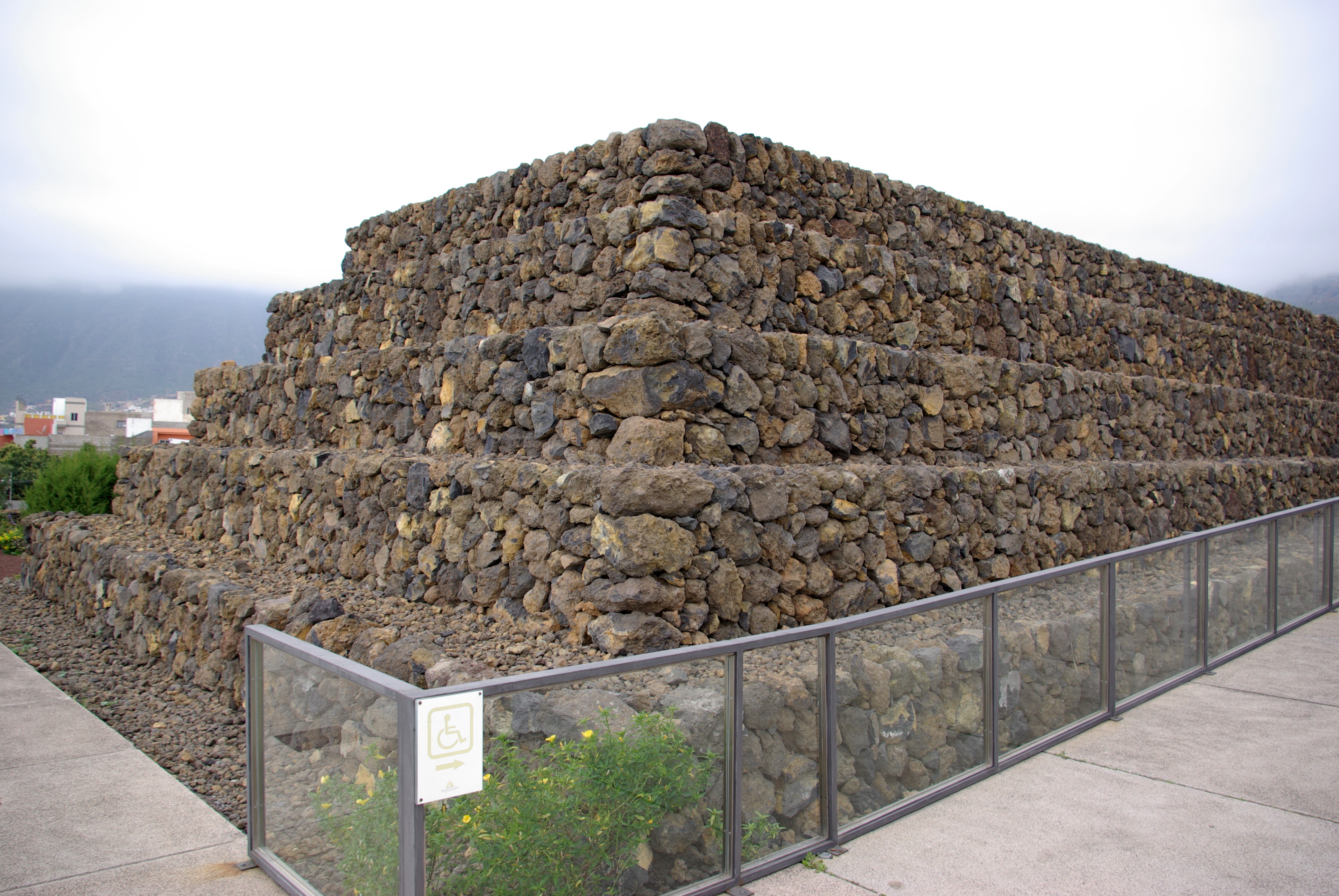
Photo: Berthold Werner, Public domain, via Wikimedia Commons
The Pyramids of Güímar consist of six rectangular stepped stone structures located on the eastern coast of Tenerife in the Canary Islands. These pyramid-like formations are constructed from volcanic basalt stones cleared from the surrounding agricultural fields, with the largest pyramid reaching approximately 12 meters in height. The complex sits on terraced land overlooking the Atlantic Ocean, surrounded by the dramatic volcanic landscape that characterizes this part of Tenerife. What makes these structures particularly intriguing is their precise astronomical alignments, particularly with the summer and winter solstices, suggesting they may have served a ceremonial or calendrical purpose for the indigenous Guanche people. Some theorists have proposed connections between Güímar's stepped pyramids and similar structures elsewhere, such as Monte d'Accoddi in Sardinia, suggesting these geographically distant cultures may have shared architectural influences—a claim that intrigues some researchers. However, most archaeologists attribute the Güímar pyramids to either ceremonial practices of the Guanche people or practical stone clearance from agricultural land, with their precise construction reflecting local knowledge and environmental adaptation rather than external influence. The astronomical alignments present at the site remain genuinely noteworthy, though whether they were intentionally designed for ceremonial purposes or represent a fortunate alignment of practical construction remains an open archaeological question.
Timeline
Estimated period when indigenous Guanche people may have constructed the stepped structures
Spanish conquest of Tenerife leads to decline of Guanche civilization
Norwegian explorer Thor Heyerdahl begins systematic study of the pyramids
Ethnographic and Archaeological Park of the Pyramids of Güímar established
What the Show Claims
- ›The stepped pyramids show architectural similarities to Monte d'Accoddi in Sardinia, suggesting possible extraterrestrial influence on geographically distant culturesS13E08
- ›The precise construction and astronomical alignments indicate advanced knowledge that may have had otherworldly originsS13E08
Theorist Takes
“This looks like some type of a stepped pyramid, almost like a ziggurat, which you can find in Mesopotamia, which is very interesting, because how is it possible that we have a step pyramid here and in Mesopotamia? And also, even closer, you have something similar in the Canary Islands, on the island of Tenerife.”
From the Transcripts
“You have something similar in the Canary Islands, on the island of Tenerife.”
What Archaeology Says
Archaeological investigation of the Pyramids of Güímar has revealed that the structures are built using the traditional dry-stone technique, with carefully fitted volcanic basalt blocks assembled without mortar. The pyramids feature stepped sides and flat tops, with staircases leading to their summits. Excavations have uncovered pottery fragments and other artifacts suggesting the site was used during the Guanche period, though the exact dating remains challenging.
Thor Heyerdahl's research team conducted extensive studies in the 1990s, documenting the structures' astronomical alignments and arguing for their ceremonial significance. Their work revealed that the pyramids align with sunrise and sunset positions during the summer and winter solstices, suggesting they may have functioned as astronomical observatories or ritual sites. However, some archaeologists have questioned whether these alignments are intentional or coincidental.
The scientific consensus remains divided on the pyramids' original purpose and construction period. While some researchers support the theory that they were built by the Guanche people for ceremonial purposes, others argue they may be relatively recent agricultural terraces created by farmers clearing stones from their fields. The lack of clear stratigraphic dating and the disturbance of the site by modern agricultural activities has made definitive archaeological conclusions difficult.
What remains genuinely mysterious is the pyramids' precise construction technique and their apparent astronomical knowledge. The careful placement of stones and the mathematical precision of the alignments suggest a level of planning that goes beyond simple agricultural clearance, yet the absence of clear cultural context makes their true purpose one of Tenerife's most enduring archaeological puzzles.
Mysteries & Fun Facts
The pyramids are aligned with both the summer and winter solstices, with staircases facing the precise direction of the setting sun
Thor Heyerdahl, famous for the Kon-Tiki expedition, spent years studying these structures and established the site's museum
The largest pyramid contains an estimated 20,000 tons of volcanic stone
Similar stepped structures exist on other Canary Islands, suggesting a widespread building tradition among the Guanche people
Planning a Visit
The Pyramids of Güímar are accessible to the public through the Ethnographic and Archaeological Park, which includes guided tours, a museum, and educational exhibits. The site is generally open year-round, though visitors should check current operating hours and admission requirements through local tourism websites.
Santa Cruz de Tenerife, approximately 20 kilometers northwest
The best time to visit is during Tenerife's mild winter months (November to March) when temperatures are comfortable for outdoor exploration. Early morning or late afternoon visits offer the best lighting for photography and cooler conditions.
Related Sites
Nuraghe Su Nuraxi
Both sites feature ancient stepped stone structures that challenge conventional understanding of prehistoric construction techniques
Gobekli Tepe
Like Güímar, this site demonstrates sophisticated astronomical knowledge in an unexpectedly early period
Sacsayhuaman
Another precisely constructed stone complex in a volcanic landscape that showcases advanced ancient engineering skills