Oseberghaugen (Oseberg Burial Mound), Tonsberg
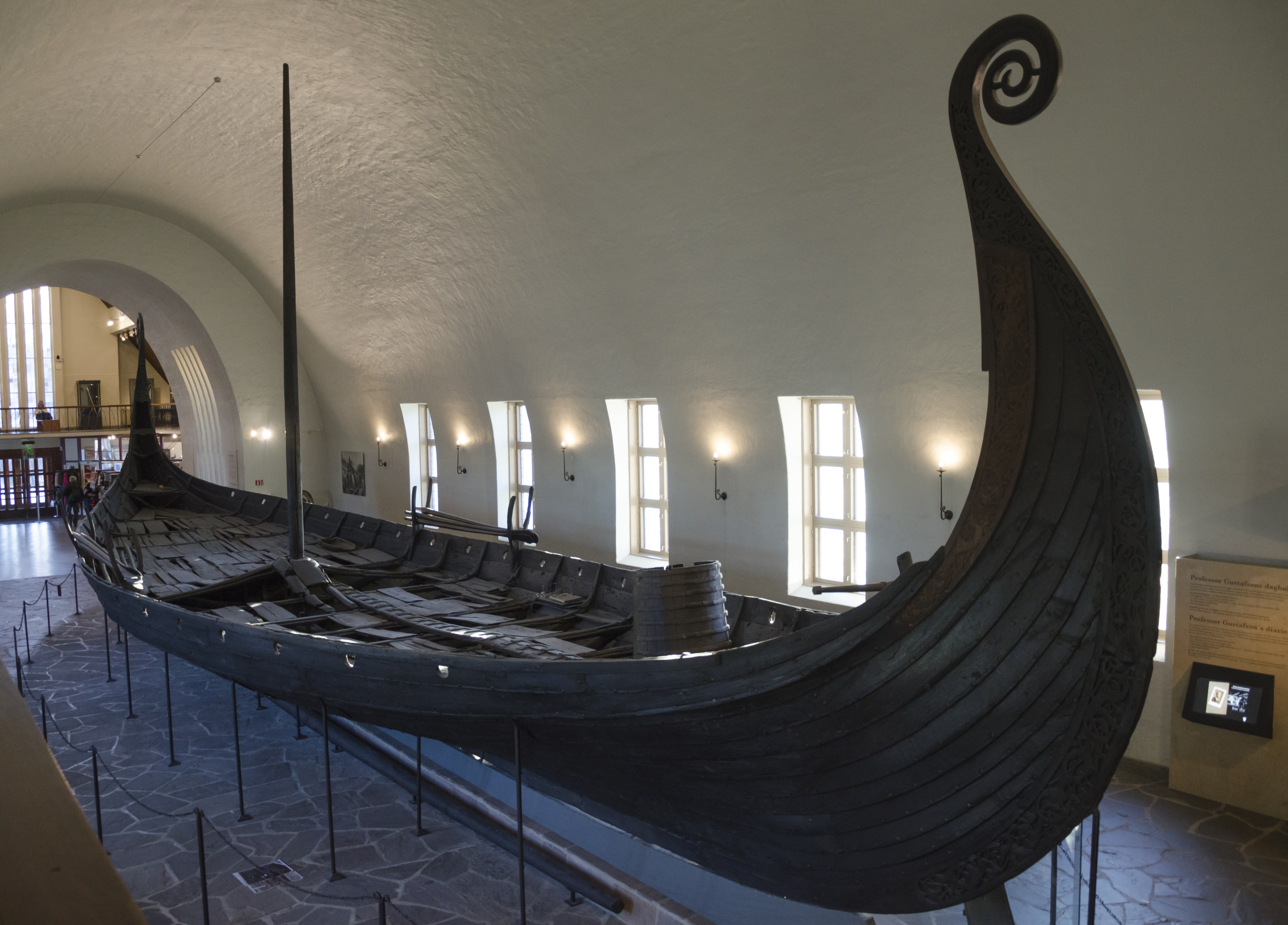
Photo: Petter Ulleland, CC BY-SA 4.0, via Wikimedia Commons
The Oseberg burial mound stands as one of the most extraordinary Viking Age archaeological discoveries near Tønsberg, Norway. The excavated site revealed a remarkably well-preserved 9th-century longship measuring approximately 22 meters in length, serving as the final resting place for two high-status women. The burial chamber contained an astonishing array of grave goods including textiles, wooden artifacts, animal carvings, and everyday objects that provide unprecedented insight into Viking Age life. Today, visitors can see the reconstructed ship and artifacts at the Viking Ship Museum in Oslo, while the original burial site remains a modest grass-covered mound in the Norwegian countryside. Some theorists have pointed to the Oseberg ship burial as potential evidence of extraterrestrial influence, noting parallels between Viking ship burials and similar practices in ancient Egypt and China, and suggesting these vessels were meant to transport the deceased to otherworldly realms—or even replicate spacecraft. However, archaeologists contextualize the Oseberg ship burial within well-documented Norse religious beliefs and social hierarchy, where elaborate ship burials reflected a culture's spiritual worldview about the afterlife journey and demonstrated the extraordinary wealth and status of the deceased. The rich inventory of everyday objects, textiles, and tools found aboard the vessel provides detailed evidence of Viking Age material culture rather than hints of celestial contact.
Timeline
Construction and burial of the Oseberg ship with two female occupants and elaborate grave goods
Local farmer discovers artifacts while digging, leading to archaeological investigation
Systematic excavation conducted by Norwegian archaeologists Gabriel Gustafson and Haakon Shetelig
Restored ship and artifacts first displayed at the Viking Ship Museum in Oslo
What the Show Claims
- ›Viking ship burial customs mirror Egyptian and Chinese burial practices, suggesting shared extraterrestrial influence on the belief that ships could convey the dead to otherworldly realmsS05E11
- ›The elaborate nature of ship burials may replicate alien spacecraft launch procedures passed down through ancient astronaut contactS05E11
Theorist Takes
“What's very interesting about the Oseberg ship is the fact that the Vikings actually chose to bury their dead in these boats. Now, this seems very similar to some type of a conveyance, possibly going into space.”
From the Transcripts
“Tonsberg, Norway. 50 miles south of Oslo lie the ruins of Oseberghaugen, a Viking burial mound. During excavations in 1904, archaeologists unearthed the remains of two people buried inside a Viking long-ship.”
What Archaeology Says
The 1904-1905 excavation of the Oseberg mound, led by Norwegian archaeologists Gabriel Gustafson and Haakon Shetelig, uncovered one of the most complete Viking Age ship burials ever discovered. The waterlogged clay soil had preserved organic materials that typically decay, including intricate wood carvings, textiles, leather goods, and even food remains. The ship itself, constructed around 820 AD, demonstrates sophisticated shipbuilding techniques with its elegant lines and elaborate decorative elements.
The two female occupants, believed to have died around the same time, were buried with an extraordinary collection of grave goods including sledges, a ceremonial cart, beds, chests, kitchen utensils, and agricultural tools. Scientific analysis suggests one woman was elderly while the other was middle-aged, though their exact identities remain debated. Some scholars propose one may have been Queen Åsa, grandmother of Harald Fairhair, Norway's first king.
Mainstream archaeology interprets the Oseberg burial as reflecting the Norse belief system where the deceased needed provisions and transportation for their journey to the afterlife. The ship served both practical and symbolic purposes, representing the vessel that would carry the dead across the waters to the realm of the gods. The elaborate grave goods demonstrate the high social status of the occupants and the community's investment in ensuring their proper transition to the afterlife.
Despite extensive study, mysteries remain about the burial's specific circumstances and the relationships between the two women. The exact religious significance of certain artifacts and the precise ritual procedures followed during the burial continue to generate scholarly debate, leaving room for various interpretations of this remarkable archaeological discovery.
Mysteries & Fun Facts
The Oseberg ship burial contained the only known complete set of Viking Age textiles, including silk imported from distant lands
Among the grave goods was an intricately carved wooden cart that may have been used in religious processions
The burial included the skeletons of 15 horses, 6 dogs, and 2 oxen, emphasizing the elaborate nature of the funeral
Dendrochronological analysis shows the oak used for the ship was felled around 820 AD, providing precise dating
Planning a Visit
The original Oseberg burial site near Tønsberg can be visited as a modest grass-covered mound in the countryside, though the ship and artifacts are housed at the Viking Ship Museum in Oslo. The museum provides comprehensive displays and interpretive materials about the burial and Viking Age culture. Access to the original site may require local inquiry for specific directions and current accessibility.
Oslo, approximately 100 kilometers northeast
Late spring through early autumn offers the most comfortable weather for visiting both the original site and the museum. Summer months provide the longest daylight hours for outdoor exploration of the burial mound location.
Related Sites
Externsteine
This Germanic sacred site connects to broader European ancient religious practices that Ancient Aliens theorists link to extraterrestrial influence
Carnac Stones
These megalithic monuments represent another European prehistoric culture with supposed connections to advanced ancient knowledge
Avebury Stone Circle
This stone circle exemplifies the type of ancient European ritual sites that the show suggests share common otherworldly origins with Viking burial practices