Nuraghe Complexes of Sardinia
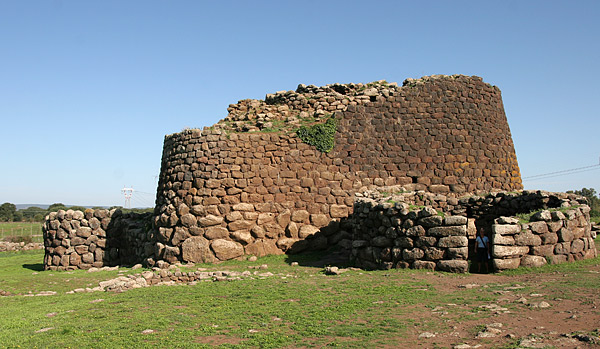
Photo: No machine-readable author provided. Jack Aubrey~commonswiki assumed (based on copyright claims)., CC BY-SA 2.5, via Wikimedia Commons
The Nuraghe complexes of Sardinia represent one of Europe's most enigmatic archaeological phenomena, consisting of approximately 7,000 megalithic stone towers scattered across the Mediterranean island. These distinctive cone-shaped structures, built without mortar using precisely fitted basalt blocks, rise up to 20 meters high and feature sophisticated corbelled dome construction. The largest and most famous, Su Nuraxi near Barumini, encompasses a central tower surrounded by defensive walls and subsidiary structures covering several acres. Dating from the Bronze Age through the Iron Age, these monuments represent the unique Nuragic civilization that flourished in isolation on Sardinia for over a millennium.
Timeline
Early Nuragic period begins; first simple nuraghe towers constructed across Sardinia
Middle Nuragic period sees construction of complex multi-towered fortresses and peak of civilization
Nuragic civilization declines under Roman influence; construction of new nuraghe ceases
Giovanni Lilliu leads major excavations at Su Nuraxi, revealing complex's full extent
Su Nuraxi di Barumini inscribed as UNESCO World Heritage Site
What the Show Claims
- ›The unusual architecture and sophisticated engineering are proposed as evidence of otherworldly influence on the Nuragic buildersS13E08
- ›Bizarre statues found at nuraghe sites suggest contact with extraterrestrial visitorsS13E08
- ›The mysterious pyramids and gigantic structures represent technology beyond the capabilities of Bronze Age peoplesS13E08
- ›The Nuragic civilization's sudden appearance and unique culture indicate possible alien interventionS13E08
What Archaeology Says
Extensive archaeological investigations have revealed the nuraghe as sophisticated multi-purpose structures serving defensive, administrative, and possibly religious functions. Excavations at major sites like Su Nuraxi have uncovered evidence of complex societies with advanced metallurgy, including bronze figurines, weapons, and tools. The builders demonstrated remarkable engineering skills, creating structures that have withstood millennia without mortar, using a technique called cyclopean masonry where massive stones are fitted together with extraordinary precision.
Key researchers including Giovanni Lilliu, who excavated Su Nuraxi from 1949-1956, have established that the Nuragic civilization developed sophisticated social hierarchies and trade networks extending across the Mediterranean. Archaeological evidence shows contact with Mycenaean Greece, Cyprus, and the eastern Mediterranean, as demonstrated by imported pottery and bronze objects found within the complexes. The famous bronze figurines discovered at various sites depict warriors, ships, and religious scenes, providing insight into Nuragic culture and beliefs.
The scientific consensus views the nuraghe as products of indigenous Bronze Age innovation, representing an isolated civilization that developed unique architectural solutions to local needs. The towers likely served as fortified residences for tribal leaders, with surrounding villages and agricultural terraces supporting complex communities. However, many questions remain unanswered about specific construction techniques, the precise social organization of Nuragic society, and the symbolic meaning of various architectural elements.
What remains genuinely mysterious is the sudden flourishing of this sophisticated civilization on an isolated island, their unique architectural innovations that appeared nowhere else in the ancient world, and the meaning behind many of the bronze figurines and stone sculptures found at the sites. The builders left no written records, leaving archaeologists to piece together their story from material remains alone.
Mysteries & Fun Facts
Sardinia contains more nuraghe structures per square kilometer than any other ancient monument type anywhere in the world
The largest nuraghe complexes could house estimated populations of several hundred people within their defensive walls
Bronze figurines found at nuraghe sites include some of the earliest known depictions of ships in European art
Some nuraghe towers are built with astronomical alignments, potentially serving as ancient observatories for tracking celestial events
Planning a Visit
Many nuraghe sites are accessible to visitors, with Su Nuraxi di Barumini being the most developed for tourism with guided tours and an interpretive center. Most sites are located in rural areas requiring some walking over uneven terrain, though major complexes generally have established pathways and signage. Visitors should check with local tourism offices for current accessibility and opening hours, as some remote sites may require permission or guides to access safely.
Cagliari, approximately 60 kilometers from the major Su Nuraxi complex
Spring and fall offer the most comfortable weather for exploring these outdoor archaeological sites, avoiding the intense summer heat of the Mediterranean climate. Winter visits are possible but may encounter occasional rain and shorter daylight hours for photography.
Featured Locations14 sites within this area
Mont'e Prama
ItalySa Domu e S'orcu (Tomb of the Giants), Siddi
ItalyMenhir Museum, Laconi
ItalyWell of Santa Cristina, Paulilatino
ItalyNuraghe Santu Antine
ItalyChurch of Sant'Anastasia, Sardara
ItalySardinia
ItalySantu Antine, Sardinia
ItalyWell of Santa Cristina
ItalyNuraghe Structures, Sardinia
ItalyTombs of the Giants, Sardinia
ItalyMont'e Prama Archaeological Site
ItalySardinian Menhirs, Sardinia
ItalyNuragic Structures, Sardinia
ItalyRelated Sites
Ħaġar Qim
Another Mediterranean megalithic complex built by an ancient island civilization using sophisticated stone construction techniques
Mnajdra Temples
Features similar prehistoric temple architecture on Malta built during roughly the same time period as early nuraghe
Gobekli Tepe
Represents another mysterious ancient site with advanced megalithic construction that challenges conventional understanding of prehistoric capabilities