Klerksdorp Sphere deposit sites, South Africa
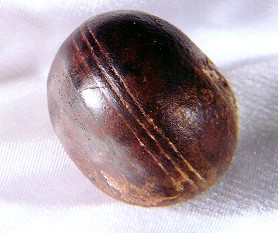
Photo: Robert Huggett, Public domain, via Wikimedia Commons
The Klerksdorp Sphere deposit sites contain hundreds of mysterious rounded objects discovered in Precambrian pyrophyllite deposits near Ottosdal, South Africa. These spheres, typically ranging from a few centimeters to about 10 centimeters in diameter, are embedded in mineral layers estimated to be approximately 3 billion years old. The spheres display remarkably uniform circular grooves around their circumference and are composed primarily of pyrite or hematite. The sites represent some of the oldest contested geological formations on Earth, predating complex life by billions of years.
Timeline
Formation of the pyrophyllite deposits containing the mysterious spheres
Discovery and initial documentation of the spheres by miners and geologists in the Ottosdal region
Increased scientific scrutiny and debate over the spheres' natural versus artificial origins
What the Show Claims
- ›The spheres are manufactured metallic objects created by extraterrestrial beings to seed Earth with bacterial lifeS10E06
- ›The perfectly circular grooves and uniform composition suggest advanced technology beyond natural geological processesS10E06
- ›The spheres' age of 3 billion years predates any known life on Earth, making them evidence of ancient interventionS10E06
Theorist Takes
“We might say that this is just a natural occurring thing on Earth, but this may be evidence that Earth was seeded by some kind of bacteria or microbes brought here and what we have today has been purposely created by beings with tremendous powers and knowledge.”
From the Transcripts
“grooved metal balls called Klerksdorp spheres. These mysterious round objects were found scattered in mineral deposits in South Africa that date back 3 billion years.”
What Archaeology Says
The Klerksdorp spheres were first brought to scientific attention when miners working the pyrophyllite deposits near Ottosdal began collecting the unusual rounded objects. Early examinations revealed their remarkable uniformity and the presence of distinct circular grooves that appeared to encircle each sphere. The objects are typically composed of pyrite (iron sulfide) or hematite (iron oxide), materials common in the geological environment where they were found.
Geological investigations have focused on understanding the formation processes that could create such uniform spherical shapes in ancient rock layers. Most mainstream geologists classify the spheres as concretions — rounded masses of mineral matter formed by the precipitation of dissolved materials around a nucleus during sedimentary rock formation. This process can create surprisingly uniform shapes when conditions remain stable over long periods. The grooves are explained as the result of differential weathering or stress fractures that developed along natural weak points in the mineral structure.
However, some researchers have questioned whether purely natural processes could account for the spheres' remarkable consistency in size, shape, and groove patterns. The debate centers on whether the observed uniformity falls within expected parameters for natural concretion formation, or whether it suggests some form of organized process. The extreme age of the deposits — roughly 3 billion years — adds complexity to any analysis, as few comparable geological formations from that era have been studied in detail.
What remains genuinely unknown is the precise mechanism that created such consistent spherical forms with regular groove patterns across hundreds of specimens. While concretion formation provides a plausible explanation, the specific conditions that would produce this level of uniformity in Precambrian deposits are still being investigated by geologists studying similar formations worldwide.
Mysteries & Fun Facts
Some of the spheres are said to spin on their own when placed on a flat surface, though this has been attributed to minor surface irregularities
The spheres are found exclusively in pyrophyllite deposits, a mineral used in the manufacture of ceramics and refractory materials
Local miners have collected hundreds of these spheres over the decades, with many ending up in private collections worldwide
The 3-billion-year age of the deposits places their formation during the Archean Eon, when Earth's atmosphere contained virtually no oxygen
Planning a Visit
The Klerksdorp sphere sites are located in rural mining areas near Ottosdal and are generally accessible to visitors, though access may require permission from local mining operations. Visitors should check with local tourism authorities for current access information and safety requirements when visiting active or former mining sites.
Klerksdorp, approximately 30 kilometers away
The South African interior experiences a subtropical highland climate, with the dry winter months from May to September typically offering the most comfortable conditions for outdoor exploration.
Related Sites
Stone Spheres of Costa Rica
Another site featuring mysterious ancient spherical objects that challenge conventional archaeological explanations
Gobekli Tepe
An ancient site that predates expected technological capabilities, raising similar questions about advanced prehistoric knowledge
Puma Punku
A location with precisely crafted stone work that some theorists attribute to advanced ancient technology or intervention