Calakmul
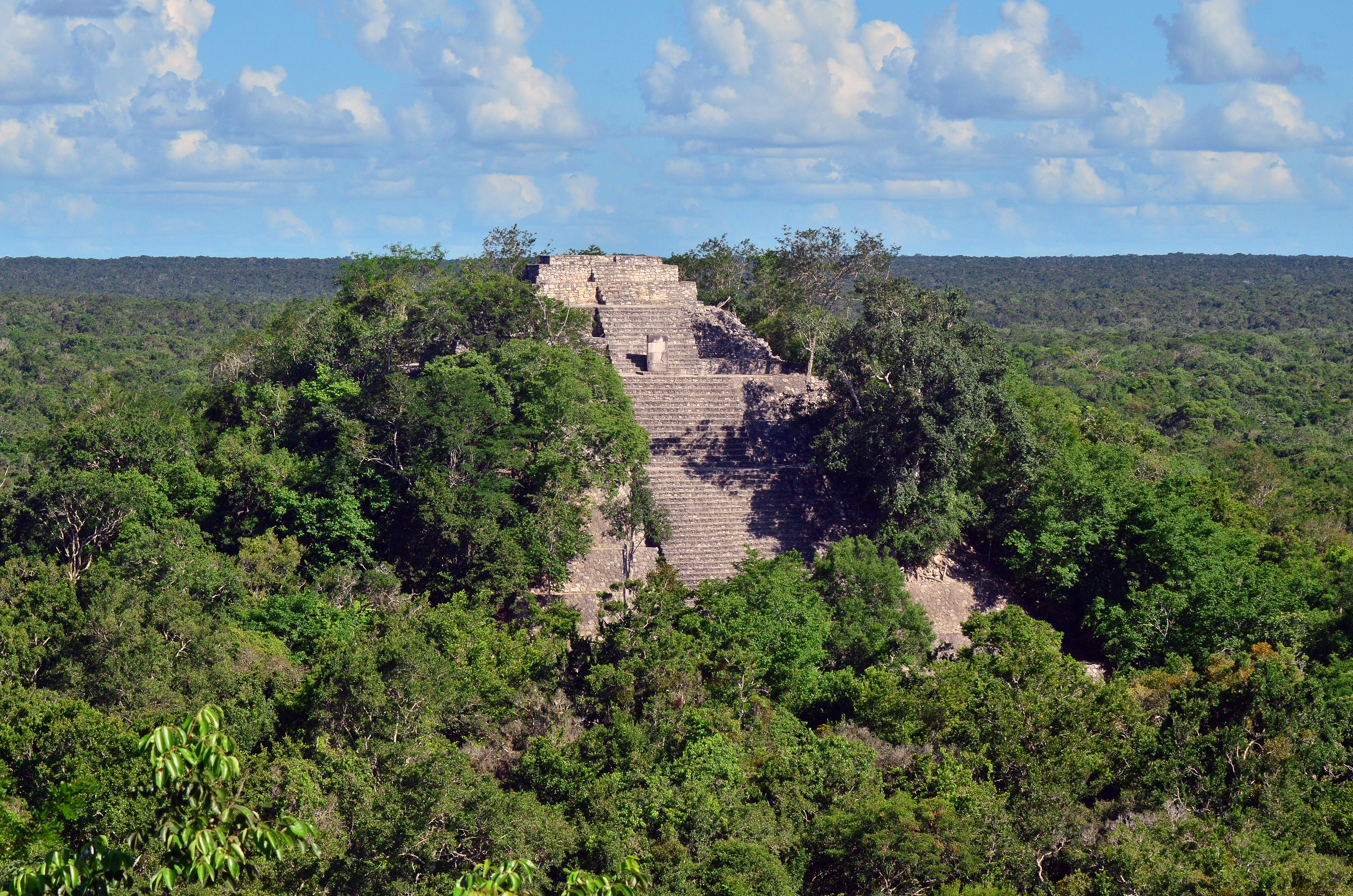
Photo: PashiX, CC BY-SA 4.0, via Wikimedia Commons
Calakmul stands as one of the most powerful Maya cities ever discovered, hidden deep in the jungles of Campeche, Mexico, just 35 kilometers from the Guatemalan border. The site spans approximately 20 square kilometers with over 6,750 identified ancient structures, dominated by Structure 2, a massive pyramid rising over 45 meters high—making it one of the tallest Mesoamerican pyramids. At its peak, this seat of the Snake Kingdom administered a vast domain and governed territories up to 150 kilometers away, with an estimated population of 50,000 people. The central monumental architecture alone covers about 2 square kilometers, while dense residential structures fill the remaining jungle-covered expanse.
Timeline
Early settlement and founding of Calakmul begins
Classic period flourishing as major Maya superpower, intense rivalry with Tikal
Rediscovered from the air by biologist Cyrus L. Lundell on December 29
Discovery reported to Sylvanus G. Morley of the Carnegie Institute in March
What the Show Claims
- ›New evidence about Maya civilization indicates contact with extraterrestrial visitorsS20E11
- ›Discoveries about the Maya challenge conventional understanding of how they achieved their sophisticated cultureS20E11
From the Transcripts
“Palenque is recognized in these texts as the Western capital of the Maya world. The southern one was Copan, the eastern one was Tikal, and the northernmost one was Calakmul.”
What Archaeology Says
Archaeological excavations at Calakmul have revealed the extraordinary scope of this Maya superpower, uncovering evidence of sophisticated urban planning across its vast 20-square-kilometer expanse. The great pyramid, Structure 2, demonstrates the Maya practice of sequential construction—building new layers over existing structures until reaching its final towering height of over 45 meters. Four tombs discovered within the pyramid provide crucial insights into Maya burial practices and royal succession.
The site's importance extends far beyond its monumental architecture. Calakmul served as the political center of the Snake Kingdom, identifiable by the extensive distribution of their distinctive emblem glyph featuring a snake head sign, read as "Kaan." This kingdom's influence stretched across the northern Petén Basin, with governance extending to territories 150 kilometers away—a remarkable feat of ancient administration.
Scientific consensus establishes Calakmul as one half of a great Maya rivalry, locked in political and military struggle with Tikal throughout the Classic period. This superpower dynamic shaped much of Maya history, with both cities vying for control of trade routes and tributary states. The discovery and documentation by Cyrus L. Lundell and subsequent reporting to Carnegie Institute researcher Sylvanus G. Morley marked the beginning of serious archaeological investigation.
Despite extensive research, significant mysteries remain about daily life in this jungle metropolis. The logistics of supporting 50,000 people in dense tropical forest, the precise nature of long-distance governance, and the astronomical knowledge encoded in the site's layout continue to challenge archaeologists and inspire ongoing research into Maya achievements.
Mysteries & Fun Facts
Calakmul was rediscovered on December 29, 1931, when biologist Cyrus L. Lundell spotted it from an airplane while working for the Mexican Exploitation Chicle Company
The site contains 6,750 identified ancient structures, making it one of the most architecturally dense Maya sites
Structure 2 rises over 45 meters high, ranking among the tallest pyramids in Mesoamerica
The Snake Kingdom's emblem glyph has been found distributed across territories up to 150 kilometers from Calakmul, indicating vast political influence
Planning a Visit
Calakmul is accessible to visitors through Mexico's Calakmul Biosphere Reserve, though the remote jungle location requires substantial travel planning and typically involves guided tours. The site offers an extraordinary opportunity to experience Maya ruins in their original forest setting, with howler monkeys and exotic birds providing a soundtrack to exploration.
Campeche, approximately 300 kilometers northeast
The dry season from November to April offers the most comfortable conditions for jungle exploration, with less rainfall and more manageable humidity levels.
Related Sites
Tikal
Tikal was Calakmul's primary rival throughout the Classic period in a struggle between Maya superpowers
Palenque
Palenque represents another major Maya political center from the same Classic period era
Chichen Itza - Kukulkan Temple
Chichen Itza showcases later Maya astronomical and architectural achievements that built upon earlier sites like Calakmul
Featured In1 episodes
Historical data sourced from Wikipedia