Tikal
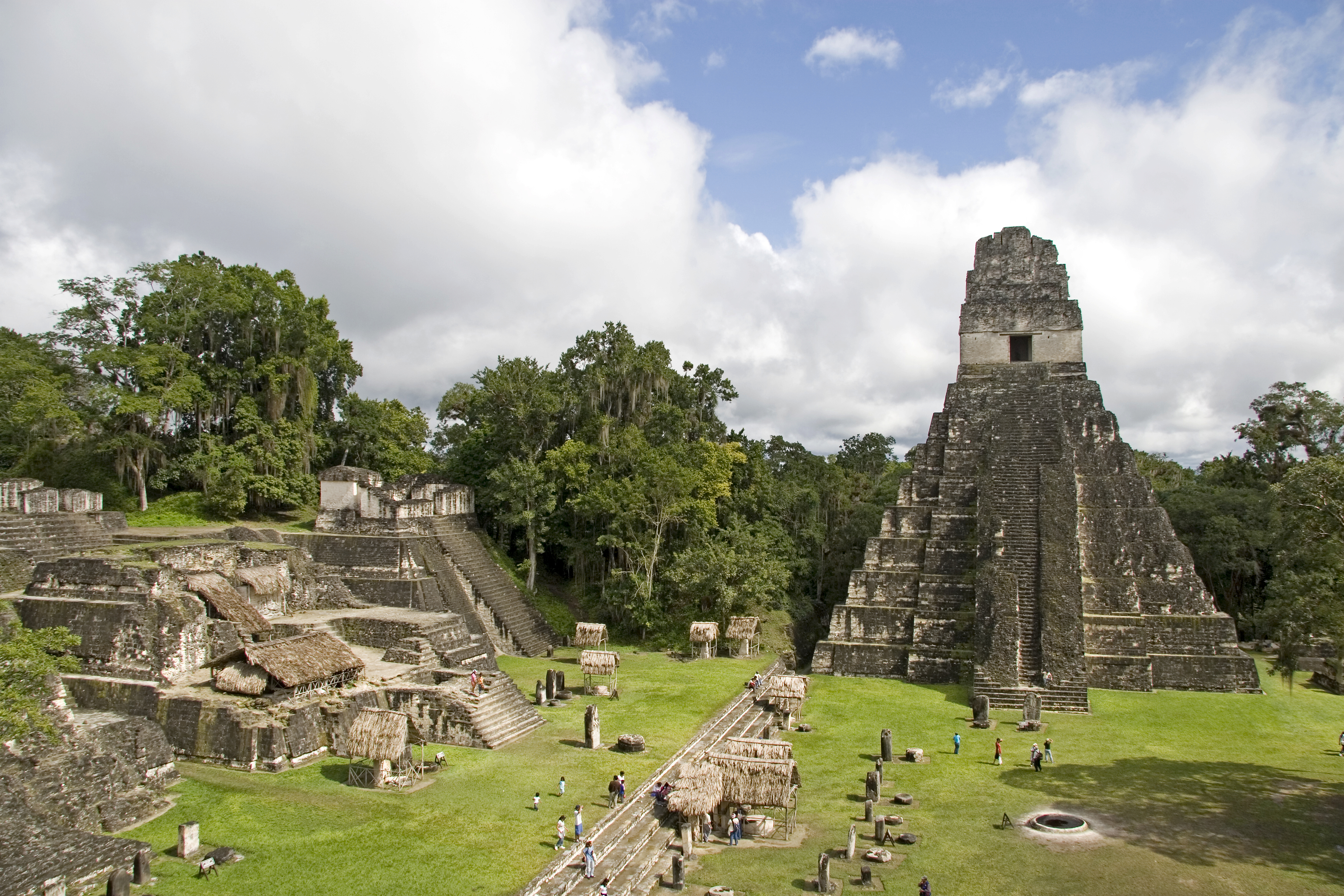
Photo: Mundo Maya, CC BY-SA 4.0, via Wikimedia Commons
Tikal stands as one of Guatemala's most magnificent archaeological sites, where towering Maya pyramids rise from dense rainforest canopy in the Petén Basin. Visitors today can explore over 3,000 structures dating from 600 BC to 900 AD, including Temple IV which reaches 65 meters (213 feet) in height, making it one of the tallest pre-Columbian structures in the Americas. The ancient city, likely called Yax Mutal by its inhabitants, once sprawled across 575 square kilometers and supported an estimated population of 100,000 at its peak. The site sits within Tikal National Park, a UNESCO World Heritage Site since 1979, where howler monkeys and exotic birds now inhabit the same stone plazas once filled with Maya nobles and priests.
Timeline
First monumental architecture constructed at Tikal
Classic Period - Tikal reaches its peak as one of the most powerful Maya kingdoms
Ruler Siyaj K'ak' arrives, possibly bringing Teotihuacan influence to the city
Temple IV constructed, becoming one of the tallest pre-Columbian structures
Beginning of Tikal's decline as part of the broader Maya Classic collapse
Modern rediscovery and first systematic exploration of the ruins
Tikal National Park designated as UNESCO World Heritage Site
What the Show Claims
- ›Temple IV is the tallest pre-Columbian structure in the Americas — built with alien engineering assistanceS03E05S04E01
- ›Tikal's layout mirrors the stars of the Pleiades — alien star map encoded in city planningS04E01
- ›The sudden flourishing of Tikal in the 1st century AD corresponds with a possible alien intervention eventS04E02
- ›Stela carvings show rulers in poses resembling alien pilots or astronautsS03E05S04E01
Theorist Takes
“Those Mayans didn't leave because of drought. They left because it was some kind of harvest. It was an experiment. The Mayans reached some place and somebody took them from here.”
From the Transcripts
“Tikal was perhaps the largest city of the entire Classic Maya period. It really was the signature city of the Maya. It was also one of the last cities to be walked away from.”
What Archaeology Says
Extensive excavations at Tikal have revealed one of the most complete pictures of any major Maya city, with archaeologists uncovering a complex urban center that dominated the region for over a millennium. The site contains more than 3,000 structures ranging from towering temple-pyramids to elite residential complexes, with the earliest monumental architecture dating to the 4th century BC. Major excavation work began in earnest in the 1950s, led by the University of Pennsylvania Museum, revealing intact royal tombs, elaborate burial goods, and hundreds of carved monuments that provide detailed records of Tikal's dynastic history.
The scientific consensus attributes Tikal's remarkable growth and architectural achievements to well-documented historical factors, particularly the arrival of foreign influence from Teotihuacan in central Mexico around 378 AD. Archaeological evidence suggests that a ruler named Siyaj K'ak' introduced new military technologies, architectural styles, and political organization that transformed Tikal into a regional superpower. The city's sophisticated urban planning, including its complex water management systems and precisely aligned ceremonial complexes, reflects advanced Maya engineering and astronomical knowledge rather than extraterrestrial intervention.
Construction techniques at Tikal demonstrate the Maya's mastery of limestone quarrying, mortar production, and massive stone transportation without metal tools or wheeled vehicles. Temple IV, standing 65 meters tall, was built using traditional Maya corbel arch construction reinforced with tons of rubble fill and precise stone cutting. While the scale and precision of Tikal's architecture continues to impress modern engineers, archaeological evidence consistently points to human ingenuity and centuries of accumulated building experience.
What remains genuinely mysterious about Tikal is the rapid abandonment that occurred around 900 AD, part of the broader Maya Classic collapse that affected cities across the region. While drought, warfare, and political fragmentation likely contributed to the decline, the exact sequence of events that led to the desertion of such a powerful center continues to be debated among archaeologists and climatologists.
Mysteries & Fun Facts
Temple IV was so tall that its summit extends above the rainforest canopy, offering panoramic views across the jungle
Tikal contains over 200 stone monuments with hieroglyphic inscriptions recording over 800 years of political history
The site's ancient name Yax Mutal means 'First Mutal,' referring to a sacred mountain in Maya cosmology
Archaeologists have identified a sophisticated water management system including reservoirs that collected rainwater for the city's massive population
Planning a Visit
Tikal is accessible to visitors year-round through Tikal National Park, with well-maintained trails connecting the major temple complexes and a visitor center providing context about Maya civilization. The site requires a moderate level of fitness as visitors must walk several kilometers through jungle terrain and climb steep pyramid steps to reach the best viewpoints. Guided tours are recommended to fully appreciate the archaeological significance and to spot the abundant wildlife that now inhabits the ancient city.
Flores, Guatemala, approximately 65 kilometers southeast
The dry season from November to April offers the most comfortable weather conditions and clearer views from the temple tops. Early morning visits provide the best opportunities for wildlife spotting and stunning sunrise views over the jungle canopy.
Featured Locations3 sites within this area
Temple of the Great Jaguar, Tikal
GuatemalaTikal, Guatemala
GuatemalaTikal Pyramids
GuatemalaRelated Sites
Palenque
Another major Maya site featured on Ancient Aliens with similar claims about advanced construction techniques and astronomical alignments
Chichen Itza - Kukulkan Temple
The famous Maya pyramid complex that Ancient Aliens theorists claim demonstrates alien influence in Mesoamerican architecture
Teotihuacan
The central Mexican metropolis that historically influenced Tikal's development in 378 AD, though the show suggests alien connections to both cities
Featured In3 episodes
Historical data sourced from Wikipedia