Patagonia (San Julián area)
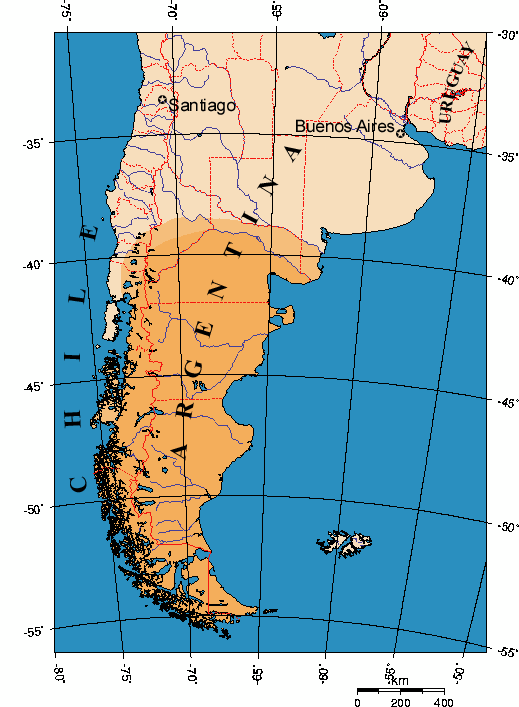
Photo: Unknown, CC BY-SA 3.0, via Wikimedia Commons
The Patagonia region near Puerto San Julián encompasses vast windswept plains and coastal areas along Argentina's Atlantic shore, approximately 2,300 kilometers south of Buenos Aires. This remote landscape of steppes and cliffs became legendary in European exploration history when Ferdinand Magellan's expedition made landfall here in 1520. The area stretches inland for hundreds of kilometers, characterized by sparse vegetation, guanaco herds, and archaeological evidence of indigenous settlement spanning thousands of years. Today, visitors can explore the same coastline where one of history's most famous encounters between European explorers and indigenous peoples took place, giving birth to enduring legends of giants.
Timeline
Indigenous peoples, including ancestors of the Tehuelche, begin inhabiting Patagonian regions
Ferdinand Magellan's expedition encounters Tehuelche people near Puerto San Julián, documenting their impressive stature
Antonio Pigafetta chronicles the expedition's encounters, creating detailed accounts of the indigenous inhabitants
What the Show Claims
- ›Ferdinand Magellan's crew encountered giants so tall that the tallest Europeans only reached their waistsS21E13
- ›Magellan's expedition successfully captured two of these giants according to historical chroniclesS21E13
- ›The encounters represent evidence of a race of giants in ancient PatagoniaS21E13
What Archaeology Says
Archaeological investigations in the San Julián area have revealed evidence of indigenous occupation spanning millennia, with tool fragments, hearths, and seasonal camping sites scattered across the coastal plains. The Tehuelche people, known to anthropologists as skilled hunters and gatherers, left behind rock art, burial sites, and artifacts that demonstrate sophisticated adaptation to Patagonia's harsh environment.
Ethnographic studies conducted in the 19th and early 20th centuries documented that Tehuelche men commonly reached heights of around 6 feet, with some individuals measuring considerably taller. This impressive stature, combined with their distinctive clothing and customs, would indeed have created a striking impression on 16th-century European sailors, whose average height was typically around 5 feet 4 inches. Spanish and Portuguese explorers consistently noted the physical presence of Patagonian peoples in their chronicles.
Modern analysis of Magellan's encounter suggests a combination of factors contributed to the giant narrative: genuine height differences, cultural misunderstandings, and the tendency of exploration accounts to become embellished over time. The scientific consensus attributes the reports to encounters with the Tehuelche and related Patagonian groups, whose impressive physical stature was enhanced by thick guanaco-skin clothing and boots that would have made them appear even larger. However, some aspects of the historical accounts remain puzzling, including specific descriptions of proportions and behaviors that don't entirely align with known Tehuelche characteristics.
Mysteries & Fun Facts
The name 'Patagonia' may derive from Magellan's crew calling the indigenous people 'Patagon,' possibly meaning 'big feet'
Antonio Pigafetta's chronicle remains one of the most detailed early European accounts of South American indigenous peoples
Some Tehuelche individuals were documented as reaching heights of 6 feet 6 inches or more, exceptional for any population in the 16th century
The encounter at San Julián was one of the first recorded meetings between Europeans and the indigenous peoples of mainland South America's southern regions
Planning a Visit
The Puerto San Julián area is generally accessible to visitors, with the town serving as a gateway to explore the historic coastline where Magellan landed. Several monuments and interpretive sites commemorate the 1520 encounter, though reaching some of the more remote archaeological locations may require local guides.
Puerto San Julián, approximately 10 kilometers from the historic landing sites
The austral summer months from December to March offer the most favorable weather conditions, with milder temperatures and less wind than Patagonia's notoriously harsh winter season.