Menehune Fishpond (Alekoko Fishpond)
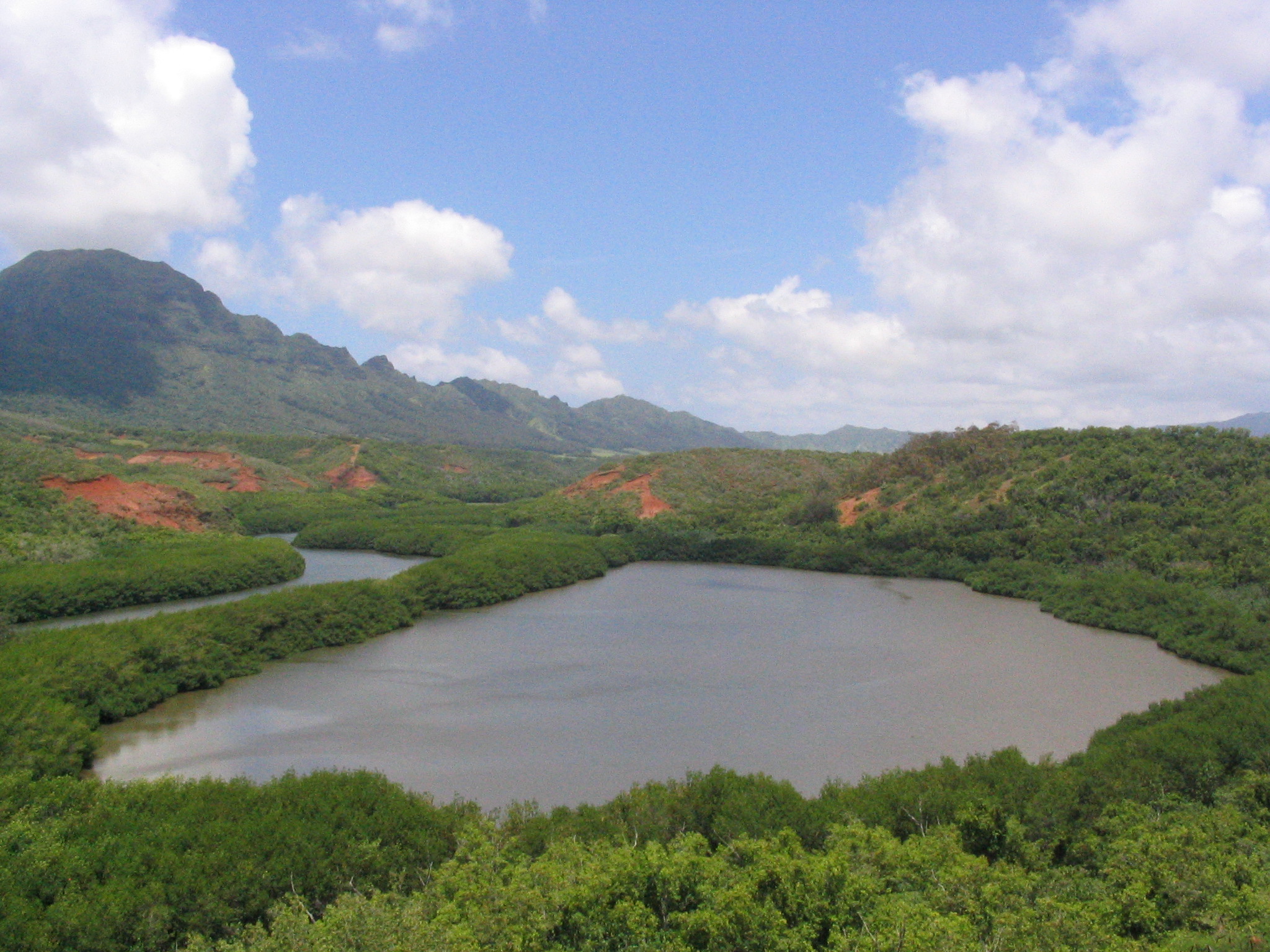
Photo: Collin Grady, CC BY-SA 2.0, via Wikimedia Commons
The Menehune Fishpond, also known as Alekoko Fishpond, stands as one of Hawaii's most impressive ancient aquaculture structures on the island of Kaua'i. This remarkable engineering feat features a massive stone wall approximately 900 feet long that creates an enclosure in the Hulē'ia River, forming what was once a thriving royal fish reservoir. The pond covers several acres and demonstrates sophisticated understanding of tidal flow management and fish cultivation techniques. Located in a lush valley setting, the structure represents one of the finest examples of traditional Hawaiian fishpond construction, with its precisely fitted stones creating a testament to ancient Polynesian engineering skills.
Timeline
Estimated earliest construction period based on traditional Hawaiian aquaculture development
Primary construction and use period as royal fishpond during height of Hawaiian civilization
Listed on the National Register of Historic Places recognizing its historical significance
What the Show Claims
- ›The fishpond's 900-foot stone wall was constructed in a single night by the menehune, a race of supernatural beingsS14E12
- ›The menehune were extraterrestrial hybrid beings created by the akua (gods) as a servant race to assist humanityS14E12
- ›The structure pre-dates known Hawaiian civilization and represents advanced technology beyond native capabilitiesS14E12
Theorist Takes
“I visited all of the structures that supposedly were built by the menehune.”
From the Transcripts
“There's a menehune fishpond that's huge, has 900 feet of a wall surrounding this one area and then they would use that as a reservoir for fish.”
What Archaeology Says
Archaeological analysis of Alekoko Fishpond reveals sophisticated construction techniques consistent with traditional Hawaiian engineering practices. The stone wall demonstrates expert knowledge of local geology, utilizing basalt rocks carefully selected and fitted together to create a durable barrier capable of withstanding tidal forces and seasonal flooding. The design shows clear understanding of fish behavior and tidal patterns, with strategically placed gates allowing controlled water flow while maintaining optimal conditions for fish cultivation.
Researchers have identified the pond as part of a broader network of Hawaiian aquaculture systems that supported dense populations across the islands. The construction methods, while impressive, align with known Polynesian building techniques found throughout the Pacific. Carbon dating and stratigraphic analysis of associated artifacts suggest construction during the height of Hawaiian civilization, likely between 1000-1700 CE, coinciding with population growth and increasing social stratification.
The scientific consensus places Alekoko Fishpond firmly within the tradition of Hawaiian fishpond construction, representing the culmination of centuries of aquacultural knowledge. Similar structures exist throughout the Hawaiian Islands, though few match Alekoko's scale and preservation. The precision of the stonework reflects the skills of master craftsmen rather than supernatural intervention, with construction techniques that can be traced through the archaeological record.
What remains fascinating to researchers is the organizational capacity required for such projects. The coordination of labor, stone selection, and construction timing represents sophisticated social organization. While the engineering is well understood, questions persist about the specific cultural and religious significance of different fishponds, and how construction knowledge was transmitted across generations of Hawaiian builders.
Mysteries & Fun Facts
The fishpond's name 'Alekoko' means 'rippling blood' in Hawaiian, possibly referring to the reddish color of the water during certain tidal conditions
According to Hawaiian oral tradition, the menehune would only work at night and demanded complete privacy during construction
The structure served as a royal fishpond, providing fresh fish exclusively for Hawaiian nobility and special ceremonies
The fishpond demonstrates ancient Hawaiian understanding of sustainable aquaculture, maintaining fish populations without depleting wild stocks
Planning a Visit
The fishpond is generally accessible to visitors and can be viewed from several vantage points along the Hulē'ia River. The site offers scenic overlooks where visitors can appreciate the scale and setting of this ancient structure, though direct access to the pond itself may be restricted for preservation purposes.
Lihue, approximately 3 miles northeast
The best time to visit is during Hawaii's dry season from April to October when weather conditions are most favorable for outdoor exploration. Morning hours typically offer the clearest views and most comfortable temperatures for sightseeing.
Related Sites
Stone Spheres of Costa Rica
Both sites feature precisely fitted stone construction attributed to supernatural beings in local folklore, raising questions about ancient building techniques
Nan Madol
This ancient Pacific island complex shares similarities in sophisticated stone engineering and legendary construction by mysterious builders
Sacsayhuaman
Like the fishpond, this Incan site demonstrates advanced stone-fitting techniques that ancient astronaut theorists claim exceed native capabilities