Mycenae
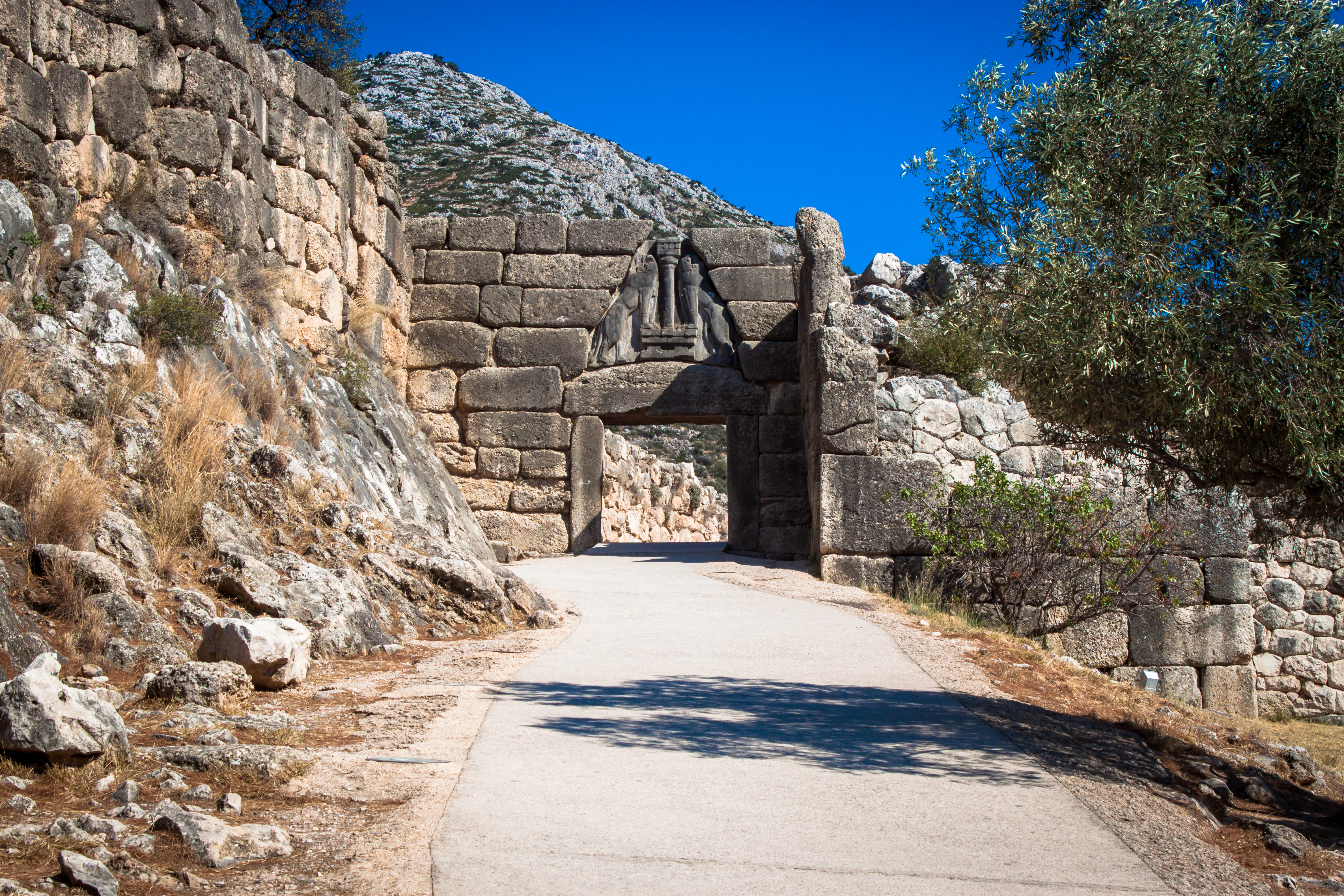
Photo: Andy Hay from UK, CC BY 2.0, via Wikimedia Commons
Mycenae is an archaeological site perched 274 meters above sea level on a strategic hilltop in the northeastern Peloponnese, approximately 120 kilometers southwest of Athens. The ancient citadel dominated southern Greece during the late Bronze Age and at its peak in 1350 BC housed a population of 30,000 across an area of 32 hectares. Visitors today can explore the massive Lion Gate entrance, the Treasury of Atreus tholos tomb, and the imposing cyclopean walls built from enormous limestone blocks fitted without mortar. The site's monumental architecture and connection to Homer's epics make it one of Greece's most significant archaeological treasures.
Timeline
Mycenaean civilization begins to flourish, establishing Mycenae as a major center
Mycenae reaches its peak with 30,000 inhabitants across the citadel and lower town
Decline and abandonment of Mycenaean civilization
Venetian engineer Francesco Vandeyk first correctly identifies the ruins as ancient Mycenae
UNESCO adds Mycenae to the World Heritage List along with nearby Tiryns
What the Show Claims
- ›The cyclopean masonry at Mycenae required acoustic levitation or extraterrestrial assistance due to the massive scale of constructionS02E06
- ›The 250-ton lintel stone at the Treasury of Atreus was beyond ancient human capability to move and positionS02E06
Theorist Takes
“In mycenae, Greece there is what's called the "treasury of atreus." And right in there, there is one stone that has been hoisted over the entrance of that treasury, and it weighs an estimated 250 tons.”
“Cyclopean architecture is associated with the Cyclopes, the one-eyed giants. It really indicates something that's almost impossible to make.”
From the Transcripts
“Mycenae. In the second millennium b.C., this ancient fortress city dominated much of Southern Greece. Here, fortifications were built in a style known as "cyclopean masonry."”
“One of those is the Lion's Gate in Mycenae. This is said to have been built by the Cyclopes. And the reason for this is, one, because of the architecture of it... It's called "cyclopean masonry."”
What Archaeology Says
Archaeological excavations at Mycenae have revealed a sophisticated Bronze Age civilization that dominated the Aegean world from approximately 1600 to 1100 BC. The site preserves remarkable examples of Mycenaean architecture, including the famous Lion Gate with its distinctive relief sculpture, massive cyclopean walls constructed from limestone boulders weighing several tons each, and the Treasury of Atreus, a spectacular tholos tomb with a corbelled dome. Linear B tablets discovered at the site provide some of the earliest examples of written Greek, offering insights into Mycenaean administrative systems and religious practices.
Modern archaeological consensus attributes Mycenae's monumental construction to the organized labor systems of the Mycenaean palace economy, supported by evidence of sophisticated engineering techniques including ramps, levers, and coordinated workforce management. The cyclopean masonry, named after the mythological Cyclopes by later Greeks who marveled at the massive stones, demonstrates advanced understanding of structural engineering and quarrying techniques rather than supernatural intervention.
Key researchers including Heinrich Schliemann in the 19th century and subsequent Greek and international archaeological teams have systematically excavated the site, revealing palace complexes, residential areas, and elaborate burial practices that reflect a highly stratified society. The construction methods, while impressive, fall well within the capabilities documented for other Bronze Age civilizations that employed similar megalithic building techniques.
What remains genuinely intriguing is the precise organizational methods used to coordinate such massive construction projects and the symbolic meaning behind specific architectural choices, though these questions reflect gaps in our historical record rather than evidence of extraordinary intervention.
Mysteries & Fun Facts
The Lion Gate relief sculpture is believed to be the oldest monumental sculpture in Europe
Linear B tablets found at Mycenae helped scholars decipher this ancient form of Greek writing
The Treasury of Atreus remained the largest domed space in the world for over 1,000 years after its construction
Pausanias, the ancient Greek geographer, used the Lion Gate as a landmark to identify Mycenae in his 2nd century AD writings
Planning a Visit
Mycenae is generally accessible to visitors year-round, with well-maintained paths connecting the major monuments including the Lion Gate, Treasury of Atreus, and palace complex. The site includes an excellent museum displaying artifacts from excavations, and guided tours are available to help interpret the complex archaeological remains.
Nafplio, approximately 25 kilometers southeast
Spring and autumn offer the most comfortable weather for exploring the hilltop site, avoiding both summer heat and winter rains. Early morning visits provide the best lighting for photography and fewer crowds.
Featured Locations2 sites within this area
Treasury of Atreus, Mycenae
GreeceLion Gate, Mycenae
GreeceTheorists argue the Lion Gate at Mycenae is an example of cyclopean masonry said to have been built by the one-eyed giant Cyclopes, implying superhuman builders were responsible for structures seemingly impossible for ordinary humans to construct. Mainstream archaeologists attribute the Lion Gate and the cyclopean walls of Mycenae to the Late Bronze Age Mycenaean civilization, built around 1250 BC using organized human labor.
Related Sites
Sacsayhuaman
Features similarly massive stone construction that ancient astronaut theorists claim required advanced technology
Gobekli Tepe
Another ancient site with precisely fitted megalithic stones that challenges conventional archaeological explanations
Puma Punku
Showcases precision stone cutting and fitting techniques that parallel the engineering mysteries at Mycenae
Featured In1 episodes
Historical data sourced from Wikipedia