Hal Saflieni Hypogeum
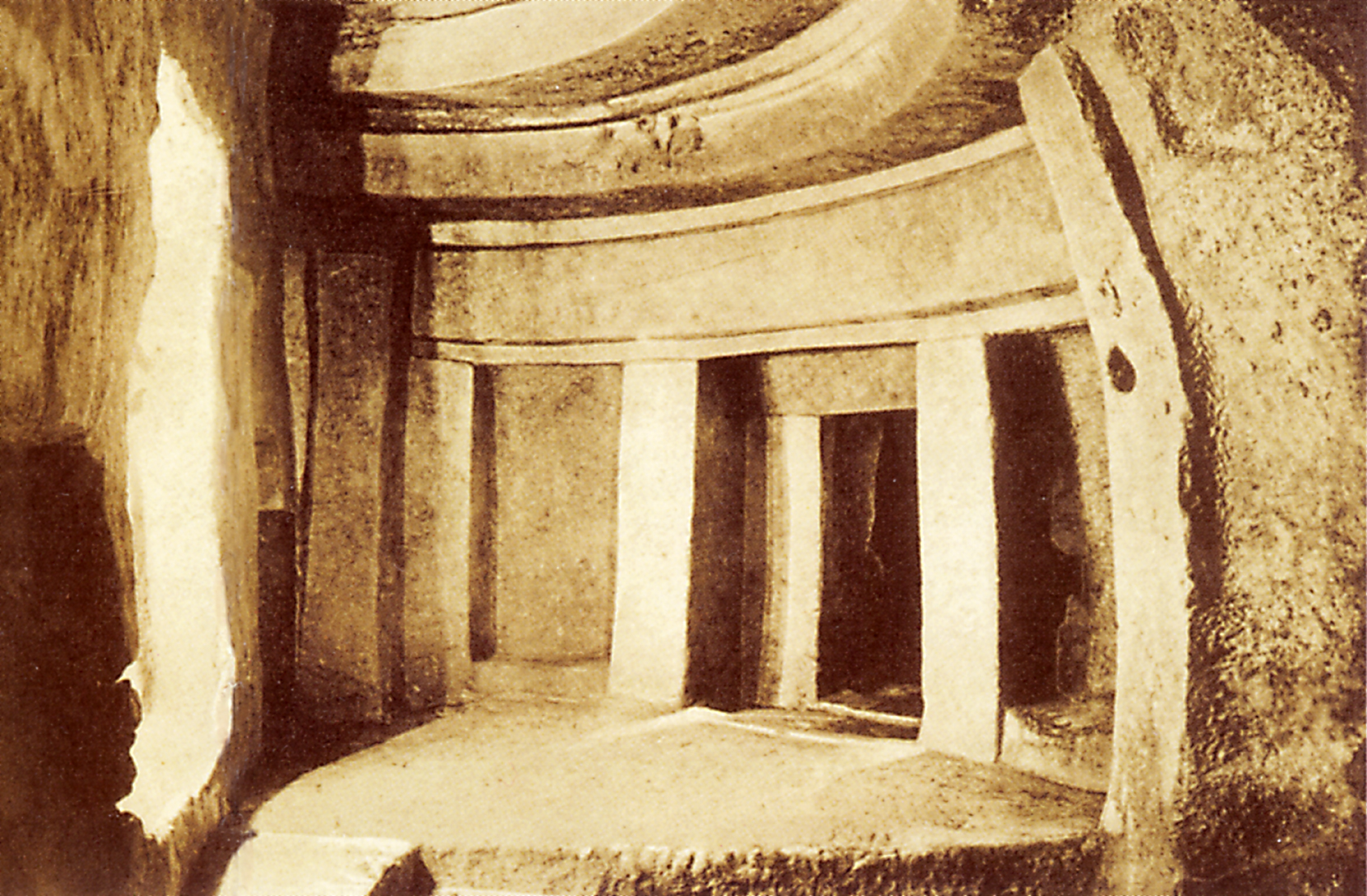
Photo: Richard Ellis, Public domain, via Wikimedia Commons
The Hal Saflieni Hypogeum is a remarkable three-level underground complex carved directly into the soft limestone bedrock of Malta between 4000-2500 BC. This subterranean sanctuary extends approximately 500 square meters across its chambers and passages, reaching depths of up to 10.6 meters below ground level. The structure represents one of the world's oldest prehistoric underground temples, featuring intricately carved walls, doorways, and chambers that mirror the above-ground Maltese megalithic temples. Archaeological evidence suggests it served as both a sacred sanctuary and necropolis, with the remains of over 7,000 individuals discovered within its chambers. The Hypogeum's most famous feature is the Oracle Room, a bell-shaped chamber renowned for its extraordinary acoustic properties.
Timeline
Construction begins during the Żebbuġ phase of Maltese prehistory
Major expansion and carving during the Ġgantija phase
Final phase of use during the Tarxien period before abandonment
Accidental rediscovery by workers cutting cisterns for housing development
First systematic excavation conducted by archaeologist Manuel Magri
Designated as UNESCO World Heritage Site
What the Show Claims
- ›Underground sanctuary dating to 4000 BC, carved with remarkable precisionS16E04S19E09
- ›Oracle Room generates acoustic frequencies between 70-114 Hz that enhance consciousnessS16E04S19E09
- ›Elongated skulls found in the Hypogeum suggest alien-human hybridsS16E04S19E09
- ›Sound properties suggest alien acoustic engineering knowledgeS16E04S19E09
Theorist Takes
“So, you have to wonder whether extraterrestrials weren't involved in tuning the Hypogeum to create this special frequency.”
From the Transcripts
“The most famous of these is the Hal-Saflieni Hypogeum. Hal-Saflieni dates back to about 6,000 years ago... The entire Hypogeum resonates at the specific frequency of 110 hertz.”
What Archaeology Says
Archaeological excavations have revealed that the Hypogeum was carved entirely by hand using antler picks, stone hammers, and obsidian blades over approximately 1,500 years. The complex consists of three distinct levels: an upper level dating to around 3600-3300 BC, a middle level from 3300-3000 BC, and a lower level completed around 3000-2500 BC. The chambers feature red ochre paintings, carved spirals, and architectural elements that closely mirror the contemporary above-ground temples of Malta.
The site's most significant archaeological finding was the discovery of thousands of human remains, representing what may be one of the world's earliest organized burial practices. Manuel Magri's early 20th-century excavations documented elaborate burial rituals, with bodies arranged in specific positions and accompanied by pottery, personal ornaments, and carved figurines. The famous "Sleeping Lady" figurine, a small terracotta sculpture of a reclining woman, was discovered here and has become an iconic symbol of Maltese prehistoric art.
Scientific analysis of the Oracle Room has confirmed its remarkable acoustic properties, with sound frequencies around 110 Hz that can resonate throughout the chamber. Studies suggest these acoustic effects were intentionally designed, as the frequency range can induce altered states of consciousness and enhance the human speaking voice. However, archaeologists attribute this sophisticated acoustic engineering to the advanced understanding of sound and architecture developed by Malta's Neolithic builders, rather than extraterrestrial influence.
The elongated skulls discovered in the Hypogeum have been thoroughly studied and represent deliberate cranial modification practices common among various ancient Mediterranean cultures. This practice, known as artificial cranial deformation, involved binding infants' heads to achieve specific skull shapes considered aesthetically pleasing or culturally significant. Similar practices have been documented across numerous ancient civilizations worldwide, representing human cultural diversity rather than evidence of hybridization with non-human entities.
Mysteries & Fun Facts
The Oracle Room's acoustic properties can amplify a male voice speaking at 110 Hz throughout the entire complex
Archaeological evidence suggests over 7,000 people were buried in the chambers over 1,500 years of use
The famous 'Sleeping Lady' figurine discovered here is considered one of the earliest known representations of sleep in prehistoric art
Conservation concerns are so serious that the site was closed to the public for nearly a decade between 1992-2000 for restoration
Planning a Visit
The Hypogeum is accessible to visitors but requires advance booking due to strict conservation measures that limit daily visitors to just 80 people in groups of 10. Tours last approximately one hour and are conducted with specialized audio guides, as speaking inside the chambers could damage the delicate prehistoric paintings and carvings.
Paola (site location) is approximately 8 kilometers south of Valletta, Malta's capital city.
Malta enjoys a Mediterranean climate making the Hypogeum visitable year-round, though spring and autumn offer the most comfortable weather for exploring the island's outdoor archaeological sites as well.
Related Sites
Ħaġar Qim
Another Maltese megalithic temple complex from the same prehistoric period with similar architectural features
Mnajdra Temples
Malta's best-preserved temple complex that shares the same building culture and astronomical alignments
Gobekli Tepe
Turkey's underground temple complex that predates the Hypogeum and also features sophisticated acoustic engineering
Featured In2 episodes
Historical data sourced from Wikipedia