Seda County (Larung Gar), Tibetan Plateau
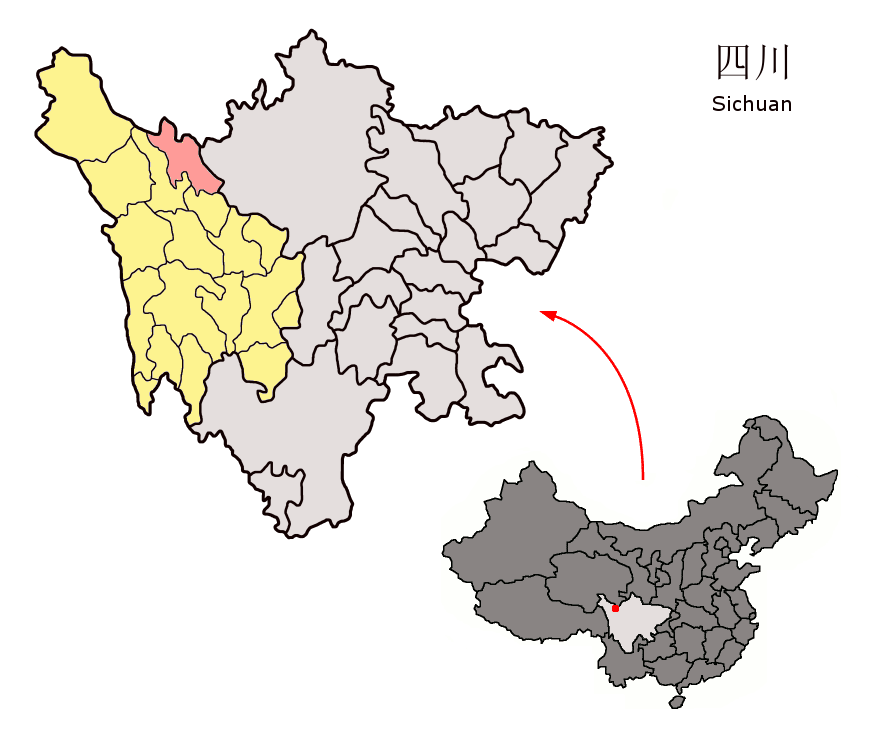
Photo: Croquant, CC BY 3.0, via Wikimedia Commons
Seda County on the southeastern Tibetan Plateau houses Larung Gar, one of the world's largest Tibetan Buddhist institutes, established in the 1980s by Khenpo Jigme Phuntsok. At an elevation of approximately 4,000 meters above sea level, this sprawling complex of red wooden houses accommodates thousands of monks and nuns from across the Tibetan cultural region. The institute serves as a major center for the study of Dzogchen, the highest teaching in the Nyingma school of Tibetan Buddhism. The remote location in Sichuan Province has made it a focal point for traditional Buddhist practices that have remained largely unchanged for centuries. Ancient Aliens has highlighted the documented 2015 case of Lama Thubser's rainbow light body phenomenon at Seda County as potential evidence that advanced meditation techniques could enable physical transformation or interdimensional travel. Religious scholars and practitioners within the Dzogchen tradition interpret the rainbow light body (Jalü) as a metaphysical concept describing the spiritual dissolution of the physical form at death, while scientific analysis notes that photographic evidence of such events remains anecdotal and difficult to verify through controlled observation. The claims underscore the ongoing tension between subjective spiritual experiences deeply embedded in Buddhist philosophy and the empirical frameworks of modern science.
Timeline
Dzogchen teachings first systematized in Tibet by Padmasambhava and other Buddhist masters
Khenpo Jigme Phuntsok establishes Larung Gar Buddhist Institute
Documented case of Lama Thubser reportedly achieving rainbow light body dissolution
What the Show Claims
- ›The documented 2015 case of Tibetan Buddhist monk Lama Thubser achieving the 'rainbow light body' at Seda County represents physical evidence that advanced meditation can dissolve the material body into lightS16E02
- ›The rainbow light body phenomenon potentially enables travel to other dimensions or star systems through consciousness transformationS16E02
Theorist Takes
“In the tibetan tradition, they tell us that once a lama has achieved this state of being, that they're able to then travel to 12 star systems where this teaching is taught, that are all connected with the earth.”
From the Transcripts
“Seda county, china. December 11, 2015. In the southeast region of the tibetan plateau, renowned tibetan buddhist monk lama thubser has been in a state of continuous meditation for seven straight days, engaged in a practice that is said to go back some 10,000 years.”
What Archaeology Says
While Seda County lacks traditional archaeological excavations due to its relatively recent establishment as a major Buddhist center, the site represents a living laboratory for studying ancient Tibetan spiritual practices. The rainbow light body, or Jalü in Tibetan, is documented within the Dzogchen tradition as the ultimate achievement of advanced practitioners, where the physical body reportedly dissolves into pure light at the moment of death.
Scholars of Tibetan Buddhism note that similar accounts appear throughout the historical records of the Nyingma and Bon traditions, with practitioners like Garab Dorje and Padmasambhava said to have achieved this state. The 2015 case of Lama Thubser has drawn particular attention because it occurred in modern times with witnesses present, though scientific verification remains challenging due to the remote location and cultural sensitivities surrounding such events.
Mainstream religious scholars classify the rainbow light body as a metaphysical concept representing the dissolution of the ego and physical attachments rather than literal physical transformation. However, the phenomenon continues to be reported within Tibetan Buddhist communities, creating an intriguing intersection between ancient spiritual practices and modern attempts at documentation.
What remains genuinely unknown is the precise nature of the physical changes that witnesses report observing, as well as the relationship between intensive meditation practices and potential alterations in biological processes. The isolated location and traditional reluctance to subject sacred practices to scientific scrutiny means that many questions about these phenomena remain unanswered.
Mysteries & Fun Facts
Larung Gar houses an estimated 10,000 to 20,000 monks and nuns, making it one of the largest Buddhist communities in the world
The distinctive red wooden houses covering the mountainside create a striking visual pattern visible from great distances
The institute operates its own printing house that produces traditional Buddhist texts using ancient woodblock methods
Practitioners at Larung Gar often complete retreats lasting three years, three months, and three days in complete isolation
Planning a Visit
Access to Larung Gar requires special permits and is subject to changing government regulations regarding foreign visitors. The site is generally accessible through organized tours, though individual travel may be restricted. Visitors should prepare for high altitude conditions and basic accommodation facilities.
Chengdu, approximately 650 kilometers southeast
Late spring through early autumn offers the most favorable weather conditions, though the high altitude means temperatures can be cold year-round. Winter visits are particularly challenging due to harsh weather and limited access roads.