Sanxingdui
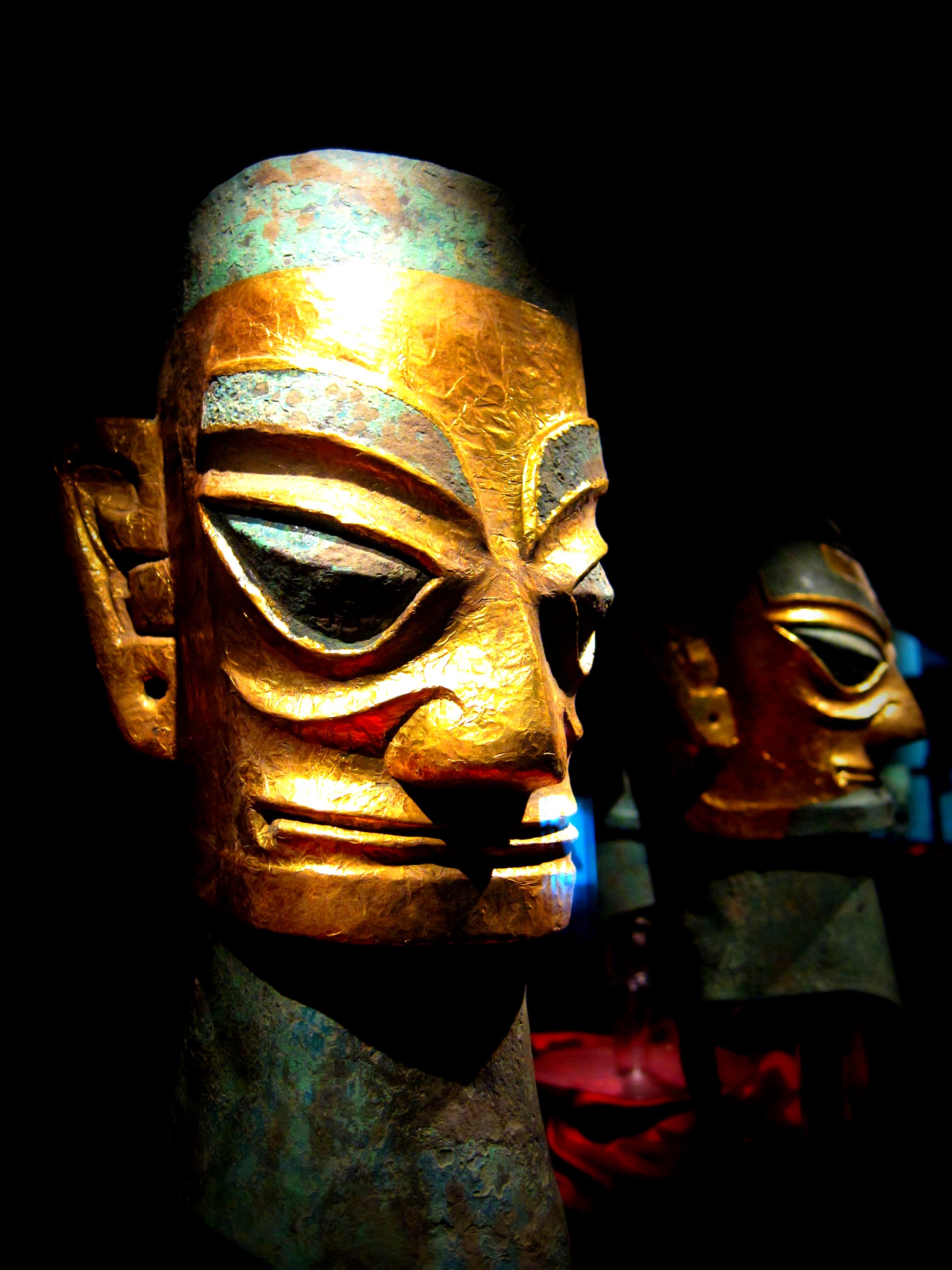
Photo: momo, CC BY 2.0, via Wikimedia Commons
Sanxingdui is an extraordinary Bronze Age archaeological site in Guanghan, Sichuan Province, revealing a sophisticated civilization that flourished in the Sichuan Basin between approximately the 12th and 11th centuries BC. The site spans several square kilometers and has yielded over 50,000 artifacts from multiple sacrificial pits, including massive bronze masks, intricate gold foil ornaments, jade ceremonial objects, and towering bronze trees. The most famous discoveries include bronze masks with dramatically enlarged eyes and protruding pupils, some measuring over a meter in width. Located in the fertile Sichuan Basin, this ancient settlement represents one of China's most significant archaeological discoveries, fundamentally changing understanding of Bronze Age Chinese civilization beyond the Yellow River valley.
Timeline
Sanxingdui civilization flourishes in the Sichuan Basin, creating distinctive bronze artifacts and establishing the ancient kingdom of Shu
State of Qin conquers the Shu kingdom, ending the independent civilization
First artifacts discovered accidentally by local farmers digging an irrigation ditch
Major archaeological breakthrough with discovery of sacrificial pits containing thousands of bronze, gold, and jade artifacts
New excavations uncover additional sacrificial pits with thousands more artifacts, advancing scholarly understanding
What the Show Claims
- ›Bronze masks with enormous protruding eyes and alien facial features represent depictions of extraterrestrial beingsS02E06S07E11
- ›The civilization appeared and disappeared suddenly with no known precursor, suggesting alien originS20E06
- ›A bronze 'tree of life' over 4 meters tall is unlike anything in Chinese art and represents an alien artifactS07E11
- ›Gold-foil covered scepters and artifacts suggest an alien gift cultureS02E06
What Archaeology Says
Archaeological excavations at Sanxingdui have revealed one of China's most remarkable Bronze Age civilizations, with radiocarbon dating placing the main cultural phase in the 12th-11th centuries BC. The site gained international attention following the 1986 discovery of two major sacrificial pits containing over 1,000 artifacts, including bronze masks, figurines, trees, and gold ornaments that challenged conventional understanding of ancient Chinese art and religion.
The most recent excavations from 2020-2022 have uncovered six additional sacrificial pits, bringing the total artifact count to over 50,000 items. These discoveries include silk remnants, wooden boxes, and bronze vessels that demonstrate sophisticated metallurgy and artistic techniques. The bronze masks, some weighing over 65 kilograms, show evidence of advanced casting methods and artistic traditions distinct from contemporary Chinese civilizations.
Scientific consensus identifies Sanxingdui with the ancient Shu kingdom, a regional power that developed independently in the geographically isolated Sichuan Basin. The distinctive artistic style, particularly the emphasis on enlarged eyes and vertical pupils in bronze masks, likely reflects religious or mythological beliefs specific to Shu culture rather than realistic portraiture. The sudden appearance of this sophisticated culture probably resulted from rapid development facilitated by the region's agricultural wealth and natural resources.
Despite extensive research, significant mysteries remain about Sanxingdui civilization. The purpose of the sacrificial pits, the meaning of the symbolic bronze trees, and the reasons for the culture's apparent decline around 1100 BC continue to puzzle archaeologists. The absence of written records from this period means much of Shu religious practices, political organization, and daily life remains speculative, making Sanxingdui one of archaeology's most intriguing enigmas.
Mysteries & Fun Facts
The largest bronze mask discovered at Sanxingdui weighs 65 kilograms and measures 1.38 meters wide
Gold foil fragments found at the site include decorations with designs of birds, fish, and human faces weighing just grams but representing extraordinary craftsmanship
The site's name 'Sanxingdui' means 'Three Star Mound,' referring to three earth mounds that mark the ancient settlement
Recent excavations have revealed that ancient Shu artisans used advanced techniques to create bronze alloys with precise tin and lead compositions
Planning a Visit
The Sanxingdui Museum in Guanghan displays the site's most significant artifacts in modern exhibition halls designed to showcase the bronze masks and ceremonial objects. The archaeological site itself is generally accessible to visitors, though active excavation areas may have restricted access. The museum provides comprehensive information about ongoing research and recent discoveries.
Chengdu, approximately 40 kilometers southeast
Spring and autumn offer the most comfortable weather for visiting, with mild temperatures and clear skies ideal for exploring both the museum and archaeological site. Summer can be quite hot and humid in the Sichuan Basin.
Featured Locations3 sites within this area
Sanxingdui, Guanghan City
ChinaSanxingdui Archaeological Site, Guanghan City
ChinaSanxingdui Archaeological Site, Sichuan
ChinaRelated Sites
Gobekli Tepe
Another sophisticated ancient civilization that emerged seemingly without precedent, challenging archaeological timelines
Harappa
Represents another advanced Bronze Age civilization that developed distinctive urban culture in relative isolation
Great Zimbabwe
Like Sanxingdui, represents a sophisticated African civilization that developed unique architectural and artistic traditions independent of other contemporary cultures
Featured In3 episodes
Historical data sourced from Wikipedia