Roopkund Lake (Skeleton Lake)
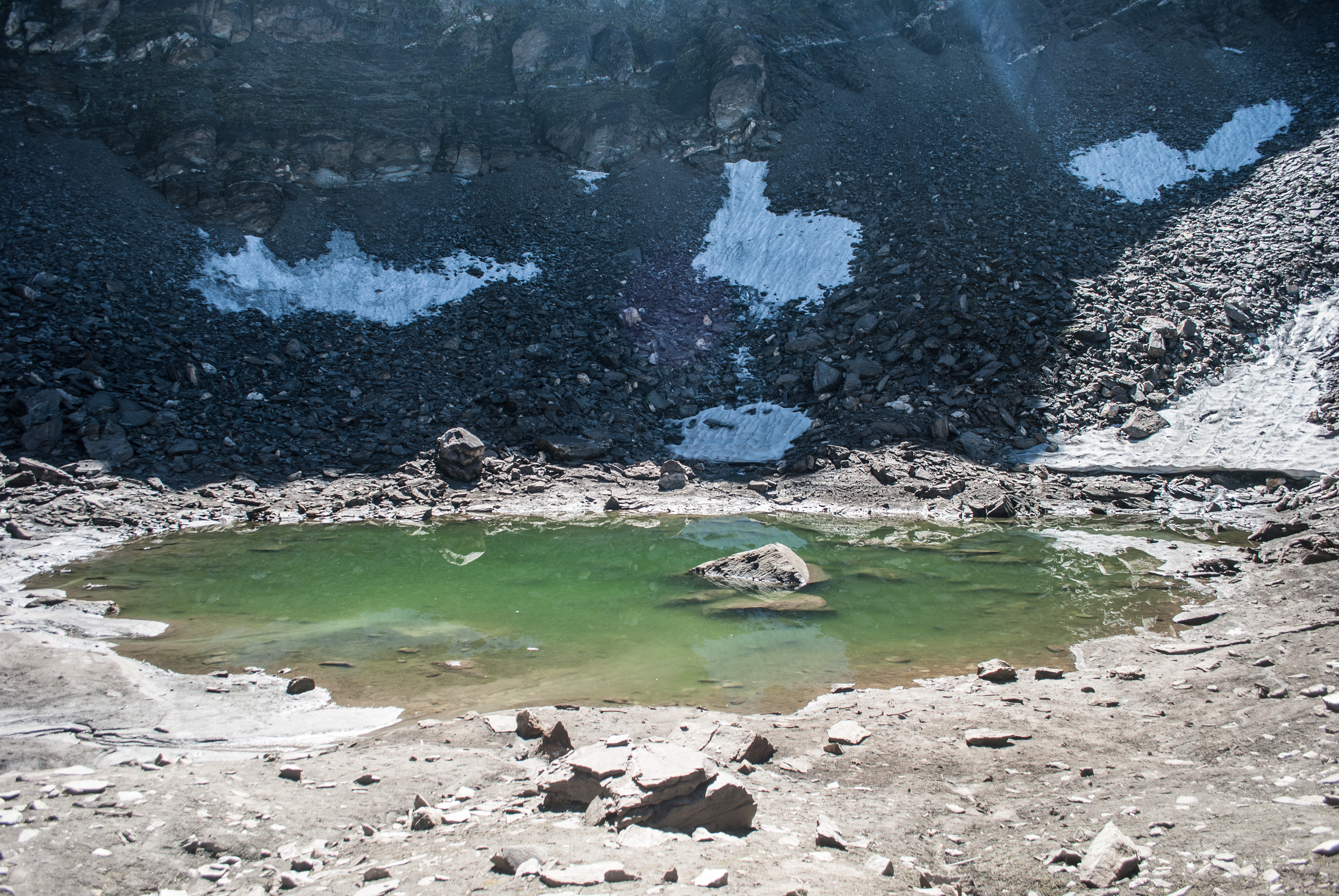
Photo: Schwiki, CC BY-SA 4.0, via Wikimedia Commons
Roopkund Lake, known locally as "Skeleton Lake," sits at approximately 16,000 feet elevation in the Uttarakhand Himalayas of India. This small glacial lake, measuring roughly 130 feet across, contains the scattered skeletal remains of over 600 individuals preserved in its icy waters and surrounding rocky shores. The lake lies along an ancient pilgrimage route toward Mount Kailash, nestled in a remote valley accessible only by treacherous mountain trails. During warmer months when the ice melts, human bones and skulls become visible both in the shallow lake waters and scattered across the surrounding alpine terrain. The site's remote location and extreme altitude have naturally preserved these remains for centuries, creating one of the world's most mysterious bone fields.
Timeline
Multiple groups of travelers died at the lake site over approximately 1,000 years, based on genetic and radiocarbon analysis
British forest guard H.K. Madhwal officially documented the skeletal remains, bringing international attention to the site
First major scientific expedition conducted detailed study of the remains and site conditions
DNA study published in Nature Communications revealed the remains belonged to genetically distinct Mediterranean, South Asian, and East Asian populations
What the Show Claims
- ›The 600+ skeletons are remains of pilgrims killed by the yeti while seeking the entrance to ShambhalaS16E02
- ›The diverse genetic origins spanning three continents suggests an otherworldly gathering or interventionS16E02
- ›The lake's position on the path to Mount Kailash indicates it was a portal or sacred site for ancient astronaut contactS16E02
Theorist Takes
“If the yeti is considered to be the guardian of shambhala, and if shambhala is kailash, then it makes perfect sense why the yeti is somehow taking these people, killing them, harming them, and throwing them in skeleton lake.”
From the Transcripts
“Roopkund lake is littered with the remains of over 600 human bodies. For decades, scientists assumed that the dead had fallen victim to a single massive catastrophe. But in 2019, dna sampling revealed that the bodies...did not all die at once, but at different points in time, over a period of at least a thousand years.”
What Archaeology Says
Scientific investigation of Roopkund Lake began in earnest in 2004 when researchers conducted the first comprehensive study of the scattered remains. The bones showed evidence of blunt force trauma to the heads and shoulders, initially leading to theories of a single catastrophic hailstorm that killed a group of pilgrims. However, radiocarbon dating revealed the remains were not all from the same time period, complicating the single-event hypothesis.
The groundbreaking 2019 DNA study published in Nature Communications by an international team of researchers revealed the true complexity of the site. The genetic analysis showed that the skeletons belonged to three distinct populations: local South Asians, individuals of Mediterranean ancestry, and people of East Asian descent. Most remarkably, these groups died at the lake during different time periods spanning roughly 1,000 years, with some remains dating to around 800 AD and others to as recently as 1800 AD.
Mainstream archaeologists now believe Roopkund represents multiple tragic events over centuries rather than a single catastrophe. The lake sits along the Nanda Devi Raj Jat pilgrimage route, which occurs every 12 years and draws thousands of pilgrims through this treacherous high-altitude terrain. Scientists suggest the deaths likely resulted from various natural disasters—severe storms, landslides, or exposure—that claimed different groups of travelers over the millennia.
What remains genuinely puzzling is how Mediterranean individuals came to die at this remote Himalayan site, particularly during earlier periods when long-distance travel was extremely difficult. The presence of East Asian genetic markers also suggests broader ancient trade or pilgrimage networks than previously understood, leaving researchers to continue investigating the cultural and historical connections that brought such diverse populations to this deadly alpine lake.
Mysteries & Fun Facts
The lake's skeletal remains are most visible during late summer when melting ice and snow reveal bones scattered both in the water and across the rocky shore
Local folklore refers to the site as the place where the goddess Nanda Devi killed trespassers with massive hailstones
The 2019 genetic study required extracting DNA from 38 individual skeletons to reveal the site's multi-continental mystery
British colonial records from the 1940s initially dismissed local stories about the "lake of skeletons" as superstition until forest officials confirmed the mass grave
Planning a Visit
Roopkund Lake requires a challenging multi-day trek through Uttarakhand's Himalayas, typically taking 7-8 days round trip from the nearest road access point. The route passes through Wan village and several high-altitude camps, with trekkers needing proper mountaineering equipment and acclimatization for the extreme elevation. Due to the site's protected status and fragile archaeological context, visitors should check current regulations with local authorities before attempting the trek.
Kathgodam is approximately 210 kilometers away and serves as the nearest major transportation hub.
The optimal trekking season runs from late May through early October when snow has melted sufficiently to reveal the skeletal remains. September and early October generally offer the clearest mountain views, though weather can change rapidly at this elevation.
Related Sites
Mount Kailash
Mount Kailash represents the sacred destination that pilgrims were traveling toward when they perished at Roopkund Lake
Harappa
Harappa demonstrates ancient South Asian civilization and the sophisticated trade networks that might explain diverse populations reaching remote Himalayan sites
Gobekli Tepe
Gobekli Tepe shows how ancient peoples undertook extraordinary journeys to reach sacred sites, paralleling the dangerous pilgrimages to Roopkund's vicinity