North Apennines, Italy
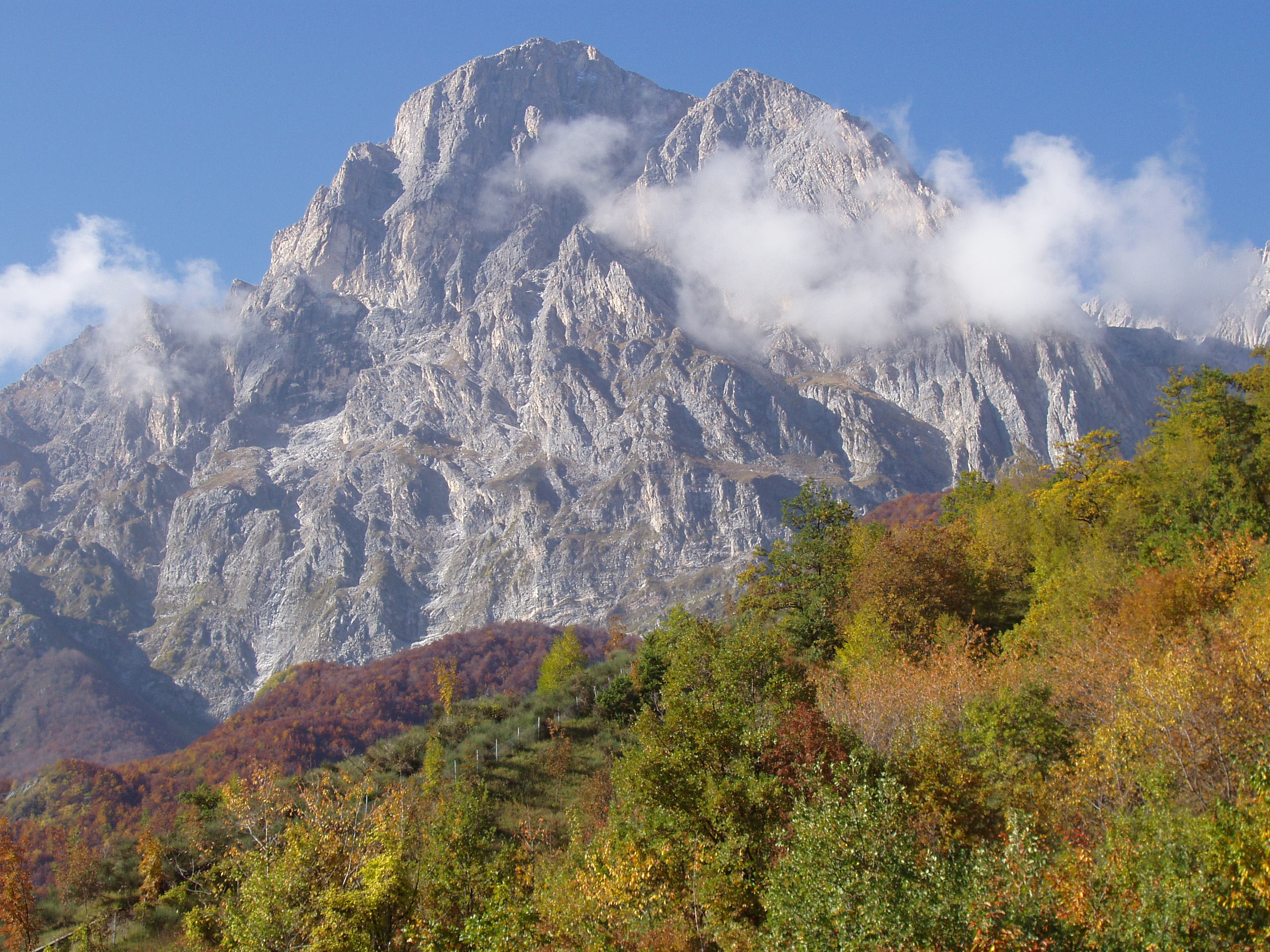
Photo: No machine-readable author provided. Luciodem assumed (based on copyright claims)., CC BY-SA 3.0, via Wikimedia Commons
The North Apennines stretch across central Italy, forming a mountainous region dotted with limestone caves and ancient forests that have remained largely unchanged since Leonardo da Vinci's time. This rugged landscape, rising to elevations of approximately 2,000 meters, encompasses numerous natural caverns carved by millennia of water erosion through the region's sedimentary rock formations. The area served as Leonardo's childhood laboratory, where he conducted his earliest observations of geology, botany, and natural phenomena during solitary expeditions from nearby Florence. Today, visitors can explore hiking trails that wind through the same valleys and cave systems that allegedly inspired one of history's greatest minds. Some theorists have speculated that a mysterious cave Leonardo documented in his writings around 1480—combined with the historically undocumented period of his life between 1476–1478—might indicate contact with an otherworldly intelligence that catalyzed his extraordinary insights. However, mainstream scholars attribute Leonardo's genius to his rigorous self-directed study of the natural world during his youth, when he explored the Apennines extensively after being denied formal academic training due to his illegitimate birth. The cave encounter itself appears in Leonardo's own notes as a naturalistic observation, with no contemporaneous accounts suggesting anything beyond a formative experience in geological observation.
Timeline
Young Leonardo da Vinci explores the North Apennine caves and mountain terrain during his formative years
Leonardo's mysterious two-year disappearance from historical records coincides with his most intensive period of cave exploration
Leonardo documents his profound cave encounter in his personal codex, describing overwhelming emotions upon discovering a dark cavern
Ancient Aliens researchers begin investigating connections between Leonardo's cave experiences and his later technological innovations
What the Show Claims
- ›A mysterious cave Leonardo encountered may have been a time portal that gave him prophetic knowledgeS04E08
- ›Leonardo's two missing years from 1476-1478 involved extraterrestrial contact in the Apennine cavesS04E08
- ›The cave experience documented in Leonardo's codex around 1480 represents evidence of otherworldly influenceS04E08
Theorist Takes
“He goes inside the cave and then he disappears, and it suggests to me time travel portals. He's opening portals or star gates and beaming to either the past or the future and then returning to the present time.”
From the Transcripts
“Here, in the mountains just outside Florence, a young Leonardo da Vinci spent much of his time examining the mysteries of nature... It was also in the North Apennines Mountains that Leonardo is believed to have discovered the cave that he wrote about in his journal.”
What Archaeology Says
Leonardo's documented cave experience represents one of the most intriguing mysteries in Renaissance history, recorded in his personal writings around 1480. In his codex, he describes approaching a dark cavern with a mixture of fear and curiosity, ultimately being overwhelmed by the desire to understand what lay hidden within. Scholars have long noted that this cave encounter coincided with Leonardo's most formative period of independent study and observation.
The two-year gap in Leonardo's biographical record from 1476-1478 has puzzled historians for centuries, particularly given that it corresponds with his transition from apprentice to independent artist and inventor. During this period, he was reportedly exploring the Apennine countryside extensively, conducting geological and botanical studies that would later inform his scientific work. Some researchers suggest this intensive period of natural observation in the mountain caves may have inspired his later innovations in hydraulics, engineering, and anatomy.
Modern investigations of the North Apennines reveal numerous limestone caverns that match descriptions from Leonardo's writings, many containing unique acoustic properties and geological formations. While mainstream archaeologists find no evidence of supernatural phenomena, they acknowledge that the region's natural caves provided Leonardo with unprecedented opportunities to study light, shadow, acoustics, and geological processes. The exact location of Leonardo's documented cave remains unknown, though several sites in the region are considered possible candidates.
What remains genuinely mysterious is the apparent acceleration of Leonardo's creative output following his intensive cave exploration period. The timing of his documented cave experience with his emergence as a revolutionary thinker continues to intrigue researchers, whether they seek conventional or unconventional explanations for his extraordinary capabilities.
Mysteries & Fun Facts
Leonardo described feeling both terror and irresistible curiosity when approaching the mysterious cave, emotions he recorded in mirror writing
The North Apennines contain over 1,000 documented limestone caves, many still unexplored since Leonardo's time
Leonardo's cave writings represent some of his earliest recorded attempts at psychological self-analysis
Several Apennine caves exhibit unusual acoustic properties that could have influenced Leonardo's later studies of sound and vibration
Planning a Visit
The North Apennines are generally accessible to visitors through numerous hiking trails and mountain roads, though specific cave systems may require guided tours or special permissions. The region offers excellent opportunities for geological exploration and nature study, with several visitor centers providing information about local cave systems and Leonardo's historical connections to the area.
Florence, approximately 50 kilometers southeast
Spring through early autumn provides optimal weather for mountain hiking and cave exploration, with clear skies offering the best views of the Apennine landscape that shaped Leonardo's early worldview.
Related Sites
Externsteine
Another European site where ancient caves allegedly provided transformative knowledge to historical figures
Cave of Altamira
Prehistoric cave system that demonstrates humanity's long relationship with underground spaces and hidden knowledge
Çatalhöyük
Ancient site where underground chambers and hidden spaces played crucial roles in early human development and potential contact