Vinci, Italy
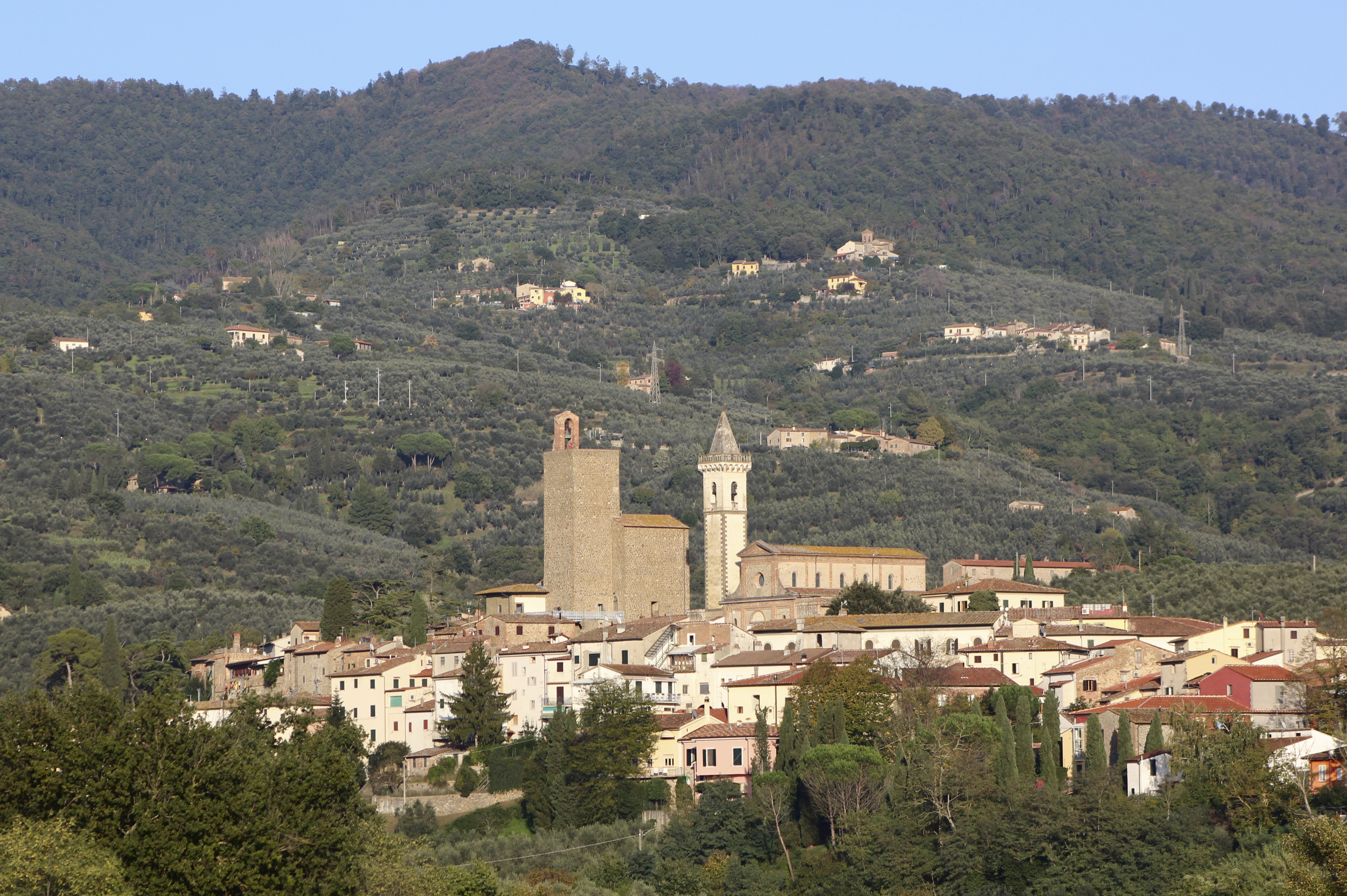
Photo: LigaDue, CC BY-SA 4.0, via Wikimedia Commons
Vinci is a small hilltop comune nestled in the Tuscan countryside, approximately 30 kilometers west of Florence, with a population of around 14,000 residents. The town sits at an elevation of roughly 97 meters above sea level, surrounded by olive groves and vineyards characteristic of the Montalbano hills. Today, visitors can explore the medieval castle that houses the Leonardo Museum, displaying models of his inventions, while the surrounding landscape retains much of the rural character that would have shaped young Leonardo's observations of nature. The birthplace itself lies just outside the main town center, marking where one of history's greatest polymaths first opened his eyes to the world that would inspire his revolutionary ideas.
Timeline
Medieval settlement of Vinci established in the Tuscan hills
Leonardo da Vinci born on April 15th to Ser Piero da Vinci and Caterina
Leonardo leaves Vinci for Florence to apprentice with Andrea del Verrocchio
Leonardo Museum established in Vinci castle to commemorate the 500th anniversary of his birth
What the Show Claims
- ›Vinci's remote location and Leonardo's illegitimate birth status freed him from orthodox thinking and allowed him to receive forbidden knowledgeS13E02
- ›Leonardo's surname derived from his hometown reflects his outsider status that may have made him receptive to unconventional ideasS13E02
From the Transcripts
“Leonardo di ser Piero da Vinci, the illegitimate child of a nobleman and his maid, is born in Vinci, Italy.”
“Leonardo di ser Piero da Vinci was born just outside Florence in Vinci, Italy, on April 15, 1452.”
What Archaeology Says
While Vinci itself predates Leonardo by several centuries, archaeological evidence of the medieval settlement remains visible in the town's layout and architecture. The castle structure that now houses the Leonardo Museum dates to the 12th-13th centuries, representing typical defensive architecture of the period when the area was contested between Florence and other Tuscan city-states.
The house traditionally identified as Leonardo's birthplace, located in the hamlet of Anchiano about 3 kilometers from the town center, has been studied by local historians and preservationists. Though the current structure shows later modifications, architectural analysis suggests portions may date to the 15th century, making it plausible as the actual birth site, though definitive archaeological proof remains elusive.
Researchers have focused more on documenting Leonardo's family connections to the area rather than extensive archaeological excavation. Notarial records from Ser Piero da Vinci's practice provide crucial documentation of the family's presence in the region, while church records help establish the social context of Leonardo's early years. The landscape itself serves as an archaeological record of sorts, with terraced hillsides and agricultural patterns that would have been familiar to Leonardo still visible today.
What remains most intriguing to scholars is how this specific environment may have shaped Leonardo's later work. The combination of rural isolation and proximity to Florence created a unique cultural position that may have indeed fostered the kind of independent thinking that characterized his approach to art, science, and engineering throughout his career.
Mysteries & Fun Facts
Leonardo's full name, Leonardo di ser Piero da Vinci, literally means 'Leonardo, son of master Piero, from Vinci'
The town's name derives from the Latin 'vinco,' meaning 'I bind,' possibly referring to the willow trees used for basket-making
Vinci lies within the Montalbano wine region, known for producing Chianti wines since Leonardo's time
The Leonardo Museum in Vinci castle contains over 60 working models built from Leonardo's original designs and sketches
Planning a Visit
The town of Vinci is easily accessible by car or bus from Florence, with the Leonardo Museum housed in the medieval castle open to visitors year-round. The museum displays working models of Leonardo's inventions alongside exhibits about his life, while the presumed birthplace at Anchiano can be reached by a short drive or pleasant walk through the countryside.
Florence, approximately 30 kilometers to the east
Spring and early fall offer the most comfortable weather for exploring both the town and surrounding landscape, with mild temperatures ideal for walking between sites. Summer can be quite warm, though early morning or evening visits provide beautiful lighting for photography.
Featured Locations1 sites within this area
Vinci, Italy (Leonardo's birthplace)
ItalyTheorists argue Leonardo's origins and the era of his birth are significant to understanding his anomalous genius, suggesting extraterrestrial influence shaped his development from an early age. Mainstream historians identify Vinci as the birthplace of Leonardo di ser Piero da Vinci on April 15, 1452, situating him firmly within the Italian Renaissance context.
Related Sites
Teotihuacan
Teotihuacan represents another site where Ancient Aliens theorists suggest advanced knowledge was transmitted to human civilizations
Chichen Itza - Kukulkan Temple
Chichen Itza features sophisticated astronomical alignments that some propose parallel Leonardo's integration of art, science, and hidden knowledge
Avebury Stone Circle
Avebury Stone Circle exemplifies ancient sites where alternative researchers claim esoteric wisdom was preserved and transmitted across generations
Featured In1 episodes
Historical data sourced from Wikipedia