Angkor Wat
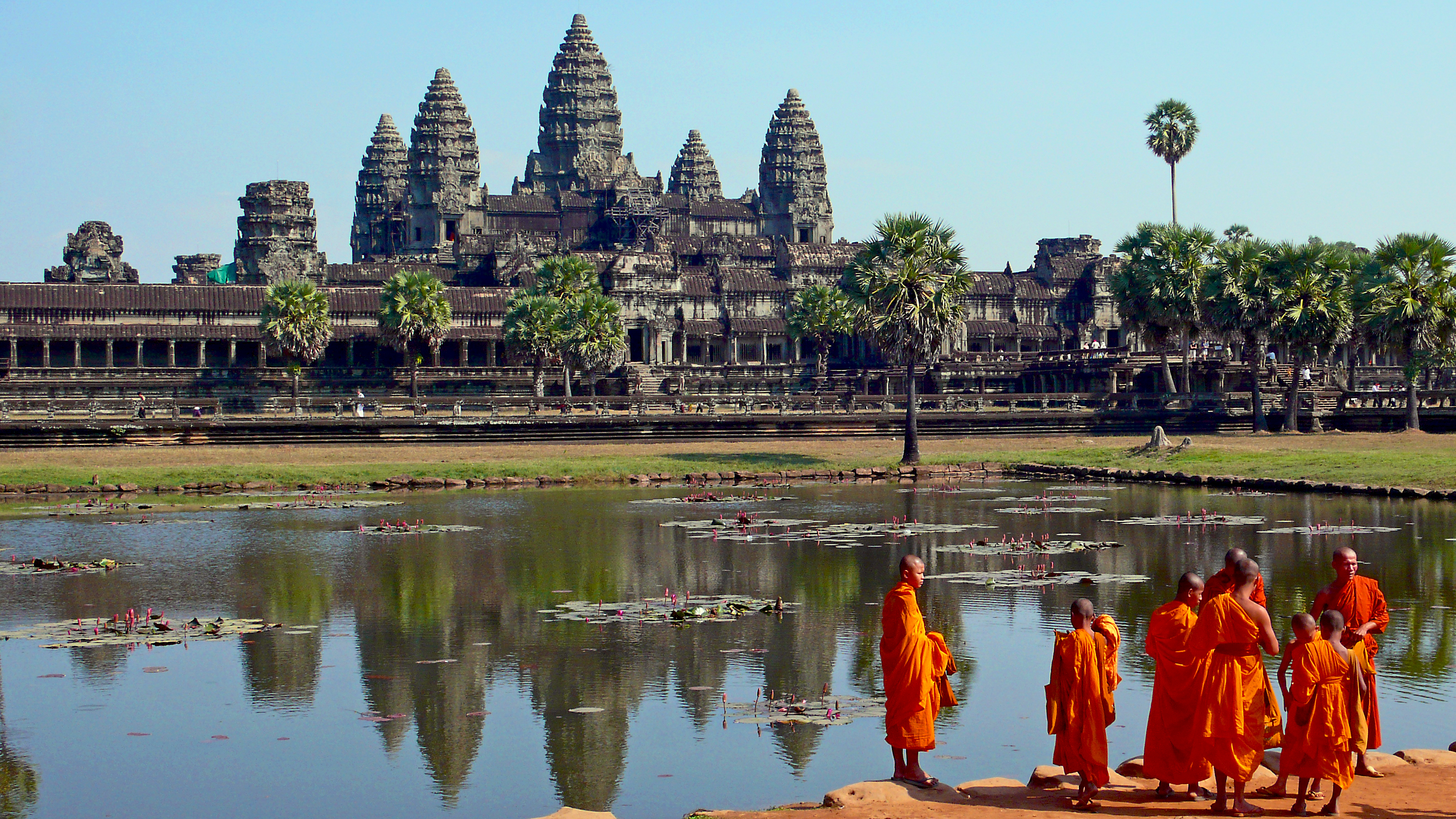
Photo: sam garza, CC BY 2.0, via Wikimedia Commons
Angkor Wat is the world's largest religious complex, covering an impressive 162.6 hectares within the ancient Khmer capital of Angkor in northwestern Cambodia. Built between 1113 and 1150 CE as a Hindu temple dedicated to Vishnu, this architectural marvel features a central quintet of towers representing Mount Meru, surrounded by three concentric galleries and an extensive moat system. The temple complex showcases the pinnacle of classical Khmer architecture with its elaborate bas-reliefs, devata carvings, and unique westward orientation. Unlike most Angkorian temples that face east, Angkor Wat's western alignment has sparked various theories about its symbolic significance as King Suryavarman II's intended mausoleum.
Timeline
Construction begins under King Suryavarman II as a Hindu temple dedicated to Vishnu
Temple construction completed, representing the height of Khmer architectural achievement
Gradual transformation from Hindu to Buddhist temple begins
Designated as UNESCO World Heritage Site, attracting international conservation efforts
What the Show Claims
- ›Contains carving that resembles a stegosaurus dinosaur — knowledge of extinct species suggests alien informationS04E10
- ›Temple layout mirrors the Draco constellation
- ›Precision construction over a vast area suggests alien engineering guidanceS07E10
- ›Moat and layout may generate specific energy patterns
Theorist Takes
“Angkor Wat was more than likely built by the hands of human beings, but the architectural plan of sophistication to lay out that type of complex could not have been engineered by human beings alone at that time.”
From the Transcripts
“Angkor Wat, Cambodia. In the 16th century, one of the first westerners to see this elaborate temple, Portuguese monk Antonio de Magdalena, described it as an "extraordinary construction as like no other building in the world."”
What Archaeology Says
Archaeological investigations at Angkor Wat have revealed the sophisticated engineering capabilities of the Khmer Empire, including an advanced hydraulic system that managed water flow throughout the complex. The temple's construction required precise planning to align its galleries, towers, and causeway with astronomical and religious principles, demonstrating remarkable mathematical and architectural knowledge for the 12th century.
The famous "stegosaurus" carving, located on a pillar in the temple's outer gallery, has been extensively studied by archaeologists and art historians. Scientific consensus identifies this bas-relief as a stylized representation of local fauna — most likely a wild boar, rhinoceros, or chameleon — set against decorative foliage rather than depicting any prehistoric creature. The carving style is consistent with other animal representations throughout Angkor Wat's extensive decorative program.
Restoration efforts coordinated by the International Coordinating Committee for the Safeguarding and Development of the Historic Site of Angkor have involved teams from France, Japan, India, Germany, and other nations since 1993. These projects have uncovered details about Khmer construction techniques, including the use of interlocking sandstone blocks assembled without mortar and sophisticated drainage systems that have preserved the structure for nearly nine centuries.
While much is understood about Angkor Wat's construction and purpose, questions remain about specific aspects of its design, including the exact reasons for its westward orientation and the complete meaning of its extensive symbolic program. The temple's role as both a state temple and royal mausoleum continues to be debated among scholars, as does the precise timeline of its transformation from Hindu to Buddhist worship.
Mysteries & Fun Facts
Angkor Wat appears on Cambodia's national flag, making it one of the few buildings depicted on a national flag
The temple complex attracts more than 2.5 million visitors annually, making it one of the world's most visited archaeological sites
The temple's bas-reliefs stretch for over 1,200 meters and depict scenes from Hindu epics including the Ramayana and Mahabharata
The entire Angkor archaeological area covers more than 400 square kilometers, with Angkor Wat as its crown jewel
Planning a Visit
Angkor Wat is accessible to visitors year-round through the Angkor Archaeological Park, with tickets available for single-day or multi-day passes. The temple complex requires considerable walking across uneven stone surfaces and climbing steep steps to reach the upper galleries. Visitors should plan for several hours to properly explore the main temple and its extensive bas-relief galleries.
Siem Reap (approximately 5.5 kilometers)
The dry season from November to March offers the most comfortable weather conditions with lower humidity and minimal rainfall. Early morning visits provide cooler temperatures and the famous sunrise views over the temple towers, though this is also the busiest time of day.
Featured Locations1 sites within this area
Ta Prohm Temple, Angkor Wat
CambodiaRelated Sites
Puma Punku
Both sites feature precisely fitted stone blocks assembled without mortar, demonstrating advanced ancient engineering techniques
Sacsayhuaman
Like Angkor Wat, this Incan site showcases massive stone construction with remarkable precision that challenges conventional understanding of ancient capabilities
Gobekli Tepe
Another ancient religious complex that demonstrates sophisticated architectural planning and construction techniques predating conventional timelines
Featured In2 episodes
Historical data sourced from Wikipedia