Nuraghes of Sardinia
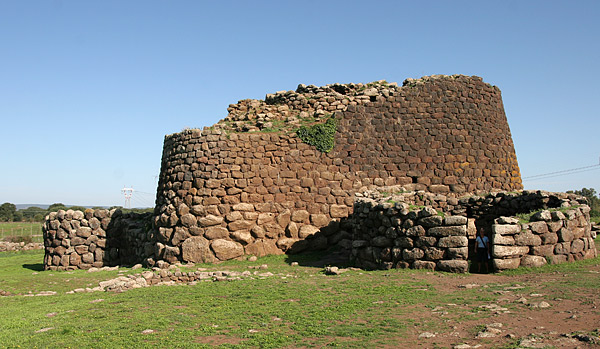
Photo: No machine-readable author provided. Jack Aubrey~commonswiki assumed (based on copyright claims)., CC BY-SA 2.5, via Wikimedia Commons
The Nuraghes of Sardinia represent one of Europe's most enigmatic Bronze Age civilizations, with over 7,000 stone tower structures scattered across the Mediterranean island. These massive megalithic monuments, built from precisely fitted basalt blocks without mortar, rise up to 20 meters tall and feature sophisticated corbelled dome construction. The structures range from simple towers to complex multi-story fortresses surrounded by defensive walls and villages. Set against Sardinia's rugged landscape of granite peaks and coastal plains, these ancient monuments dominate the island's archaeological heritage. The Nuragic civilization flourished for over a millennium, leaving behind not only towers but also sacred wells, tombs, and the mysterious bronze figurines known as bronzetti.
Timeline
Beginning of Nuragic civilization and earliest tower construction across Sardinia
Peak period of nuraghe construction and Nuragic cultural expansion
Decline of Nuragic civilization with Roman expansion into Sardinia
Su Nuraxi di Barumini becomes UNESCO World Heritage Site, bringing international attention to Nuragic culture
What the Show Claims
- ›The bizarre statues and mysterious pyramids of Sardinia's ruins hold clues to an extraterrestrial pastS13E08
- ›The Nuragic culture may have received visits from extraterrestrials who influenced their mysterious architectureS13E08
- ›The gigantic structures demonstrate construction techniques beyond the capabilities of Bronze Age peoplesS13E08
What Archaeology Says
Archaeological excavations across Sardinia have revealed a sophisticated Bronze Age society that mastered advanced construction techniques using only stone tools and bronze implements. The nuraghes demonstrate remarkable engineering knowledge, with their corbelled dome construction distributing weight efficiently and their strategic positioning suggesting both defensive and ceremonial purposes. Excavations have uncovered evidence of metalworking, pottery production, and extensive trade networks reaching across the Mediterranean.
Key archaeological investigations by Giovanni Lilliu at Su Nuraxi di Barumini in the mid-20th century revealed the complexity of Nuragic settlements, with towers surrounded by defensive walls and village structures. More recent excavations have uncovered sacred wells with precise astronomical alignments and elaborate ritual deposits. The bronze figurines found at many sites depict warriors, priests, and mysterious figures that provide insights into Nuragic religious practices and social organization.
Mainstream archaeology explains the impressive construction through the Nuragic people's mastery of dry-stone building techniques, which required no advanced technology beyond skilled craftsmanship passed down through generations. The precision of the stonework reflects centuries of architectural evolution, with later nuraghes showing increasingly sophisticated design. Carbon dating and stratigraphic analysis confirm construction spans from the Bronze Age through the Iron Age.
Despite extensive research, significant mysteries remain about Nuragic culture, including the exact purpose of many structures, the meaning of their bronze figurines, and the reasons for their civilization's decline. The lack of deciphered written records leaves many aspects of their society open to interpretation, though ongoing archaeological work continues to reveal new insights into this remarkable ancient civilization.
Mysteries & Fun Facts
Sardinia contains more nuraghe towers than any other type of ancient monument, with estimates of over 7,000 structures originally built across the island
The largest nuraghe complexes feature multiple towers connected by walls, creating fortress-like structures that could house entire communities
Nuragic bronze figurines include mysterious boat-shaped objects and figures with four eyes, sparking debate about their meaning and purpose
Some sacred wells at Nuragic sites demonstrate precise astronomical alignments, suggesting sophisticated knowledge of celestial cycles
Planning a Visit
Many nuraghe sites across Sardinia are generally accessible to visitors, with Su Nuraxi di Barumini being the most developed for tourism with guided tours and visitor facilities. Most sites require some walking across uneven terrain, and visitors should wear sturdy shoes for exploring these ancient stone structures. Check with local tourism offices for current access conditions and tour availability at specific sites.
Cagliari, approximately 50-100 kilometers from most major nuraghe sites depending on location
Spring through early fall offers the most comfortable weather for exploring outdoor archaeological sites, with mild temperatures and longer daylight hours. Summer can be quite hot, making early morning or late afternoon visits preferable for comfort.
Related Sites
Ħaġar Qim
Another Mediterranean megalithic site featuring sophisticated prehistoric stone construction and mysterious purposes
Gobekli Tepe
Represents an even earlier example of monumental architecture that challenges conventional timelines of human civilization
Carnac Stones
Features thousands of standing stones arranged in mysterious patterns across the European landscape