Vandenberg Air Force Base
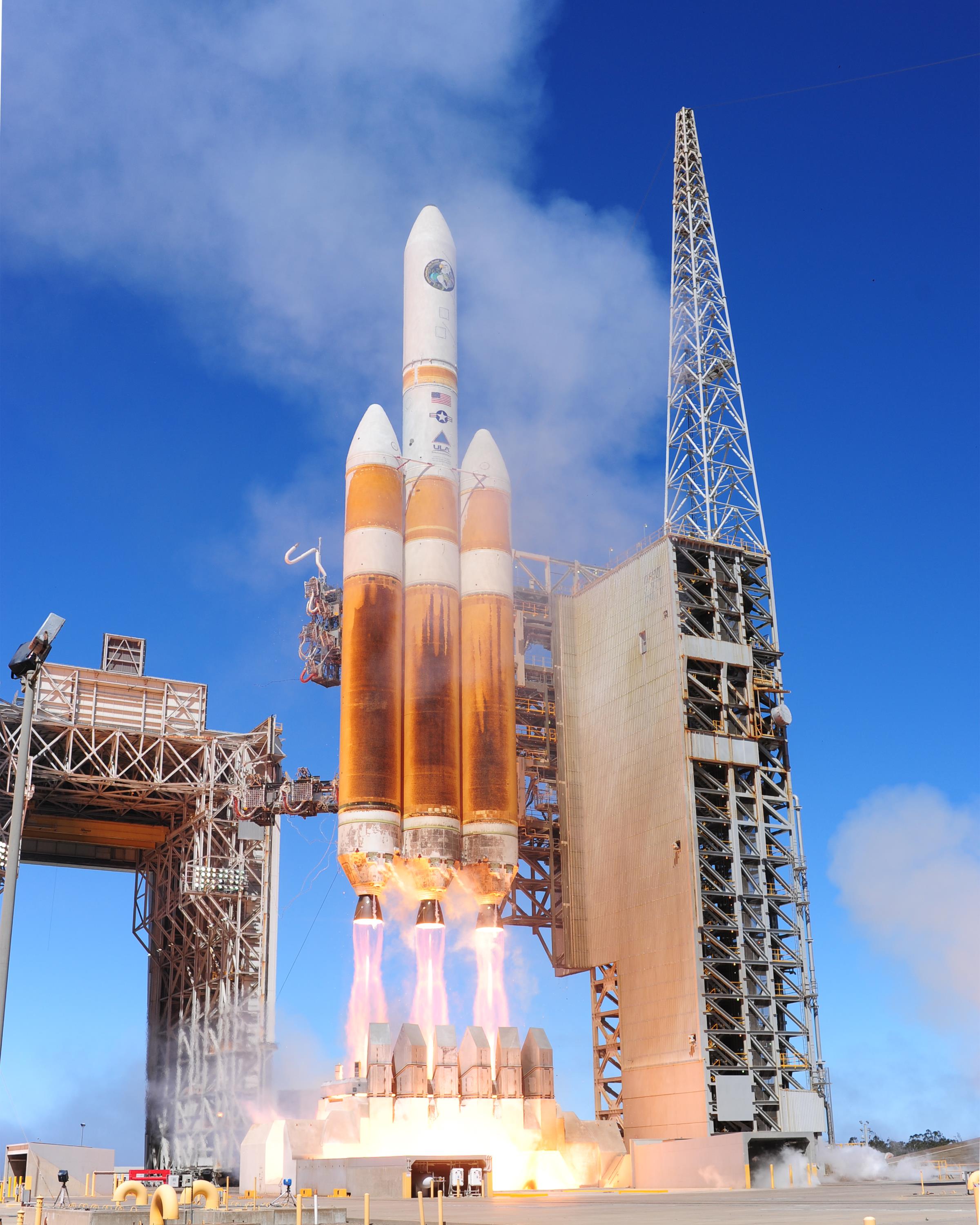
Photo: U.S. Air Force/Joe Davila, Public domain, via Wikimedia Commons
Vandenberg Space Force Base spans approximately 99,604 acres along the rugged central California coast near Lompoc, making it one of the largest military installations on the West Coast. Established in 1941 and originally known as Camp Cooke, the base transformed into America's premier missile testing facility in the 1950s. Today, visitors would see vast launch complexes, radar installations, and miles of coastline where rockets streak into the Pacific sky. The base serves as the primary West Coast spaceport for military, commercial, and NASA missions, launching spacecraft into polar and sun-synchronous orbits that cannot be achieved from Florida's Cape Canaveral. Ancient astronaut theorists have pointed to a 1964 incident at Vandenberg in which Air Force cameraman Lt. Robert Jacobs reportedly filmed a disc-shaped craft firing a beam at an ICBM during a test launch—suggesting extraterrestrial intervention in nuclear weapons programs. However, official records from the Department of Defense indicate no such footage has been verified, and the incident remains classified; mainstream aerospace historians attribute ICBM test failures during this period to documented technical malfunctions and the inherent challenges of Cold War-era missile development. The question of what actually occurred during those 1964 launches continues to intrigue researchers examining declassified military records.
Timeline
Camp Cooke established as Army training facility during World War II
Renamed Vandenberg Air Force Base and designated as missile testing center
Alleged UFO incident during ICBM test, as reported by Lt. Robert Jacobs
Redesignated as Vandenberg Space Force Base under new military branch
What the Show Claims
- ›In 1964, Air Force cameraman Lt. Robert Jacobs allegedly filmed a disc-shaped UFO firing a beam at a test ICBM, causing the missile to fail as evidence of alien intervention to disable nuclear weaponsS14E14
From the Transcripts
“a craft, very disc-like, moves in into the screen, and starts maneuvering around it. And then, it seems to fire a beam at this dummy warhead. It burned up in the atmosphere. The test failed.”
What Archaeology Says
While Vandenberg Space Force Base is a modern military installation rather than an ancient archaeological site, the area holds significant historical importance spanning both indigenous and contemporary periods. The coastal region was originally inhabited by the Chumash people for thousands of years before Spanish colonization, and archaeological surveys have identified numerous Native American sites within the base boundaries, though access is restricted due to military operations.
The base's Cold War-era infrastructure represents a different kind of archaeological record — one of 20th-century military technology and the space race. Launch complexes, underground command centers, and massive radar installations from the 1950s and 1960s serve as monuments to America's nuclear and space programs. These facilities were designed to test intercontinental ballistic missiles by launching them over the Pacific Ocean, making Vandenberg a crucial component of Cold War deterrence strategy.
The 1964 incident involving Lt. Robert Jacobs remains one of the most controversial UFO cases associated with nuclear facilities. According to Jacobs' account, he was filming an Atlas rocket test when his cameras captured an unidentified object that appeared to interfere with the missile. While the Air Force has consistently denied the existence of such footage, the incident has become central to theories about extraterrestrial interest in human nuclear capabilities.
Today, the base continues to evolve as America's premier West Coast launch facility, hosting missions for SpaceX, ULA, and other aerospace companies. The transition from Cold War missile testing to commercial space operations represents a transformation from weapons of destruction to tools of exploration, though the underlying technology and infrastructure remain remarkably similar.
Mysteries & Fun Facts
The base has launched more than 2,000 rockets since becoming operational in 1957
Vandenberg's coastal location makes it ideal for polar and sun-synchronous satellite orbits that cannot be achieved from Florida
The facility originally served as a training camp for tank destroyer battalions during World War II
SpaceX conducts regular Falcon 9 launches from Vandenberg, often landing boosters back at the base
Planning a Visit
Vandenberg Space Force Base is an active military installation with extremely limited public access, requiring special permission for most visits. Occasional public viewing areas are opened for major rocket launches, and the base sometimes participates in community events, but general tourism is not permitted due to security restrictions.
Lompoc, California, approximately 15 miles inland from the base
Launch viewing opportunities typically occur year-round, with coastal weather generally favorable for observation. Check official Space Force and launch provider websites for public viewing announcements.
Related Sites
White Sands Proving Ground
Another major U.S. military facility associated with UFO incidents and nuclear weapons testing
Norton Air Force Base, California
Fellow California military installation featured in Ancient Aliens UFO investigations
Hanford Nuclear Processing Facility
Nuclear facility where similar theories about alien intervention in atomic programs have been proposed
Featured In1 episodes
Historical data sourced from Wikipedia