Nazi Base 211 (Antarctica)
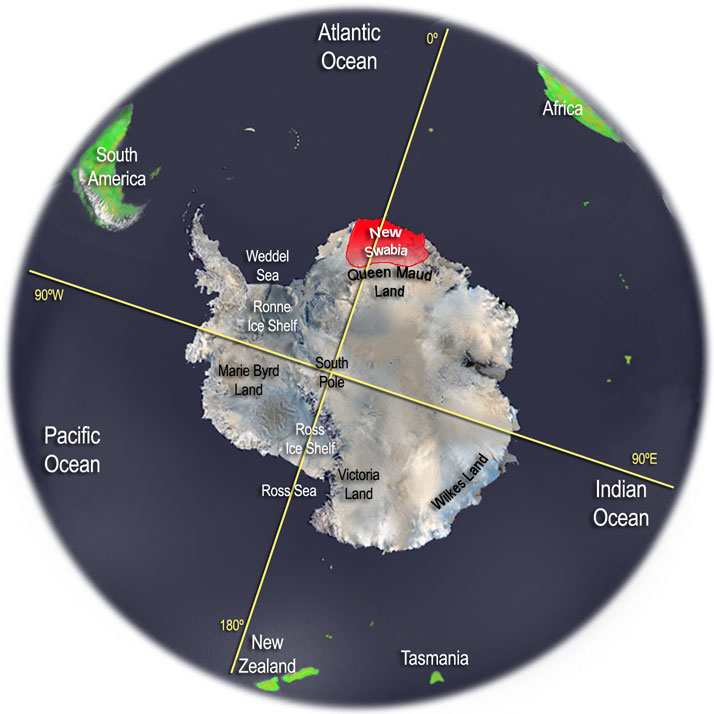
Photo: Thomas Blomberg, CC BY-SA 2.5, via Wikimedia Commons
Nazi Base 211 refers to the alleged secret underground military facility that theorists claim was established by Nazi Germany in Antarctica during and after World War II. The supposed base would have been located in the region called Neuschwabenland, covering approximately 600,000 square kilometers of Queen Maud Land that Germany claimed in 1939. Today, this area of Antarctica remains one of the most remote and inhospitable regions on Earth, with temperatures regularly dropping below -40°F and massive ice sheets covering any potential archaeological evidence. No physical structures or remains of any Nazi installation have ever been discovered by modern Antarctic research expeditions, despite decades of international scientific presence on the continent.
Timeline
German Antarctic Expedition aboard MS Schwabenland conducts aerial surveys and territorial claims in Queen Maud Land
End of World War II sparks theories about Nazi evacuation to Antarctic bases
International Geophysical Year brings unprecedented scientific exploration to Antarctica, with no evidence of Nazi installations found
What the Show Claims
- ›Nazi Germany discovered massive underground cities with advanced technology during their 1938-1939 Antarctic expeditionS11E01
- ›The Nazis established a secret underground headquarters known as Base 211 in AntarcticaS11E01
- ›Nazi personnel and equipment were evacuated to Antarctic bases after World War II endedS11E01
- ›Underground tunnel systems and advanced facilities remain hidden beneath the Antarctic ice
Theorist Takes
“When the Germans got to Antarctica what they found were massive cities that were highly technological. And these buildings were not just on the surface-- they went deep down underground.”
From the Transcripts
“On December 17, the German freighter MS Schwabenland sets out on one of these top secret missions. Its 33-member team is rumored to include scientists, military experts, construction crews, and key members of the Thule Society.”
What Archaeology Says
The actual German Antarctic Expedition of 1938-1939 is well-documented by historical records and represents legitimate territorial exploration rather than secret base construction. Led by Captain Alfred Ritscher aboard the MS Schwabenland, the expedition conducted aerial photographic surveys of approximately 350,000 square kilometers of previously unmapped territory. The Germans dropped metal markers with swastika flags to claim the region they named Neuschwabenland, primarily motivated by Germany's need for whale oil and strategic territorial expansion during the pre-war period.
Historical evidence shows the expedition lasted only a few months and involved relatively small teams focused on mapping and aerial photography. The harsh Antarctic conditions, limited fuel supplies, and logistical constraints would have made large-scale construction projects virtually impossible with 1930s technology. Modern historians have found no credible documentation in captured Nazi archives suggesting plans for permanent Antarctic installations, despite extensive Allied investigation of German wartime activities.
Contemporary Antarctic research has revealed no physical evidence supporting claims of Nazi bases or underground facilities. Decades of international scientific presence, including permanent research stations and advanced ground-penetrating radar surveys, have thoroughly mapped much of the region without discovering artificial structures. The extreme isolation, brutal climate, and massive ice sheets covering the Antarctic interior make the survival of any 1940s-era installations highly unlikely.
What remains genuinely unknown is the complete extent of the 1938-1939 expedition's discoveries and documentation. Some expedition records were reportedly lost during the war, leaving gaps in the historical record that fuel continued speculation. However, the absence of evidence combined with Antarctica's harsh realities strongly suggests that claims of Nazi bases remain in the realm of theory rather than archaeological fact.
Mysteries & Fun Facts
The MS Schwabenland expedition dropped approximately 11,000 metal markers across Queen Maud Land to establish territorial claims
Antarctica's ice sheet averages over 1.5 miles thick, which would completely bury any 1940s-era surface installations
The German expedition named over 350 geographical features in the region, many of which still bear their original German names today
Modern satellite imagery and ground-penetrating radar have mapped extensive underground lake systems beneath the Antarctic ice, but no artificial structures
Planning a Visit
Antarctica is not accessible to casual tourists and requires specialized expedition cruises or scientific programs to visit. The region where Base 211 allegedly existed remains one of the most remote areas of the continent, typically reachable only through organized research expeditions with proper permits and extreme cold weather gear.
The nearest research station is approximately 1,000 kilometers away, with the closest major city being Cape Town, South Africa at roughly 4,000 kilometers.
Antarctic expeditions generally operate during the southern summer months from November to February when temperatures are most tolerable and daylight hours are longest.
Related Sites
Roswell
Both locations feature prominent UFO crash and cover-up theories involving government secrecy
White Sands Proving Ground
Military proving ground connected to classified aerospace testing and alleged alien technology research
Tunguska explosion site
Remote explosion site that some theorists connect to advanced technology and government investigations