English Channel (Spanish Armada engagement)
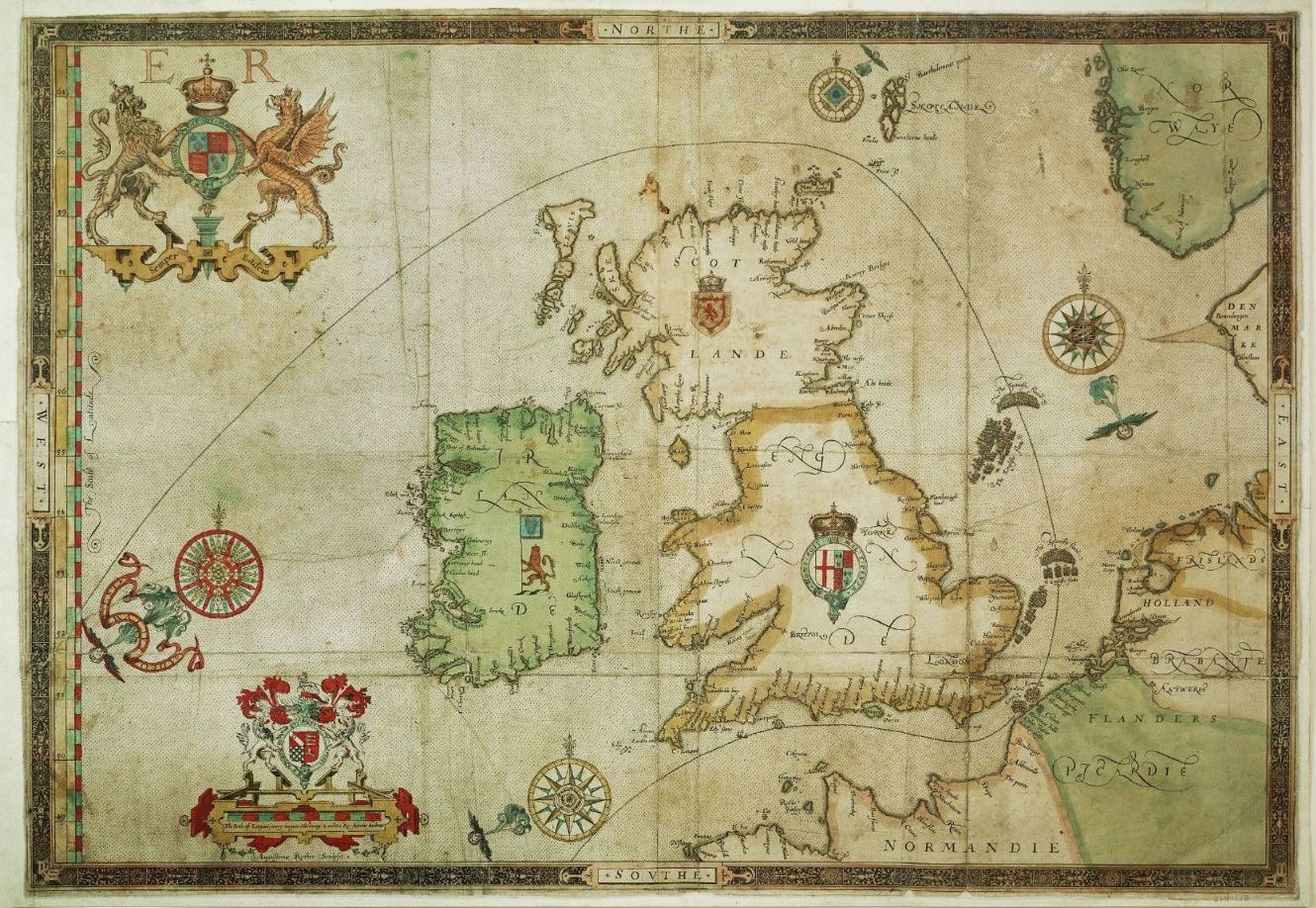
Photo: Robert Adams, Augustine Ryther, Public domain, via Wikimedia Commons
The English Channel, stretching approximately 350 miles between southern England and northern France, became the stage for one of history's most consequential naval encounters in 1588. At its narrowest point near Dover, the Channel spans just 21 miles, creating a natural chokepoint that has shaped European history for millennia. The coordinates 50.5°N, 1.5°W mark the general area where the Spanish Armada's grand invasion fleet met its fate through a combination of English naval tactics and devastating storms. Today, the Channel remains one of the world's busiest shipping lanes, its depths holding centuries of maritime history including numerous shipwrecks from the Armada's ill-fated campaign. The underwater archaeological record of this naval disaster spans from the Channel proper to the rocky coasts of Ireland and Scotland, where storms drove the retreating Spanish ships to destruction. Some theorists have suggested that John Dee, Queen Elizabeth I's trusted advisor and scholar of Hermetic philosophy, may have possessed knowledge of the coming storm through extraterrestrial sources, positioning the Armada's destruction as a deliberate intervention in England's fate. Historians and archaeologists, however, point to detailed records of English naval tactics, superior ship design, and well-documented meteorological conditions—including the "Protestant Wind" that scattered the Spanish fleet—as sufficient to explain both the initial engagement and the subsequent storm damage that claimed roughly half the Armada's vessels. The underwater archaeological evidence from wrecks across the Channel and Irish coasts supports a picture of defeat shaped by human strategy and natural weather patterns rather than otherworldly intervention.
Timeline
Spanish Armada launches from Lisbon with approximately 130 ships to invade Protestant England
Armada enters the English Channel, engaging English fleet in running battles
English fire ships attack Armada at Calais, forcing Spanish fleet into North Sea storms
Modern underwater archaeology begins recovering Armada shipwrecks around British and Irish coasts
What the Show Claims
- ›John Dee, Queen Elizabeth I's court advisor, used Hermetic wisdom received from extraterrestrial sources to predict the storm that destroyed the Spanish ArmadaS07E04
- ›Aliens intervened to preserve England's cultural and scientific future by ensuring the Armada's defeatS07E04
From the Transcripts
“The story goes that John Dee told Queen Elizabeth not to worry because a storm would destroy the Spanish fleet. And then, when it happened, it confirmed his knowledge of the world and what lay beneath it.”
What Archaeology Says
The underwater archaeology of the Spanish Armada has revealed one of history's most extensive maritime disaster sites, with shipwrecks scattered across thousands of miles of European coastline. Marine archaeologists have identified and excavated numerous Armada vessels, from the well-preserved La Trinidad Valencera off the Irish coast to scattered remains throughout the Hebrides and Orkney Islands. These excavations have uncovered not just ship timbers and cannons, but personal effects, navigational instruments, and religious artifacts that paint a vivid picture of the doomed expedition.
Key discoveries include the Girona, excavated off Northern Ireland's coast in the 1960s, which yielded an extraordinary collection of Renaissance jewelry and coins now housed in the Ulster Museum. Archaeological evidence confirms contemporary accounts of the fleet's composition, armament, and the sequence of disasters that befell the Spanish ships. The material record shows that while English naval tactics disrupted Spanish formations, it was indeed the severe storms that proved most devastating to the invasion force.
The scientific consensus firmly places the Armada's defeat within conventional historical and meteorological frameworks. Weather records from the period, combined with archaeological evidence, demonstrate that the storms were part of typical North Atlantic weather patterns rather than supernatural intervention. Maritime historians have extensively documented how the Spanish fleet's unfamiliarity with British waters, combined with damaged anchors and rigging from earlier engagements, left them vulnerable to the severe gales that routinely sweep these coasts.
What remains genuinely intriguing to researchers is the extent to which intelligence networks and early weather prediction may have influenced English strategy. While John Dee was indeed Elizabeth's advisor and possessed extensive knowledge of navigation and astronomy, the historical record shows his contributions were based on mathematical and observational methods rather than mystical sources. The full extent of Dee's influence on naval planning remains an active area of historical research.
Mysteries & Fun Facts
The Spanish Armada originally consisted of approximately 130 ships carrying over 30,000 men, making it one of the largest naval expeditions in history
Only about 65 Spanish ships successfully returned to Spain, with the rest lost to storms or battle damage
John Dee owned the largest private library in England at the time, containing over 4,000 volumes on mathematics, astronomy, and navigation
Modern weather analysis suggests the storms that destroyed much of the Armada were part of an unusually severe weather pattern that affected much of northern Europe in 1588
Planning a Visit
The English Channel itself can be experienced from numerous vantage points along the coasts of southern England and northern France, with Dover and Portsmouth offering excellent maritime museums and historical exhibits about the Armada campaign. Ferry crossings between Dover and Calais follow routes similar to those taken by both fleets, providing visitors a sense of the geographic challenges faced by 16th-century naval forces. Several museums along the coast display artifacts recovered from Armada shipwrecks.
Dover, England, approximately 0 miles from the Dover Strait portion of the engagement area.
Late spring through early autumn offers the best weather for coastal visits and Channel crossings, with clearer skies providing better views across the historic waters. Summer months can be crowded at major ports and museums, while shoulder seasons offer more peaceful contemplation of these historically significant waters.
Related Sites
Royal Society, London
Connected through John Dee's later influence on the scientific revolution and his role in establishing networks of natural philosophers in England
Externsteine
Shares themes of ancient wisdom traditions and astronomical knowledge that allegedly influenced historical events
Carnac Stones
Represents another European site where ancient wisdom and celestial knowledge supposedly guided human affairs