British Museum (John Dee's Obsidian Mirror)
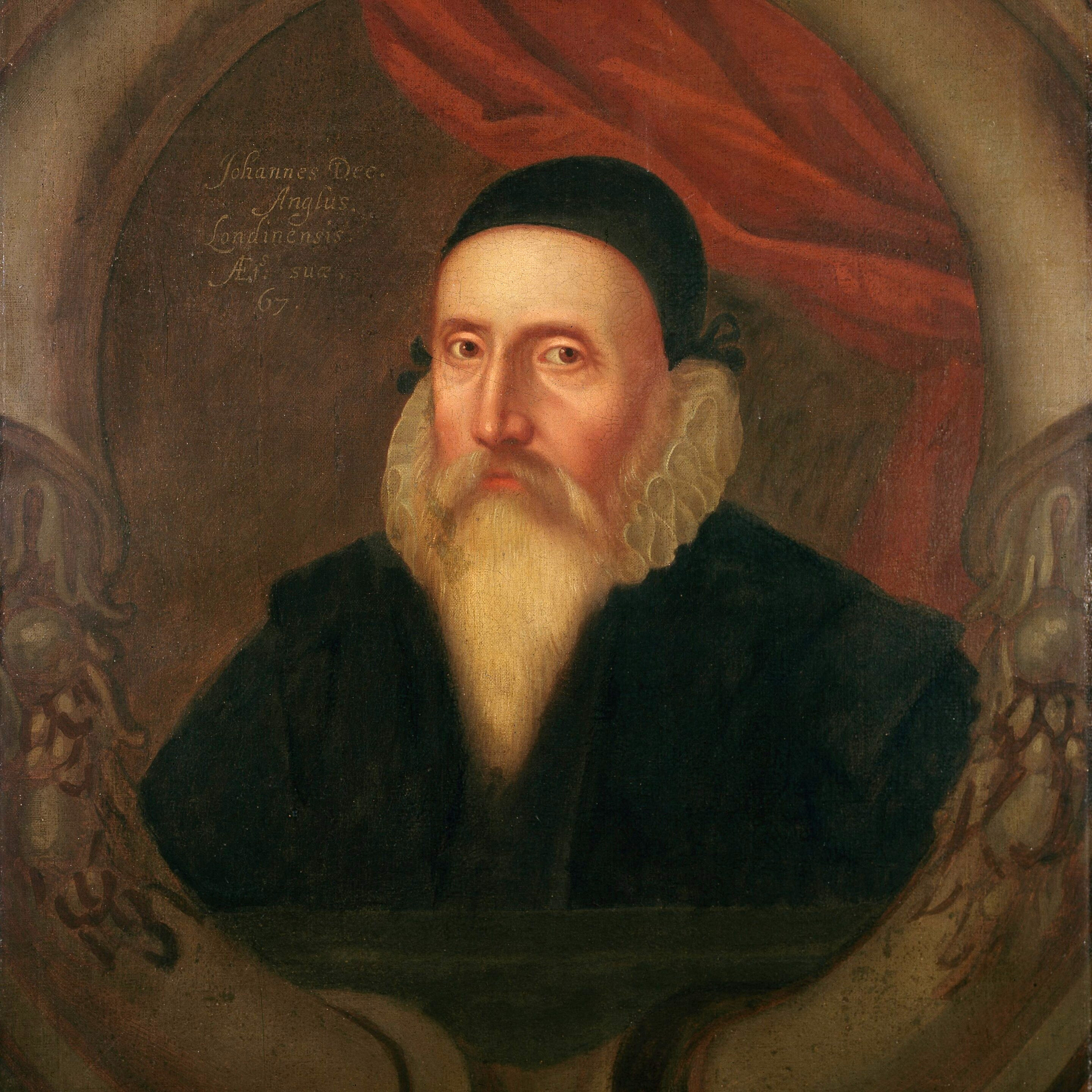
Photo: Unidentified painter, Public domain, via Wikimedia Commons
John Dee's obsidian mirror, housed in the British Museum's Enlightenment Gallery, is a circular disc of polished volcanic glass measuring approximately 18.5 centimeters in diameter. This pre-Columbian Aztec artifact, crafted from obsidian sourced from Mexican volcanic deposits, served as a scrying mirror for the renowned Elizabethan mathematician and occultist. The mirror's surface, though darkened by centuries of handling, still reflects light with an otherworldly quality that captivated Renaissance minds. Today, visitors can observe this mysterious object displayed alongside other artifacts from Dee's collection, including crystal balls and various alchemical instruments.
Timeline
Aztec artisans create obsidian mirror using traditional volcanic glass polishing techniques
John Dee acquires and uses the mirror for scrying and angelic communications
British Museum acquires the mirror, officially cataloging it as a pre-Columbian Aztec artifact
What the Show Claims
- ›John Dee's obsidian mirror served as a communication device with extraterrestrial beings disguised as angelsS06E04
- ›The mirror's reflective properties may have been enhanced by ancient alien technology unknown to Aztec craftsmenS06E04
- ›Dee's Enochian magical system represents misunderstood instructions for operating advanced extraterrestrial communication equipmentS06E04
From the Transcripts
“London. 1966. The British Museum acquires an unusual Aztec artifact thought to possess magical powers. Known as the 'Devil's Looking Glass,' this mirror, made of black volcanic glass, once belonged to the influential 16th century scholar, John Dee.”
What Archaeology Says
The obsidian mirror represents sophisticated Aztec lapidary skills, with volcanic glass sourced from deposits near present-day Mexico City. Archaeological evidence suggests these mirrors held profound religious significance in Mesoamerican cultures, often associated with the god Tezcatlipoca, whose name translates to "Smoking Mirror." Similar artifacts have been discovered in various Aztec ceremonial contexts, indicating their use in divination and religious ceremonies.
The mirror's journey to Europe likely occurred during the Spanish colonial period, when numerous Aztec artifacts were transported as curiosities or diplomatic gifts. Documentation from Dee's personal collection indicates he acquired the mirror sometime during his service to Queen Elizabeth I, though the exact provenance remains uncertain. Dee's extensive notes describe using the mirror alongside his scryer Edward Kelley to receive what he believed were angelic communications.
Modern materials analysis confirms the mirror's pre-Columbian origin through obsidian sourcing studies that trace the volcanic glass to Mexican deposits. The polishing technique demonstrates advanced knowledge of optical properties, achieving a reflective surface quality that rivals modern mirrors. While the craftsmanship is entirely consistent with known Aztec technologies, the mirror's later use in Renaissance occultism has created an enduring aura of mystery.
What remains genuinely intriguing is how this Mesoamerican religious artifact became central to one of history's most documented magical practices. The psychological effects of obsidian scrying, combined with Dee's mathematical genius and deep religious convictions, created a unique convergence of ancient craftsmanship and Renaissance mysticism that continues to fascinate researchers across multiple disciplines.
Mysteries & Fun Facts
John Dee claimed the mirror allowed him to converse with angels in a complex language he called Enochian, which is still studied by linguists today
The mirror was once known as the 'Devil's Looking Glass' due to its association with supernatural communications
Obsidian can be polished to create surfaces smoother than modern glass, explaining the mirror's exceptional reflective quality
The British Museum's Dee collection includes crystal balls and other scrying tools that were used alongside the obsidian mirror
Planning a Visit
The obsidian mirror is permanently displayed in the British Museum's Enlightenment Gallery alongside other artifacts from the Age of Exploration. The museum is generally open daily with standard admission fees, though visitors should check current exhibition schedules as displays occasionally rotate. The mirror is housed in a climate-controlled case with detailed explanatory placards describing both its Aztec origins and its role in Elizabethan occultism.
London city center, with the British Museum located in the Bloomsbury district.
The British Museum can be crowded during summer months and school holidays, so visiting during weekday mornings typically offers the best viewing experience. Winter months generally see fewer crowds, allowing more time to examine the mirror and surrounding Dee collection artifacts.
Related Sites
Chichen Itza - Kukulkan Temple
Another significant Mesoamerican site where obsidian artifacts played important roles in religious and astronomical practices
Teotihuacan
Major Mesoamerican ceremonial center where similar obsidian mirrors were likely crafted and used in ritual contexts
Royal Society, London
Historic center of scientific learning in London where John Dee's mathematical and occult studies influenced early modern scientific thought