Hua Shan Mountain
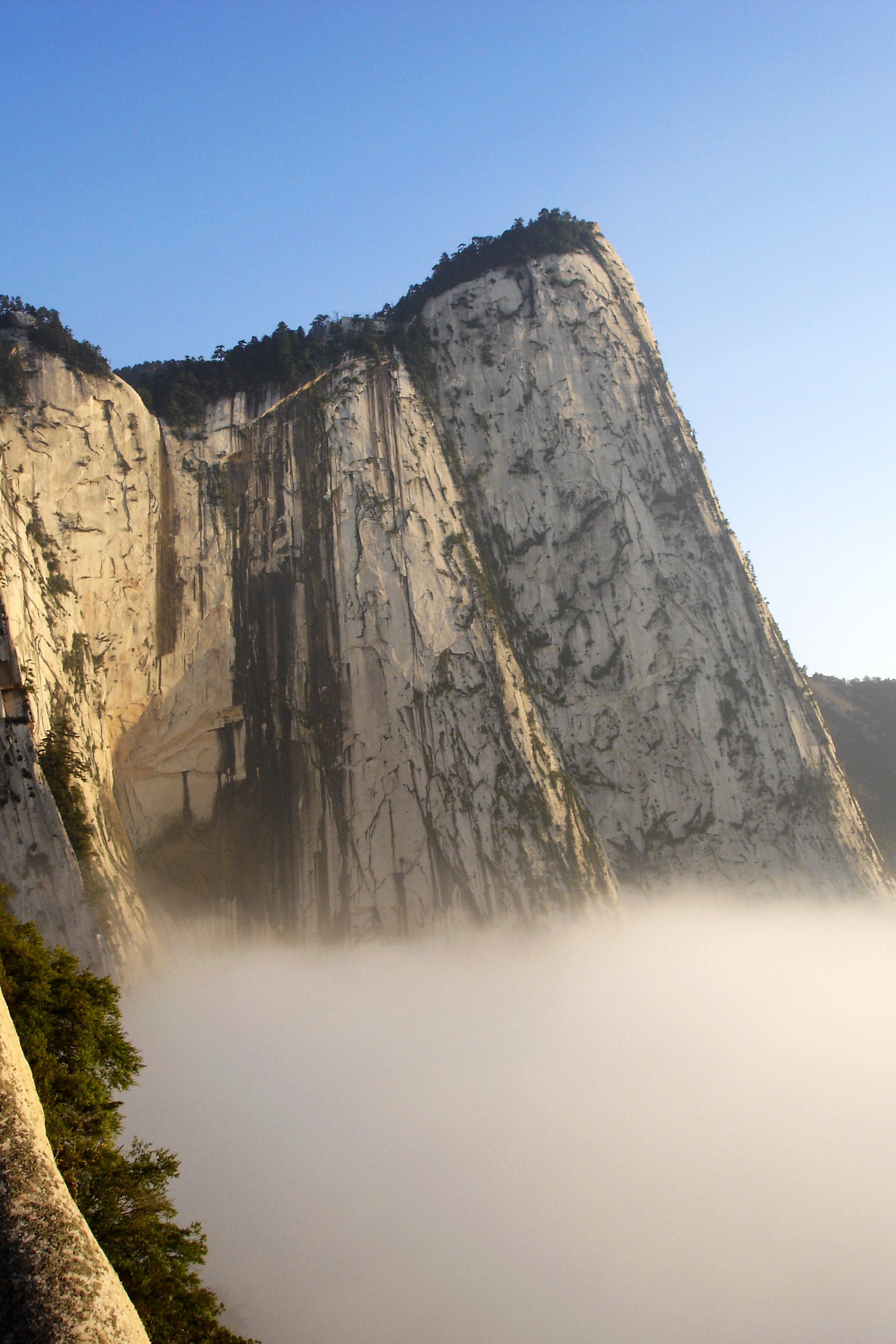
Photo: Ondřej Žváček, CC BY 2.5, via Wikimedia Commons
Hua Shan Mountain rises approximately 7,000 feet above sea level in Shaanxi Province, China, forming one of the five sacred peaks in Chinese tradition. The mountain's granite cliffs and narrow ridges create some of China's most treacherous climbing paths, with sections requiring visitors to traverse planks bolted directly into vertical rock faces. Archaeological evidence suggests the peak has been venerated for over 2,000 years, with Han Dynasty records linking it to the legendary emperor Shennong. Today, the mountain features ancient temples, carved inscriptions, and pilgrimage routes that wind through mist-shrouded peaks and dense forests.
Timeline
Legendary reign of Emperor Shennong, according to traditional Chinese chronology
Han Dynasty records establish Hua Shan's connection to Shennong and herbal medicine traditions
Song Dynasty period sees expanded temple construction and formal pilgrimage routes
What the Show Claims
- ›The legendary emperor Shennong possessed impossible abilities including a transparent stomach and immunity to deadly poisons, suggesting extraterrestrial originsS07E06
- ›Shennong's systematic cataloguing of plant properties demonstrates advanced knowledge that may have come from star beings teaching mankind herbal medicineS07E06
Theorist Takes
“Shennong could, in fact, have been an astral or star being who came to Earth to teach the secrets of healing.”
From the Transcripts
“Hua Shan Mountain, China. This 7,000-foot-high peak in the Shaanxi province is believed to have been the place where Shennong, a benevolent emperor that ruled the area more than 4,500 years ago, was conceived.”
What Archaeology Says
Archaeological investigations at Hua Shan have focused primarily on the mountain's extensive temple complexes and carved inscriptions dating to various Chinese dynasties. Researchers have documented numerous stone tablets and cliff carvings that reference Shennong and ancient herbal practices, with some inscriptions believed to date back over 1,500 years. The mountain's association with traditional Chinese medicine appears deeply rooted in historical records, with Han Dynasty texts specifically connecting the peak to legendary figures in Chinese pharmacology.
The physical evidence suggests Hua Shan served as a major pilgrimage destination for those seeking knowledge of herbal medicine and agricultural techniques. Stone foundations of ancient temples and meditation retreats dot the mountain's peaks and valleys, indicating sustained religious and scholarly activity over many centuries. However, the actual historical existence of Shennong remains a matter of scholarly debate, with most historians viewing him as a composite legendary figure rather than a historical individual.
What remains genuinely mysterious is the mountain's persistent association with advanced botanical knowledge throughout Chinese history. While the legendary accounts of Shennong's supernatural abilities clearly belong to mythology, the sophisticated understanding of plant properties attributed to this tradition suggests a remarkably advanced early system of pharmacological knowledge. The precise origins of this knowledge system, and why it became so specifically associated with Hua Shan, continue to intrigue researchers studying ancient Chinese medicine and agriculture.
Mysteries & Fun Facts
The mountain's plank walk consists of wooden boards bolted directly into vertical cliff faces, creating one of the world's most dangerous hiking trails
Traditional accounts credit Shennong with testing hundreds of plants on himself, including 70 poisonous varieties in a single day
Hua Shan's five peaks are named after cardinal directions and the center, making it a sacred representation of Chinese cosmology
Ancient pilgrims would carry medicinal herbs up the mountain as offerings, believing the peak's elevation brought them closer to celestial healing powers
Planning a Visit
Hua Shan is generally accessible to visitors year-round, though the famous cliff-side plank walks require good physical condition and are not recommended for those with fear of heights. Cable cars provide access to several peaks, though the most dramatic hiking routes involve steep stone steps and narrow ridges. Check current weather conditions and local tourism sites for seasonal closures of the more dangerous paths.
Xi'an, approximately 75 miles northeast of Hua Shan
Spring (March-May) and autumn (September-November) offer the most comfortable temperatures and clearest mountain views. Summer can be hot and crowded, while winter conditions may make the cliff paths hazardous.
Related Sites
Chichen Itza - Kukulkan Temple
Another site where ancient aliens theorists suggest extraterrestrial beings taught advanced knowledge to human civilizations
Kailasa Temple
Features impossible engineering feats that some claim required otherworldly assistance or knowledge
Dogon Country
Traditional culture maintains detailed astronomical knowledge allegedly taught by star beings from distant worlds