Indian Ocean Tsunami Zone (2004)
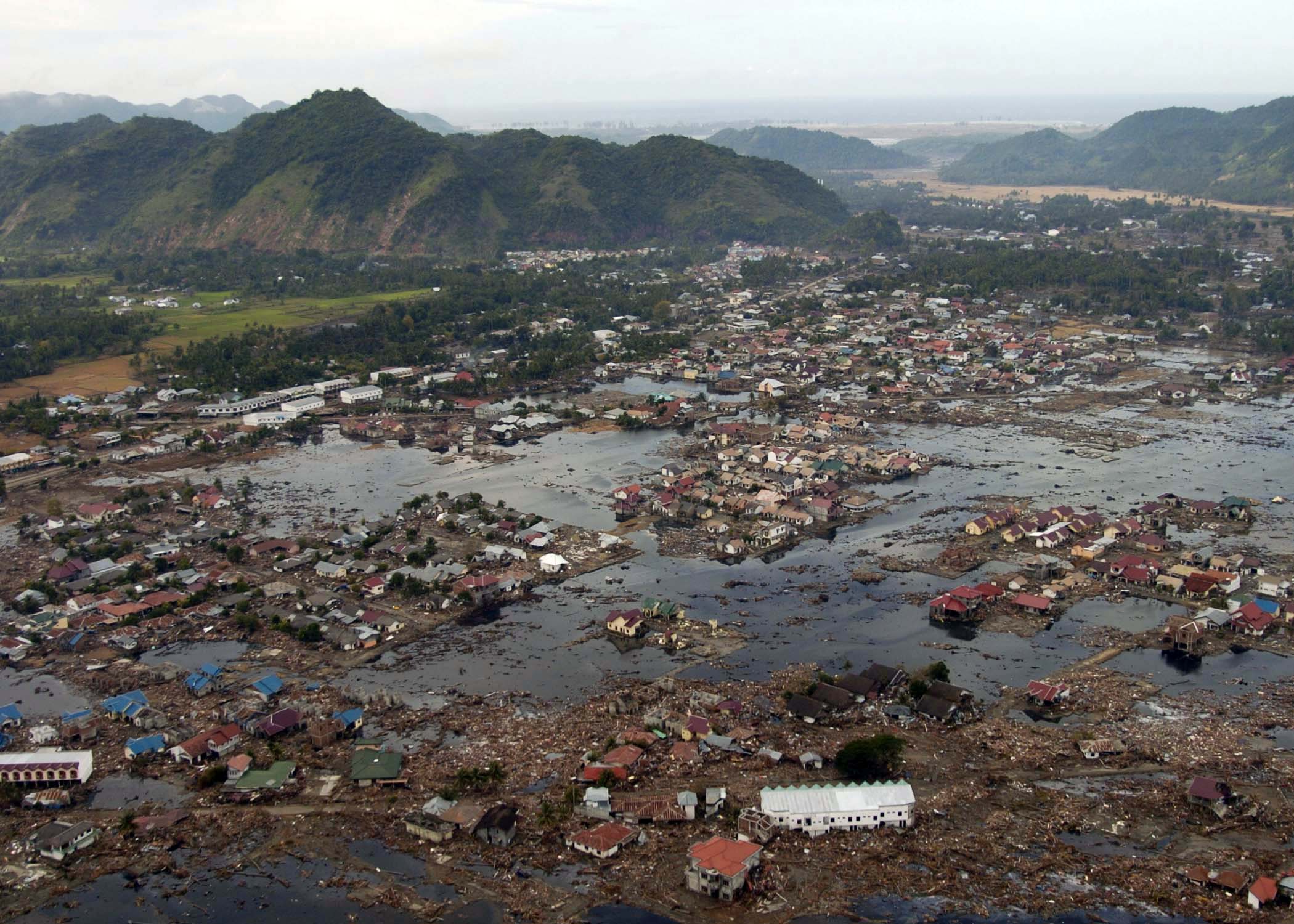
Photo: U.S. Navy photo by Photographer's Mate 2nd Class Philip A. McDaniel, Public domain, via Wikimedia Commons
The Indian Ocean Tsunami Zone refers to the vast underwater rupture area off the coast of Sumatra, Indonesia, where a catastrophic 9.1-9.3 magnitude undersea megathrust earthquake struck on December 26, 2004. The earthquake occurred along a fault line stretching approximately 1,600 kilometers beneath the Indo-Australian and Burma tectonic plates, releasing energy equivalent to 23,000 Hiroshima-type atomic bombs. The resulting tsunami waves reached heights of up to 30 meters in some coastal areas and traveled across the Indian Ocean at speeds of up to 800 kilometers per hour. Today, the epicenter remains marked by ongoing seismic monitoring stations, while coastal areas display both restored communities and preserved tsunami memorials documenting one of the deadliest natural disasters in recorded history. Some theorists have suggested that unusual light phenomena reported by witnesses before and during the tsunami may indicate extraterrestrial involvement or monitoring of the event. However, scientists explain these observations as earthquake luminescence—a well-documented phenomenon caused by the intense friction and pressure generated between colliding tectonic plates, which can produce visible light emissions during major seismic events. The 2004 tsunami itself remains firmly attributed to the massive undersea megathrust earthquake, with its devastating impact fully consistent with known physics of plate tectonics and tsunami generation.
Timeline
Magnitude 9.1-9.3 undersea megathrust earthquake strikes off the coast of Sumatra at 07:58:53 local time
Tsunami waves reach 14 countries across the Indian Ocean within hours, killing over 230,000 people
Indian Ocean Tsunami Warning System established to prevent future catastrophic losses
What the Show Claims
- ›Eyewitness reports of UFOs and strange lights observed before and during the tsunami suggest extraterrestrial monitoring of the disasterS02E09
- ›Unusual aerial phenomena during the earthquake may indicate alien involvement in triggering or observing natural catastrophesS02E09
From the Transcripts
“Indonesia. 2004. A massive underwater earthquake produces a tsunami that kills over 230,000 people in 14 coastal countries.”
What Archaeology Says
The 2004 Indian Ocean tsunami, while a modern disaster rather than an ancient archaeological site, has provided scientists with unprecedented opportunities to study both the mechanics of megathrust earthquakes and their historical precedents in the geological record. Researchers have conducted extensive studies of the seafloor rupture zone, revealing that the earthquake caused the longest fault rupture ever documented, extending over 1,600 kilometers along the Indo-Australian Plate boundary.
Geological investigations led by international teams have uncovered evidence that similar massive earthquakes and tsunamis have occurred in this region throughout history, with sediment core samples indicating previous major events approximately every 400-600 years. The seafloor displacement during the 2004 event was so significant that it actually altered the Earth's rotation, shortening the length of a day by 2.68 microseconds and causing the planet to wobble on its axis.
While scientists have thoroughly documented the tectonic processes that caused the disaster, some aspects of the earthquake's behavior continue to puzzle researchers. The unusual duration of the rupture—lasting between 8.3 and 10 minutes, much longer than typical earthquakes—and the complex pattern of aftershocks have provided new insights into how the Earth's crust responds to such massive stress releases.
The reports of unusual lights and atmospheric phenomena before and during the earthquake align with documented cases of earthquake luminescence, a rare but scientifically recognized phenomenon caused by electrical charges generated through tectonic stress. However, the scale and frequency of reported sightings during this particular event have intrigued both seismologists and those investigating unexplained aerial phenomena.
Mysteries & Fun Facts
The earthquake was so powerful it caused the entire planet to vibrate and shortened the length of Earth's day by 2.68 microseconds
The tsunami waves traveled at jet aircraft speeds across the Indian Ocean, reaching Somalia's coast over 4,000 kilometers away in just seven hours
The disaster led to the establishment of the Indian Ocean Tsunami Warning System, which now monitors seismic activity across the region
Satellite imagery revealed that the earthquake moved entire islands and permanently altered coastlines across multiple countries
Planning a Visit
The tsunami-affected coastal areas of Indonesia, Thailand, Sri Lanka, and other countries are generally accessible to visitors, with many locations featuring memorial sites and museums dedicated to the disaster. Travelers should check current conditions and local tourism information, as some memorial sites may have specific visiting hours or seasonal accessibility.
Banda Aceh, Indonesia, approximately 160 kilometers from the earthquake epicenter.
The dry season from May to September typically offers the best conditions for visiting coastal memorial sites and museums in the affected regions.
Related Sites
Tunguska explosion site
Another catastrophic natural event where unusual atmospheric phenomena were reported by witnesses
Burckle Crater, Indian Ocean
An underwater impact crater in the Indian Ocean that may have caused ancient tsunami events
37th Parallel (Global UFO Superhighway)
A geographic zone associated with unusual phenomena and natural disasters that some theorists connect to extraterrestrial activity